

A profound shift in the media industry was accelerated during the pandemic.
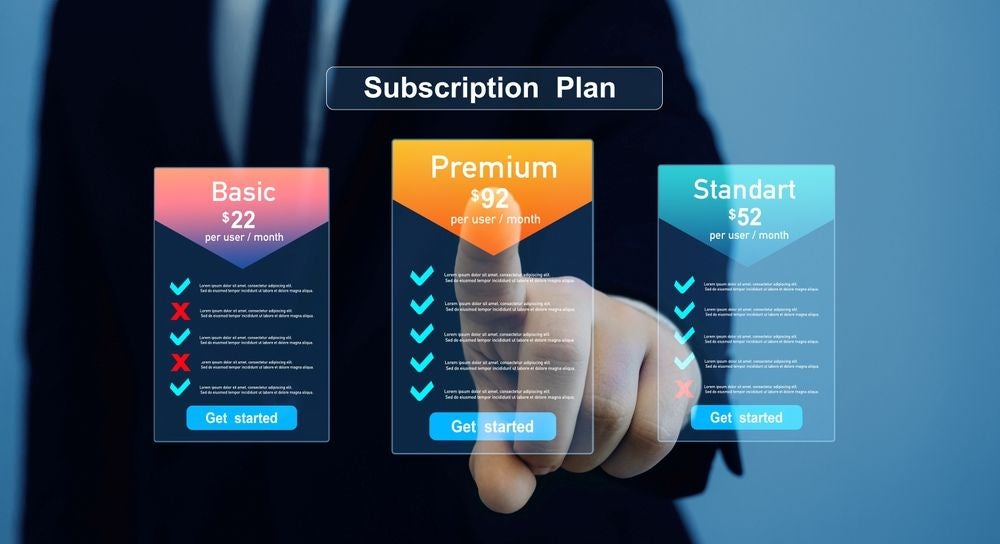
From offering one-off content or product sales, publishing, news and entertainment companies began to sell their services in bundles and tranches on subscription and there was a gold rush to join the subscription economy.
From streaming companies to digital information services, research firms, education providers and SaaS-plus-content hybrids, recurring revenue has now become the holy grail. Even Apple, one of the most famous hardware companies in the world, is rapidly turning its operating model into a subscription services juggernaut that will define its future growth. News giants like News Corps’ The Wall Street Journal (WSJ) started moving to a multiplatform operation years ago as print readers migrated online and to smartphone apps.
In News Corps’ quarterly results for the three months ended September 2025, it was reported that WSJ subscribers are topping 4.6 million with ambitious plans to grow this base through strategic marketing campaigns that appeal to new demographics.
Bundling and strategic partnership arrangements with companies that have complementary services have become increasingly common as retention and profitable growth become more challenging.
One deal offered by the WSJ includes online access to investment news and analysis titles Barron’s and MarketWatch, other publications in the News Corp stable. In another example, The Atlantic and The Economist were some of the first to sign up to Google’s NotebookLM, an AI-powered research and note-taking tool that allows users to upload material from the publishers, ask questions and receive answers from the original sources.
These kinds of partnerships will help to deepen customer engagement and strengthen customer relationships with these brands, as well as support future customer acquisition. Bundle and multiproduct subscribers engage more and pay more over time, and this is bearing out in the earnings results of businesses doubling down on their subscription ecosystem.
By 2028, market intelligence firm GlobalData expects the subscription video on-demand (SVOD) industry alone to generate revenue of $122 billion, growing 36% from the $90 billion earned in 2023. But the easy money is now off the table – as evidenced by the Wall Street brawl between Paramount and Netflix over the assets of Warner Bros. Discovery.
Heightened consumer expectations; more complex service offerings
Inflation, consumer financial pressures and a hyper-competitive operating environment are making growth much more of a challenge. Consumers are re-evaluating their spending commitments in a difficult market, and there is no shortage of choice.
In a survey of 60,000 people across 30 major markets in the second half of 2024 to assess attitudes and preferences toward TV and film content, 72% of respondents said they had cancelled a subscription service, with the most common reasons being increased price of the service and wanting to cut the number subscriptions.
Gen Z and Millennials were much more likely to have cancelled a subscription service than older customers, the GlobalData survey showed but then younger customers tend to subscribe to more services. The survey also showed that younger customers are more likely to leave a subscription service because they are intentionally trying to reduce their number of subscriptions.
So, today’s premium content platforms are under immense pressure to consistently deliver value to meet heightened customer expectations, while also making sure the commercial machinery behind the scenes is optimised for growth and achieving profitability despite an increasingly complex business model.
“Producing scalable, engaging material that maximises audience engagement and extends content lifecycles across multiple platforms is no small task in any environment, but with production costs on a steady rise, budget scrutiny and management of operational costs are increasingly taking centre stage at content-driven media companies,” said Mandheer Walia, senior director, SAP Media and Entertainment
SAP Media, a global leader in enterprise applications and business AI, produced a whitepaper in partnership with GlobalData in 2025 called Building a Resilient Financial Foundation for High-Flying Creative Businesses exploring how premium content and media business executives can use cloud-based technology solutions to underpin the processes and systems that are essential to scaling and adapting in a crowded, constantly evolving and increasingly AI-enabled market.
In a world oversaturated with digital content and entertainment experiences, customers expect more than just access to research, premium information, news or gated videos. They want personalised recommendations and plans, usage-based pricing options and in B2B, flexible seat management and proof of ROI.
They want AI empowered dashboards that prove customers are consuming the content — and achieving commercial outcomes.
These demands put pressure on subscription platforms. They must manage entitlement, which is increasingly expensive, pricing configuration across services and experiences, renewal workflows, and service tiers with precision — all while maintaining strict access security.
Content platforms must be able to offer specific bundles and libraries, languages and product tiers. Reducing churn and offering a seamless customer experience is clearly a priority.
Clearly, recurring revenue is only valuable if it recurs.
The value of cloud enterprise-resource planning software
Walia adds: “If I’m a premium content publisher, I need to be able to manage the costs of creating the content and the distribution across bundles and users. The business could have multiple usage scenarios. All businesses face increasingly complex billing and mediation requirements and as they grow they can end up with a complex expense, of software systems that cannot keep pace with data growth or business model agility.
“Then there are the royalties to manage, the author contracts, the legal compliance, and especially in today’s market, understanding all the costs in the business as well as where the profitability opportunities are, can be the difference between failure and success.
“Any strategy for growth today will depend on operations being underpinned by the right technology platforms that supports effective cash and procurement management, billing and forecasting, as well as empowering informed decision making through real-time AI-enabled analytics.”
SAP is well known as the provider of a unified and globally recognised portfolio of core business applications, data management, and AI for multinational corporations. Now the company is increasingly developing software tools for scaleups. Its Cloud ERP was recognised as a leader in the 2025 Gartner® Magic Quadrant™ for Cloud ERP for service-centric enterprises for the fourth year in a row.
“Premium content businesses must move beyond project-to-project or content-to-content survival to a model that supports long-term growth. To do that, it must employ a modular, right-sized, intelligent Cloud ERP solution that will automate workflows, offer full operational and financial transparency and provide full flexibility to scale. That’s what SAP ERP Cloud software has offered for the world’s biggest media and entertainment companies for decades and now we can provide the same capability for tomorrow’s industry leaders.”
Visit sap.com/media to learn how SAP Media can support your business goals or request a personalised demo.
