Across September and October 2025, the big four fashion weeks—New York, London, Paris, and Milan—ended for the season.
At these shows, AI tools were used to analyse data to predict trends, generate new designs, create virtual models for marketing, and improve the shopping experience for consumers. As a result, we now have a clearer view of the trends for the months ahead.
Go deeper with GlobalData


Access deeper industry intelligence
Experience unmatched clarity with a single platform that combines unique data, AI, and human expertise.
AI is transforming the fashion industry at every level: design, production, marketing, and retail. By combining large-scale data analysis, computer vision, natural language processing, and predictive algorithms, AI helps brands move faster, focus on customers, and work more efficiently. However, as the industry finds more uses for the technology, questions arise about what this means for the creativity of designers, stylists, and other fashion professionals. Are designers and stylists ceding control to algorithms rather than following their own creative instincts?
How AI is helping fashion design
AI helps fashion design through generative models that can quickly produce concept sketches, mood boards, and fabric patterns from a designer’s prompts. This speeds up the process and helps designers visualise ideas based on trends and consumer behaviour.
Consumer preferences change quickly, often driven by social media, so designers must try to stand out amid a lot of noise. AI can show what is trending, which colours or fabrics are popular, and what customers might like, using large amounts of historical data and sentiment analysis. For example, Gucci is experimenting with generative art and AI-assisted pattern creation for limited-edition pieces and digital fashion drops.
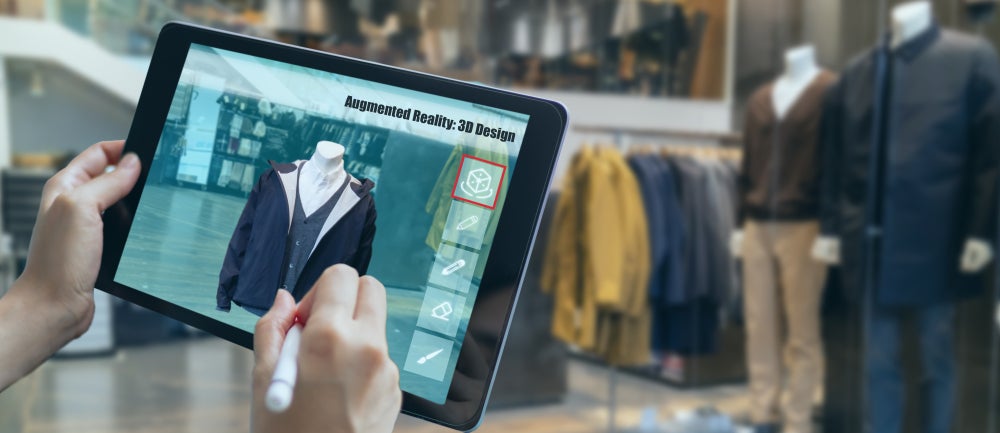
Designers also use computer vision to visualise fabrics and see how garments will fit on a body. The technology supports virtual try-ons and helps designers judge which pieces will work well in a collection and which will appeal to audiences—making it easier to commercialise garments.
How AI supports styling
For styling, AI can combine clients’ purchase history, body measurements, style preferences, social media likes, and event calendars to create detailed profiles. Stylists can then recommend looks tailored to each person’s lifestyle and taste.
AI stylist tools use computer vision, machine learning, and data-driven personalisation to generate on-trend outfit suggestions, visualise garments on accurate 3D avatars, and simplify sourcing via visual search. Examples include Stitch Fix, which blends machine learning with human stylists to create personalised recommendations, and Fashioholic, which helps stylists find items by style attributes rather than keywords. One could argue that this helps stylists find more creative solutions faster and find outfits that match the client’s preferences quicker, while also maintaining their own tastes.
AI could bring too much efficiency
Importantly, AI can amplify a designer’s or stylist’s creativity and client knowledge—it does not have to replace the human judgment and relationship work essential to the industry.
However; fashion is driven by emotion, expression, and cultural context, so relying too much on automation could erode the individuality some designers bring. AI may limit the creative opportunities of newcomers to the industry, a problem seen in other fields, too.
Every industry will need to work alongside AI to handle routine tasks, but a creative field like fashion may need guardrails so it keeps its unique qualities. The apparel industry already uses AI across the value chain—from design and production to recycling—and it will be interesting to see how this evolves.