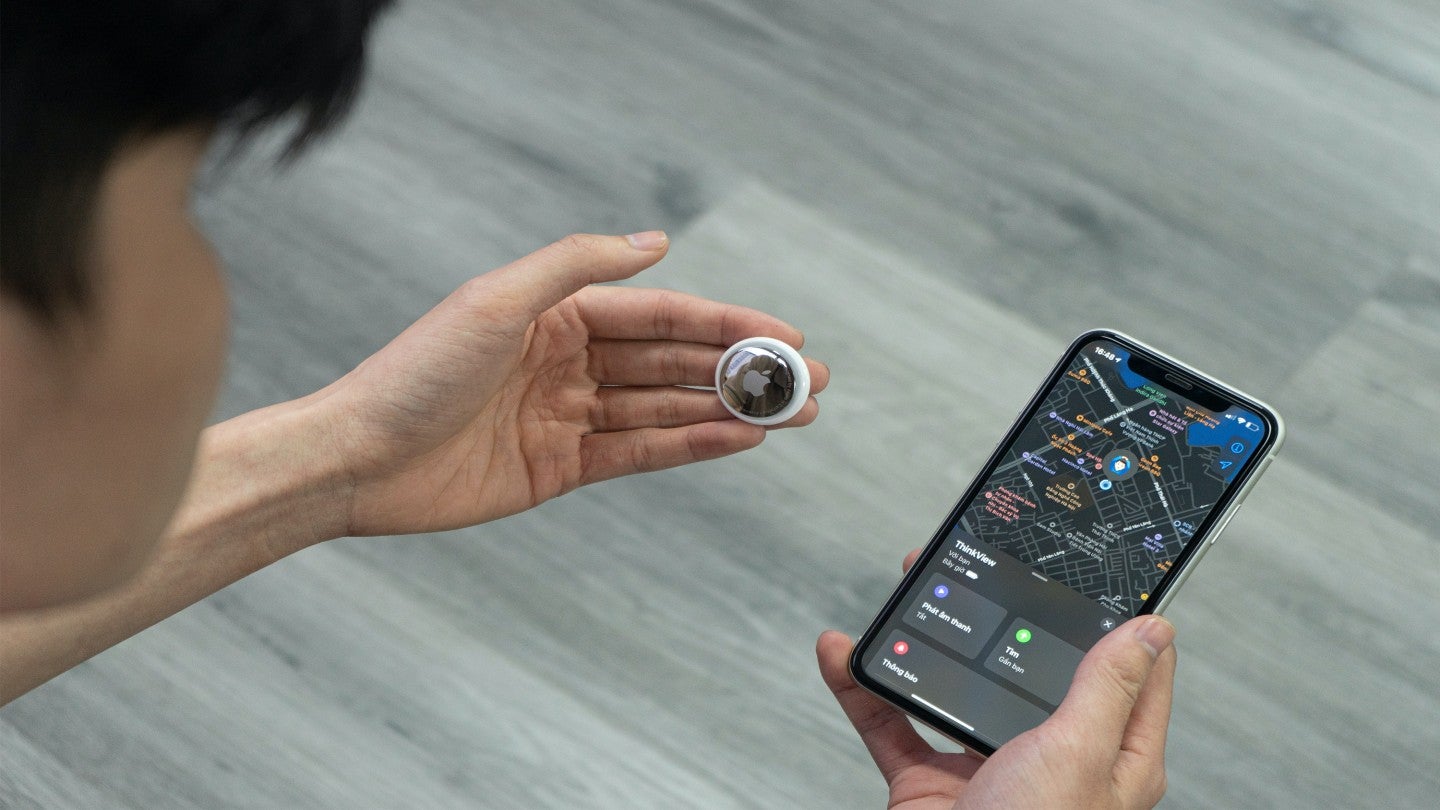
Tech giants Google and Apple have launched a joint initiative to minimise the issue of unwanted tracking of people via their Bluetooth devices.
The two companies have submitted ‘a proposed industry specification’, which state that all the Bluetooth tracking devices should be compatible to detect any unauthorised tracking.
Go deeper with GlobalData


Access deeper industry intelligence
Experience unmatched clarity with a single platform that combines unique data, AI, and human expertise.
It also requires such devices to send alerts to the users on their iOS and Android platforms in case an unauthorised tracking instance is detected.
Apple said that Bluetooth devices, such as AirTags, which are used by people to locate their luggage, keys, purse and other personal belongings can also be misused for monitoring and tracking individuals.
Apart from Google and Apple, multinational electronic companies, including Samsung, eufy Security, Chipolo, Pebblebee and Tile, have also expressed their interest in supporting this draft specification.
Besides, the companies have incorporated inputs and feedbacks given by several advocacy groups and industry participants into the draft specification.
Apple Sensing and Connectivity vice president Ron Huang said: “We built AirTag and Find My network with a set of proactive features to discourage unwanted tracking — a first in the industry — and we continue to make improvements to help ensure the technology is being used as intended.”
This submission, according to Apple, has been made in the form of an Internet-Draft through standards development organisation Internet Engineering Task Force.
The companies are also accepting to take comments and reviews from interested parties over a period of next three months.
Once this period is complete, Apple and Google will come together to assess and address the submitted feedback, followed by the release of a production implementation of their draft specification by the end of this year.
The process will then result in the adaptation of approved modifications in the future versions of iOS and Android.
Google Android Engineering vice president Dave Burke said: “Bluetooth trackers have created tremendous user benefits, but they also bring the potential of unwanted tracking, which requires industrywide action to solve.”