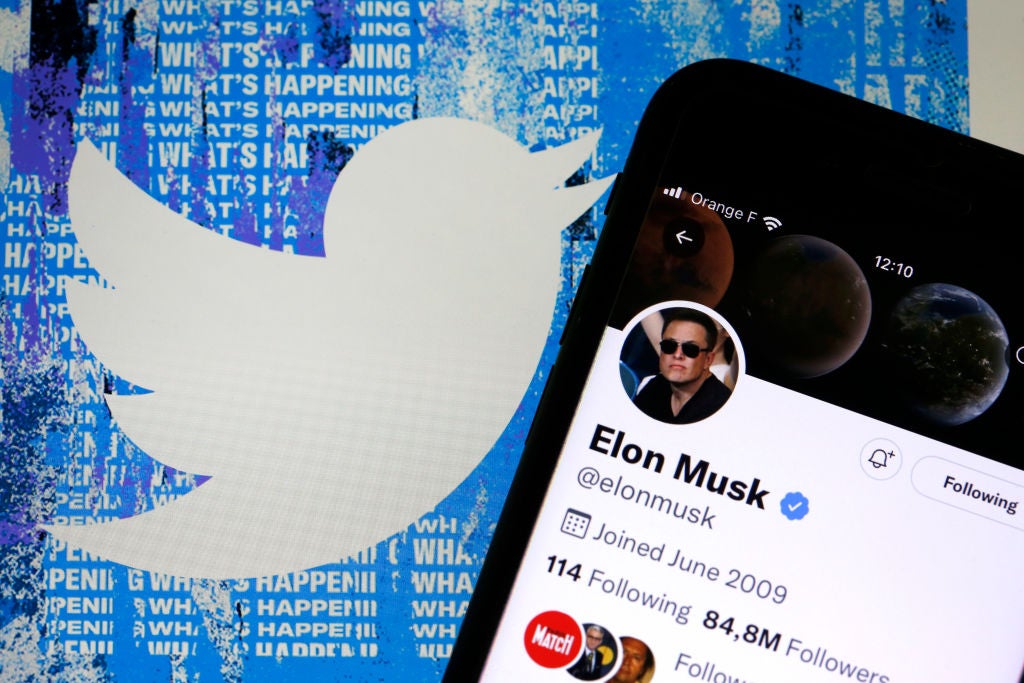
Elon Musk’s shambolic first few weeks at the reins of Twitter have already put the company at odds with EU regulators. The confusing launch of its blue tick verification service, which led to a spate of impersonations on the platform, is particularly concerning as it could potentially lead to the proliferation of harmful or even illegal content.
As it struggles with its finances, Twitter cannot afford to ignore the regulators’ warnings: after all, the European Commission can stop an online platform from operating in the single market. On top of this, Twitter could be fined up to 6% of its global turnover if it becomes a repeat offender.
Twitter Blue’s backlash
The social media company launched its new premium service—which grants blue check verification labels to anyone paying $8 a month—only to put it on hold just days afterward. The feature led to a spate of impostor accounts attempting to impersonate well-known brands and celebrities, all approved by Twitter. Before Musk’s $44 billion acquisition, Twitter’s signature ‘Blue Check’ was granted to celebrities and journalists verified by the platform, ironically, to prevent impersonation. Now, under Elon Musk, anyone can get one as long as they have a phone, a credit card, and $8 a month.
Regulators and advertisers alike were already concerned about Twitter being a safe place to advertise or post, given Musk’s relaxed stance on content moderation rules. But now the blue tick feature gives even more reasons to be worried about the spread of toxic and even illegal content on the platform. Brands advertising on Twitter do not want to be associated with harmful content and will likely desert the platform if Twitter cannot be kept free of this material.
Twitter cannot ignore the DSA, which will set new global standards
Brussels has now a brand-new set of rules—enshrined in the Digital Services Act—to wield against social media companies. Clear obligations laid out within the new legislation, such as the swift removal of illegal content and online disinformation, are established ex-ante, i.e. before any wrongdoing is committed or investigated. The DSA also provides a clearer “notice and action” procedure, where users will be empowered to report illegal content online and online platforms will be forced to act quickly.
The DSA aims to make online platforms like Twitter more responsible for the content that is spread online. Online platforms can be fined up to 6% of their worldwide turnover if they fail to take the necessary measures. In the case of very large online platforms with more than 45 million users, as in Twitter’s case, the EU Commission will have exclusive power to demand compliance.
A test bed for the new regulation?
The DSA requires a team of experts to confirm Twitter’s technical and legal compliance. But many of these content moderators and executives implementing EU rules have left or were laid off at the behest of Musk. EU regulators may think that Twitter’s massive lay-offs are a sign that the company can no longer guarantee full compliance, especially in the case of swiftly removing illegal content after it has been reported.
Social media companies like Twitter are particularly vulnerable amid the current deteriorating economic outlook, as they are the most exposed to the slowdown in advertising spending. Twitter cannot afford to ignore regulators’ warnings, nor can it ignore the fact that its content moderation policy is frightening advertisers away. After all, Twitter lives or dies based on ad spending.