

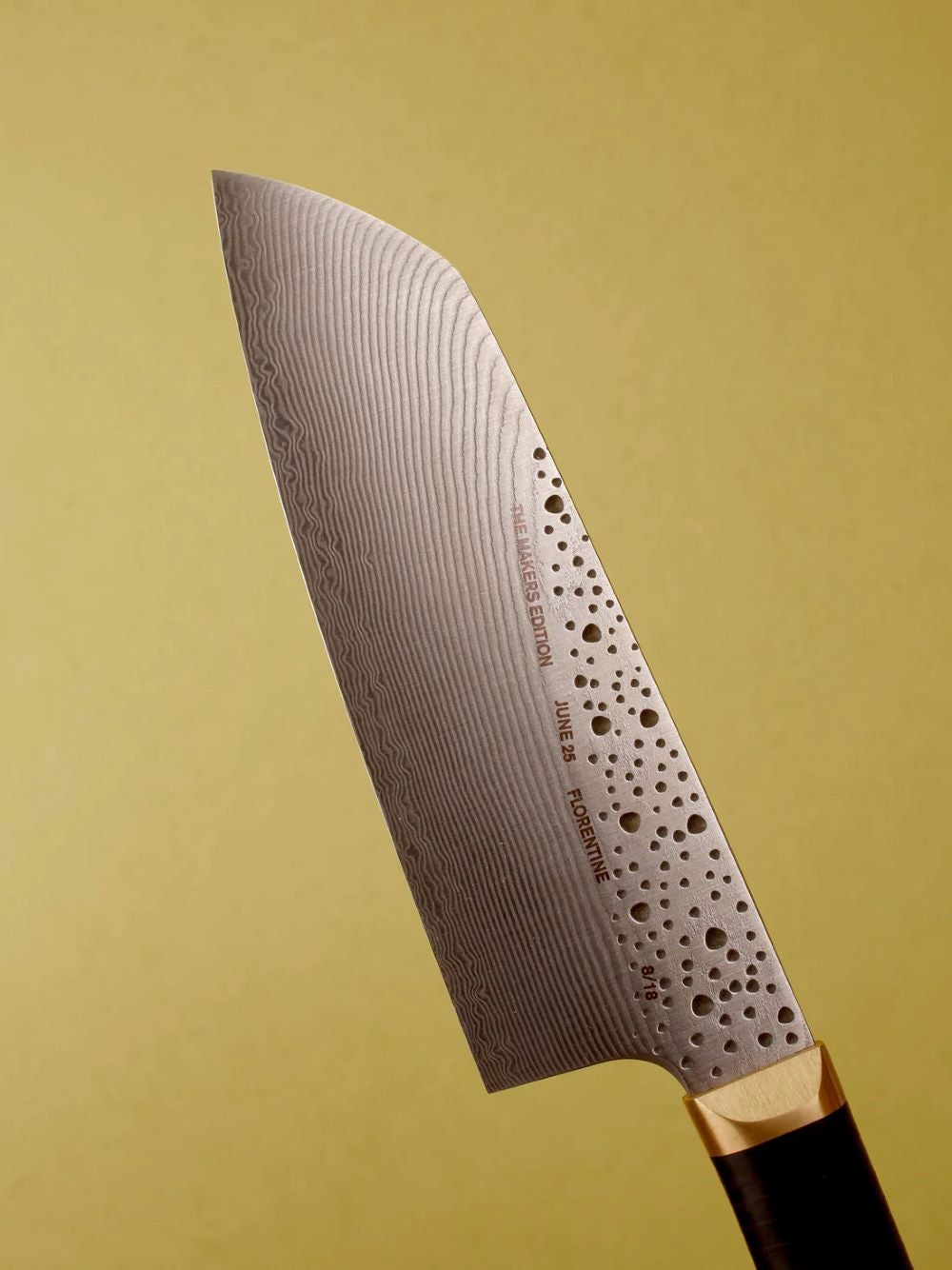
Whether used in the home to slice vegetables, in operating theatres to open tissue with precision, or on factory floors to cut through dense synthetic materials, blade performance comes down to edge retention. Choosing the correct steel for a specific application is essential, as not all steels behave the same. Their performance depends not only on composition but also on the microstructure determined by hardening and tempering.

Understanding why some blades stay sharp longer
Edge retention is influenced by several factors: steel composition, the nature and distribution of carbides, the microstructure formed during processing, the blade geometry and surface treatment. These elements collectively determine the blade’s ability to resist wear, maintain sharpness, and retain structural stability during use.
One of the fundamental determinants of blade performance is the “edge-performance triangle”, comprising sharpness, edge stability, and wear resistance. Sharpness relates to how fine the initial edge is and how easily it can be honed. Edge stability is the extent to which a fine edge resists deformation, chipping, or rolling. Wear resistance concerns the blade’s ability to withstand abrasive forces over time. Depending on the task, a blade may emphasise one of these qualities over the others. For example, a surgical instrument’s priority is a flawless, consistent sharpness paired with stability, since the forces applied during surgery are relatively small but precision is paramount, whereas a blade designed for carpet cutting requires high wear resistance even if this comes at the expense of razor-fine initial sharpness.
The microstructure of the steel determines how these properties are expressed. Coarse carbides increase wear resistance but compromise edge stability and ease of sharpening, whereas fine carbides support sharpness and stability but offer less extreme abrasion resistance.
Corrosion resistance is another factor that requires a balance, as blades exposed to moisture, food acids, or cleaning chemicals must withstand corrosion without compromising hardness or edge integrity. However, corrosion resistance often competes with other desirable features, because higher carbon improves hardness and wear resistance, while higher chromium improves corrosion resistance, but high content of these two elements cannot be achieved at the same time
Finally, the blade’s geometry and surface finishing techniques, such as polishing, coating, or nitriding, also affect how long the edge remains sharp. While these factors are secondary to steel composition, they can enhance or diminish the underlying metallurgical foundation.
How steel grade and processing determine edge retention
The choice of steel for a blade is shaped by the application’s demand for toughness, corrosion resistance, edge stability, wear resistance, or a meaningful combination of these. Meticulous tuning of these factors is only possible through strict oversight of the metallurgical pathway and subsequent processing steps, which ensure clean structures, controlled carbide populations, and reproducible properties.
The behaviour of different Alleima grades demonstrates how small but precise adjustments to composition dramatically change blade performance:
Alleima® 19C27
This grade is the company’s only blade steel with a coarse carbide microstructure. These large carbides deliver exceptional wear resistance, making 19C27 ideal for cutting abrasive materials such as synthetic fibres or carpets. However, the trade-off is reduced edge stability and lower corrosion resistance, since as stated before high carbon levels cannot coexist with very high chromium content. This grade excels where wear resistance dominates the performance requirement.
Alleima® 13C26
13c26 offers a more balanced profile by retaining high carbon content but with fine well dispersed carbides to promote sharpness, hardness, edge stability, and toughness. These qualities make 13C26 a favourite for razors, surgical blades, and microtome instruments that demand extremely precise, stable, and repeatable sharpness. Its finer microstructure enables edges to be honed to acute angles without premature failure.
Alleima® 14C28N
This grade introduces nitrogen as alloying element, which enhances both hardness and corrosion resistance while maintaining good edge stability. This combination makes it suitable for outdoor, pocket, and kitchen knives that may be exposed to corrosive environments, including dishwashers. 14C28N offers a well-rounded performance profile, making it attractive for high-quality consumer blades that must maintain sharpness while resisting rust. Its re-sharpening is easy, and this grade is also fine-blankable.
Alleima® 12C27
This grade, along with its modified variant 12C27M, offers versatility. While 12C27 offers sharpness, toughness, and balanced corrosion and wear resistance, the M variant delivers improved corrosion resistance due to its higher chromium content, making it well-suited for dishwasher-safe kitchen knives. These grades are also widely used in hunting knives, pocket knives, and sporting applications, as well as in ice drills and skate blades, where reliable toughness and consistent edge retention are essential.
The importance of correct hardening, tempering, and blade treatment
The heat treatment process, including hardening and tempering, is fundamental to achieve corrosion resistance and hardness. Even a well-engineered steel grade cannot achieve its designed properties without precise execution.
It is essential that steel grades are not mixed within the same furnace load, as each has a specific austenitizing temperature, and deviating from the prescribed temperature or time can severely impact hardness and corrosion resistance. In fact, during austenitizing the initial ferrite state (not stainless) is transformed into austenite, releasing carbon and chromium in the matrix and therefore conferring the corrosion resistance and the hardness to the steel. After austenitizing, quenching step is performed to further transform austenite in untempered martensite, very hard but brittle. Quenching speed is also essential, as quenching too slowly risks the steel reverting to the ferritic state, thereby losing the features just achieved. Even slight under-quenching can cause unwanted carbide precipitation along grain boundaries, which causes brittleness and hardness reduction due to the stabilisation of the retained austenite. The tempering stage is always a balance depending on the desired mechanical properties and it’s mainly managed by temperature, that has to be carefully controlled: in fact the exposure to incorrect low temperatures can lead to very high hardness but extreme brittleness, whereas excessively high temperatures can cause precipitation of chromium-rich carbides leading to a loss of corrosion resistance but increase in toughness.
Surface treatments can further refine a blade’s performance through processes such as polishing, which reduce micro-roughness, lower friction during cutting, and decrease the likelihood of corrosion initiation points. For some industrial applications, additional treatments such as nitriding can introduce hardened surface layers, enhancing wear resistance and prolonging edge life.
Choosing the right steel
Selecting the right steel requires understanding how carbides, microstructure, hardness, toughness, and corrosion resistance interact to produce specific performance outcomes. From the coarse-carbide endurance of 19C27 to the surgical precision of 13C26, the corrosion-resistant balance of 14C28N, and the dependable versatility of 12C27 and 12C27M, Alleima’s range of blade steels demonstrate how fine-tuned metallurgical control directly shapes performance.
Alleima’s continuous refinement of microstructures, carbides, and metallurgical cleanliness and consistency ensures that each grade delivers predictable performance, giving manufacturers confidence and end-users blades they can rely on.
To find out more, download the whitepaper below.
