

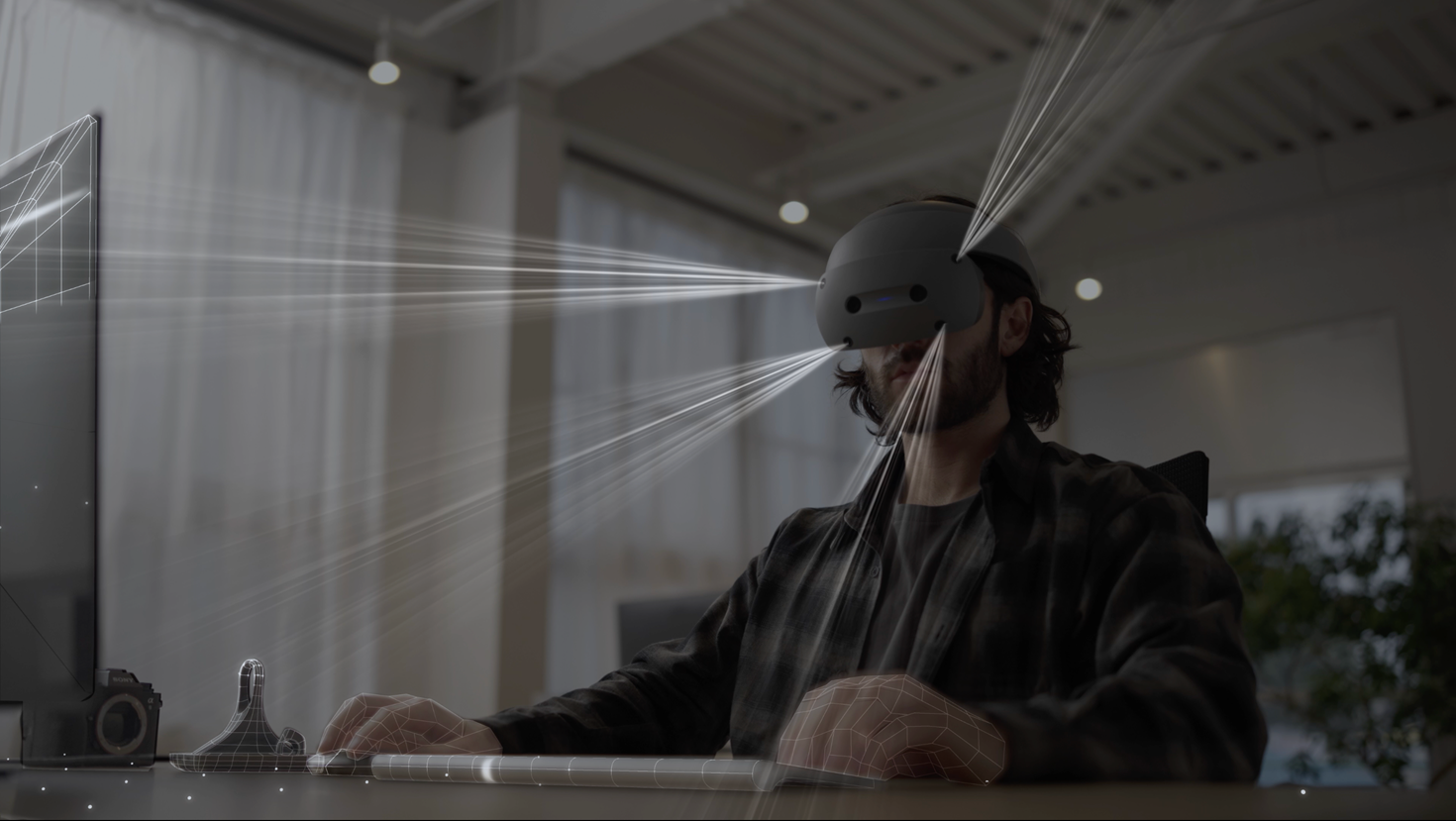
Collaborative tools in Immersive Engineering are enabling us to move into a new era of product design, all whilst facilitating a customer-centric approach during the design phase. The use of mixed reality headsets is paving the way for collaborative approaches and faster production timelines across a variety of industries.
To bring brilliant ideas together, teams need to align. To see a vision come to life, conceptual planning needs to be thoroughly undertaken. Creating a car that didn’t exist was part of the vision that led to the founding of Briggs Automotive Company (BAC) in 2011. The team have since created the Mono; a road-legal single seater supercar that emphasizes performance and excitement for the driver.
The single-seater supercar weighs in at 570kg, accelerates from 0 to 60 mph in 2.7 seconds and has been lauded by customers for its “driving purity”. Not a company to rest on its laurels, BAC is investigating ways to improve and enhance the next generation of the Mono using the Siemens Xcelerator portfolio.
The challenge of standardisation for different markets
The design team faced two significant challenges. The first is homologation; ensuring that the design of the vehicle meets specific standards and regulations across global markets. Furthermore, BAC places vehicle customization at the center of their go-to-market approach, giving customers the ability to add their own finishing touches to the Mono. Having the ability to do this before the product goes to manufacturing is key, as mistakes can be incredibly costly to rectify.
Immersive Engineering technology makes the process of designing varying positional requirements, headlights, and lines of sight for different markets far less complicated. The Siemens Xcelerator portfolio of tools enable this framework to be built into their CAD models. Designcenter X NX’s AI-powered CAD gives the team greater confidence when checking requirements or making minor adjustments, whilst also providing the tools to visualize design changes in real time.
“From the design side, if we are modifying something on a car, it is great for us all to be able to look at it and see it modified before our eyes, just from modifying the CAD data,” says Guy Harvey, senior designer. “By changing the shape or the design of the spokes on a wheel … we can see that transferred to a visual effigy of the car in front of us.”
More collaborative design with Siemens Immersive Engineering
Through real-time visualization of the CAD data, collaboration becomes seamless. Teams can work together to assess the pros and cons of a modification and make informed decisions on whether to implement that change before manufacturing the product.
What’s more, Immersive Engineering allows customers to experience their new car in mixed reality before it is physically created. They get a far richer understanding of what their vehicle will look and feel like, which enhances their overall purchase experience. “There is something about a customer being able to sit in their seat fitting jig and physically see around them, the personal bits that they wanted to bring to their car already implemented,” says Elliot Marshall, production manager. “Nothing is going to get the fire burning within them more than that.”
In addition, the customers using the Sony head mounted display enjoy incredible levels of fidelity, whilst seeing how different features and elements would look or function. In terms of quantitative results, the time from product review to implementing a sign-off and starting the production manufacturing process is shortened “exponentially”.
“The reason we chose Siemens’ Designcenter software to develop the next generation of Mono is because it’s the best,” says Ian Briggs, co-founder and design director at BAC. “It gives us the tools we need to take our vision to the next level.”
To learn more about how Siemens Immersive Engineering could turn your product vision into a reality, fill in your details on this page.
