
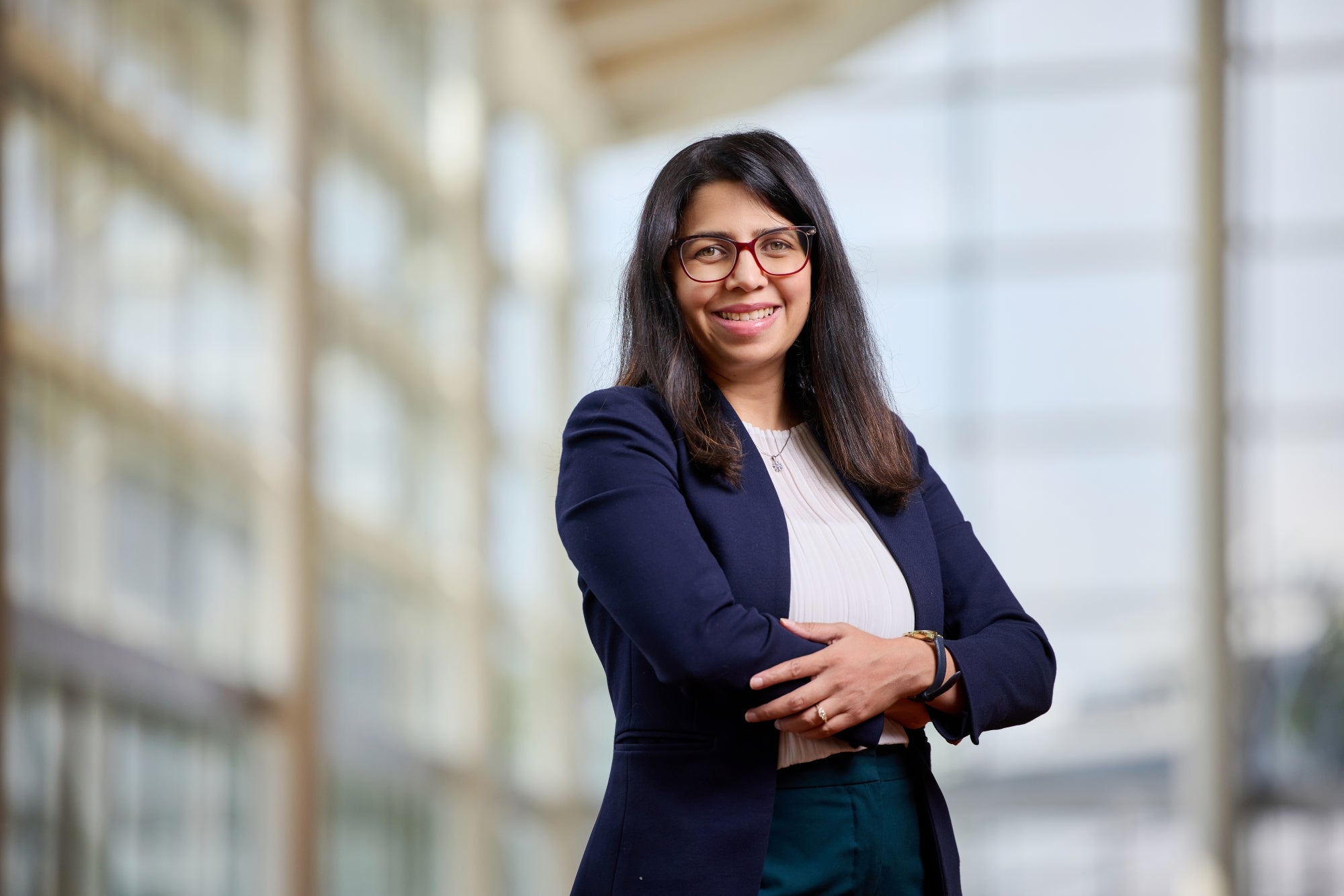
Manasi Vartak’s path to becoming chief AI architect at US data platform Cloudera came by way of a successful exit. The Silicon Valley based MIT alum sold her company, Verta, to Cloudera in 2024.
At Verta, Vartak took MIT-born machine learning infrastructure and scaled it into a multi-million-dollar business, winning Fortune 500 customers across financial services and capital markets.
Go deeper with GlobalData


Access deeper industry intelligence
Experience unmatched clarity with a single platform that combines unique data, AI, and human expertise.
Vartak’s vision for Verta was to make enterprise model deployment more efficient through monitoring, compliance and governance. The startup cut time-to-market for AI tools by more than 10x and enabled audit-ready model lifecycle management.
What differentiates Vartak from other entrepreneurs in the AI space is her dedication to developing AI that serves everyone. This is something, she says, that informs her current role at Cloudera. And at a time when enterprise AI tools face more scrutiny over accuracy, trustworthiness, and bias, it would be easy enough to simply pay lip service to cognitive and gender diversity.
But Vartak’s own experience as a female entrepreneur and tech leader has led her to think really deeply about this question of gender representation in AI models.
“The fact is that you’re going to build products a lot of times that are used by regular people, and 50% of them are likely to be female, and so you might want to have that represented in the people building the product,” she says.
Diverse teams build better products
Vartak sees a direct connection between the team diversity she has maintained over her career with the quality and outcomes of those same projects. As an example, she describes an AI feature in a spreadsheet tool she was building that started hallucinating only Indian names in the autofill fields—demonstrating how non-diverse teams overlook biased behaviors.
“It was making up all Indian names when there are people from Hungary, people from the US, people from South America… That is a problem. You are making assumptions about what the data looks like, and then you’re extrapolating,” says Vartak.
What was missing in this particular scenario, Vartak characterises as “cognitive empathy”, something she considers critical when hiring. “One of the things that we are testing for in our interview process is cognitive empathy—can you empathise with the end user? And that’s what we’re optimising for, and that’s where having a diverse background helps a lot,” she explains.
That said, Vartak says Cloudera still hiring the best person for the job. It’s just that a lot of times the best people for the job come from diverse countries, genders, and cultures. “And that’s because the people we serve, as a global company, are in APAC, in South America, in Spain, and we serve men and women,” she adds.
Diversity of thought and gender in hiring is a goal but happens when companies choose AI over hiring humans? Vartak addresses the issue of AI job displacement with consideration. She comes down firmly on the side of the prevailing narrative of job augmentation rather than wholesale replacement, especially in the near-to-medium term where it will help developers spend less time on rote tasks such as testing.
“I think that it is very much augmentation right now, and it depends on the use case and the vertical. Coding, for example. There, we’re seeing big changes in how software gets developed, and I think over time we’re going to see where that lands,” says Vartak.
As AI agents lower the cost of building enterprise tools, Vartak notes that there will always be human problems to solve, such as understanding customers and their needs. “People can do more now with their time… Take coding, if people don’t need to spend as much writing test cases, they can actually focus on what to build. So, something that really resonates with me is the cost of building is going to zero… but do you deeply understand what problem you’re trying to solve? Do you understand your customer?”
Data hygiene remains key to building AI
Data quality and governance is still under human purview. AI is only as good as the data it’s built on—a mantra that has reached fever pitch in the AI age. Companies need data governance, lineage, and solid architecture, which is Cloudera’s core value proposition, according to Vartak. “What we’re seeing is the companies that have data governance, that have data lineage, a solid data architecture, go a lot faster with AI,” she adds.
And what of the human element in content generation? Vartak’s views on this align with her human centred view of technology development. She predicts that the “AI slop effect” and output homogenisation will hit a saturation point where everything sounds the same because it’s machine-generated. That’s the point at which she imagines individual human voices will become a differentiator. Her goal is to build enterprise AI tools for use cases where provenance, context, and human ownership of content still matter more than volume.
She muses about a potential backlash to “AI slop” as everything becomes automated. “I feel like there’s a pendulum, and I think in some ways it will swing back to where these individual voices are going to matter more. Otherwise, everything is going to sound like Claude or GPT wrote it.”