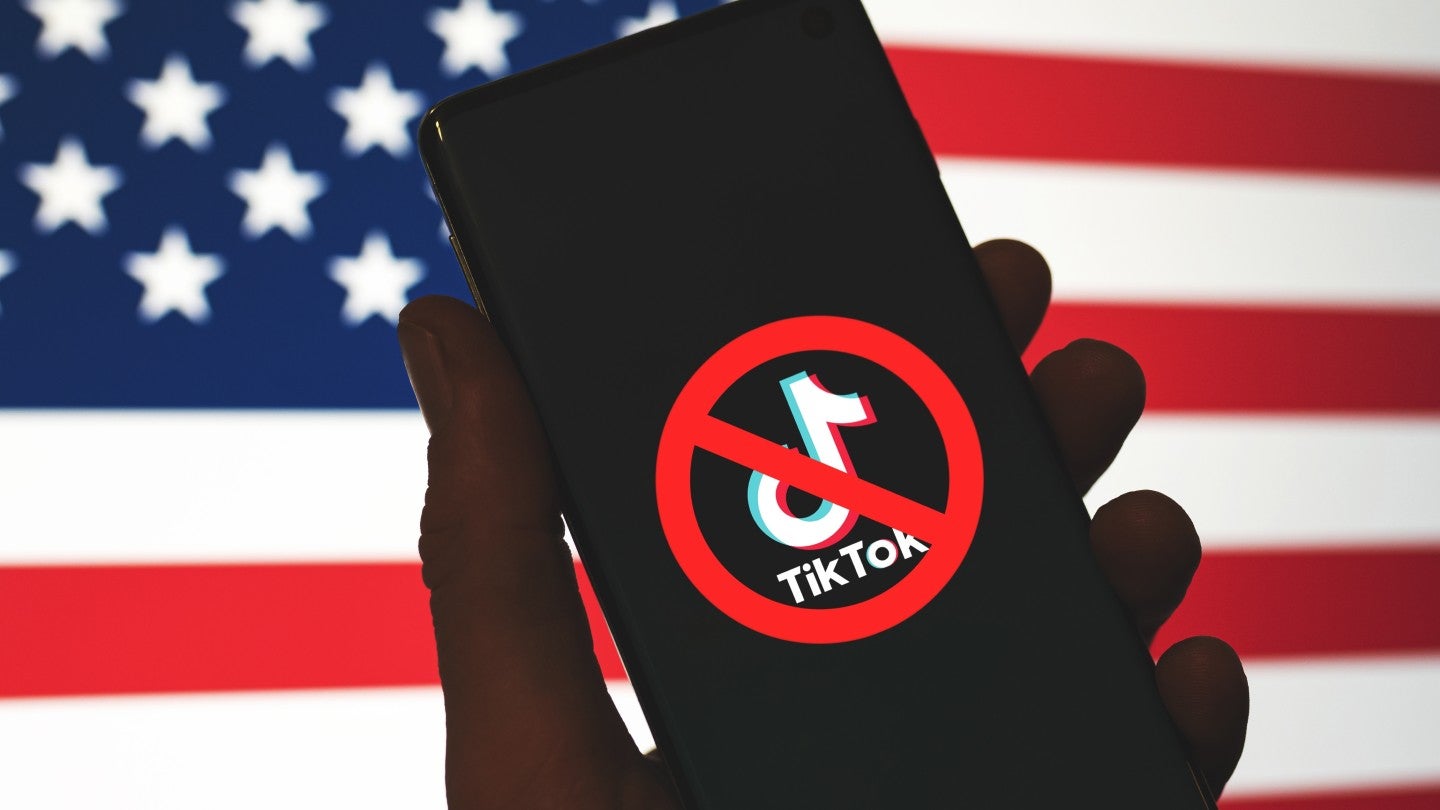
In April, the US signed into law the Protecting Americans from Foreign Adversary Controlled Applications Act. The act forces the sale of TikTok from its parent company ByteDance to a US company to avoid an outright ban.
With other states looking to ban TikTok and China’s ban on WhatsApp, a greater fragmentation of the internet on the basis of national security could be emerging.
Smarter leaders trust GlobalData


Access deeper industry intelligence
Experience unmatched clarity with a single platform that combines unique data, AI, and human expertise.
Laura Petrone, principal analyst at GlobalData, spoke to Verdict about the motivations behind the ban and how, despite it highlighting tensions between the US and China, a full ‘splinternet’ is unlikely.
What is the splinternet?
Petrone: GlobalData defines the splinternet as the fragmentation of the internet into separate spheres supporting competing visions of how technology standards and regulations should be implemented and geopolitical conflicts around internet architecture. These competing visions form so-called technospheres, each shaped by its own set of cultural, economic and political assumptions and with divergent approaches to governing the digital landscape.
Why is TikTok being banned in the US?
The main concern is that TikTok could threaten US national security while Chinese company ByteDance owns it. Indeed, the Chinese government has significant control over Chinese companies, including being able to force them to hand over any user data for security reasons, although there’s no evidence that data has been used in this way.
Why would the US banning TikTok accelerate the splinternet?
The ban is a sign of the intense US-China rivalry, and it shows that the decoupling between China and the US is in full swing. However, I don’t think it would necessarily accelerate the splinternet. States have created fractures around the internet for years, spurred by competition among countries to assert their authority. These have already led to a fragmentation of the current tech landscape, with complications for companies with global operations.
However, it is unlikely that a splintering of the internet into entirely separate and non-interoperable blocks will ever happen, as this would be too costly to implement and sustain. It would also create undesirable barriers for companies with global operations.
Are other apps at risk of being banned?
I think the case of TikTok is unique, and I don’t think there are signs that other apps are at risk of being banned by the US.
What would be the impacts of a further entrenched splinternet?
Fragmentation of the internet, and the splinternet in a more drastic scenario, risks hindering international governance and has costs for all countries. The increased mistrust and lack of cooperation on internet governance risks leaving severe regulatory gaps and increasing security threats at a time when mechanisms to ensure data security, tackle cybercrime and develop common ethical standards are especially needed. It also has economic and social costs as digital fences across jurisdictions risk creating barriers for companies with global operations.