IBM has advanced to Stage C of the Quantum Benchmarking Initiative (QBI) overseen by the US Defense Advanced Research Projects Agency (DARPA).
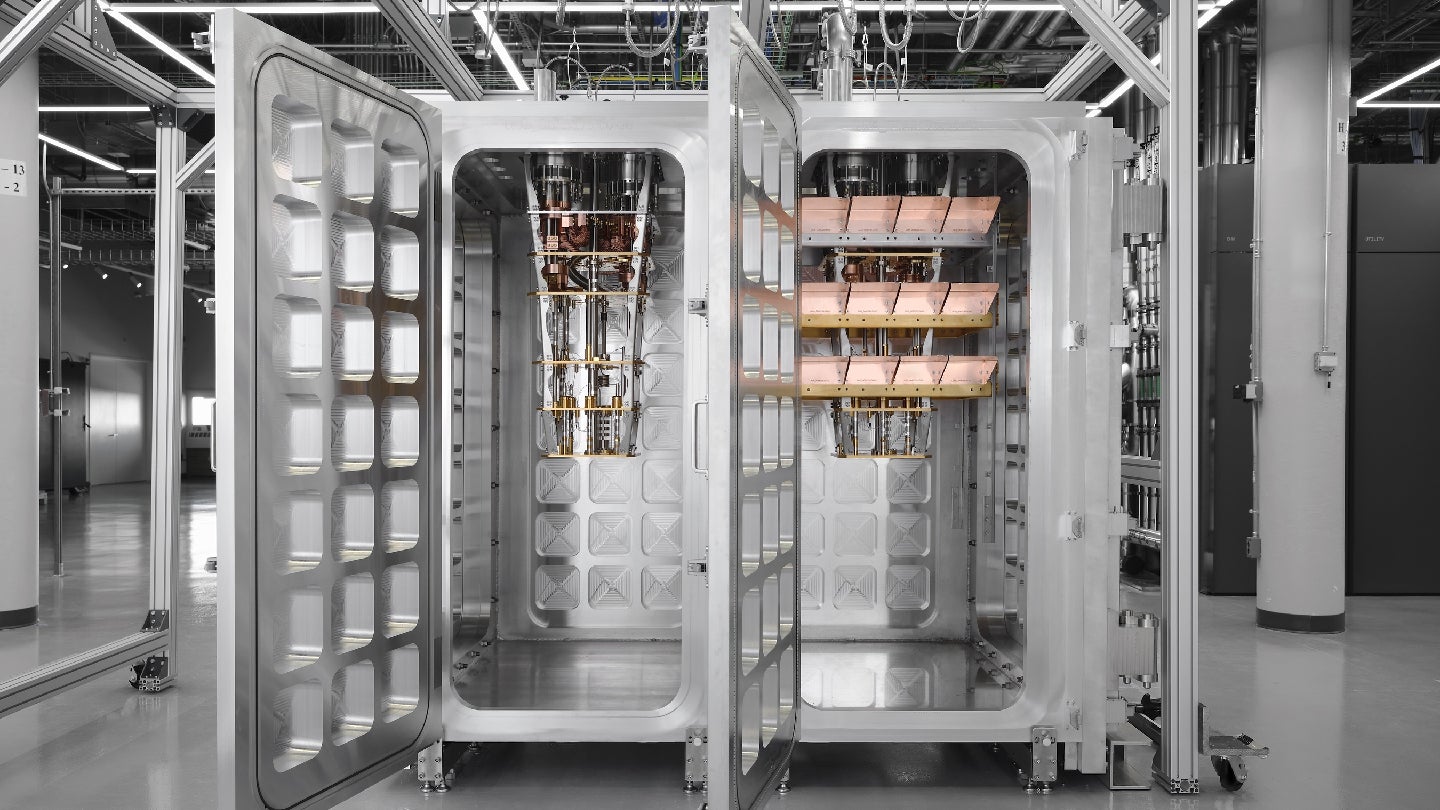
The company announced its selection for the programme’s third phase. In this stage, independent experts will conduct extensive testing and measurement of quantum hardware, systems engineering, technology, and architectures to assess whether a company can build a fault-tolerant quantum computer.
Go deeper with GlobalData


Access deeper industry intelligence
Experience unmatched clarity with a single platform that combines unique data, AI, and human expertise.
DARPA launched QBI in 2024 with the aim of determining if an industrially useful fault-tolerant quantum computer could be developed by 2033.
For the initiative, a fault-tolerant quantum computer is defined as a system whose computational value exceeds its cost.
The three-stage process requires participants to pass through increasingly rigorous assessments focused on technical feasibility, research and development (R&D) strategies, and now, in Stage C, live hardware examination.
IBM has already completed the first two stages of QBI.
Initially, participants submitted technical concepts for a cost-effective, fault-tolerant quantum computer with a plausible near-term development trajectory.
Companies advancing to Stage B provided detailed R&D plans, including risk analysis and mitigation strategies.
Stage C involves evaluation by an independent verification and validation team from DARPA, which will test the performance of the companies’ actual hardware.
IBM Fellow and IBM Research director Jay Gambetta said: “Advancing to the third stage of DARPA’s Quantum Benchmarking Initiative validates the strength of IBM’s path to building a fault-tolerant quantum computer.
“IBM expects to deliver the first fault-tolerant system in 2029, and we plan to scale the value of quantum computing well beyond that timeline.
“We look forward to working with DARPA’s team of experts as they advance their review of approaches to fault-tolerant quantum computing into the testing phase.”
IBM reported that its quantum systems are currently used by a network of over 340 organisations in sectors including financial services, materials science, healthcare, academia, and government.
The company also referenced its last year announcement of IBM Quantum Starling, a planned fault-tolerant quantum computer that will integrate innovations in error correction, systems engineering, and processor design.
In addition to its participation in QBI, IBM continues to collaborate with partners from government, industry, and academia to support R&D in quantum computing technologies.
Last month, Anderon, a subsidiary of IBM, completed a $1bn award agreement with the US Department of Commerce (DoC) as part of the CHIPS and Science Act.