
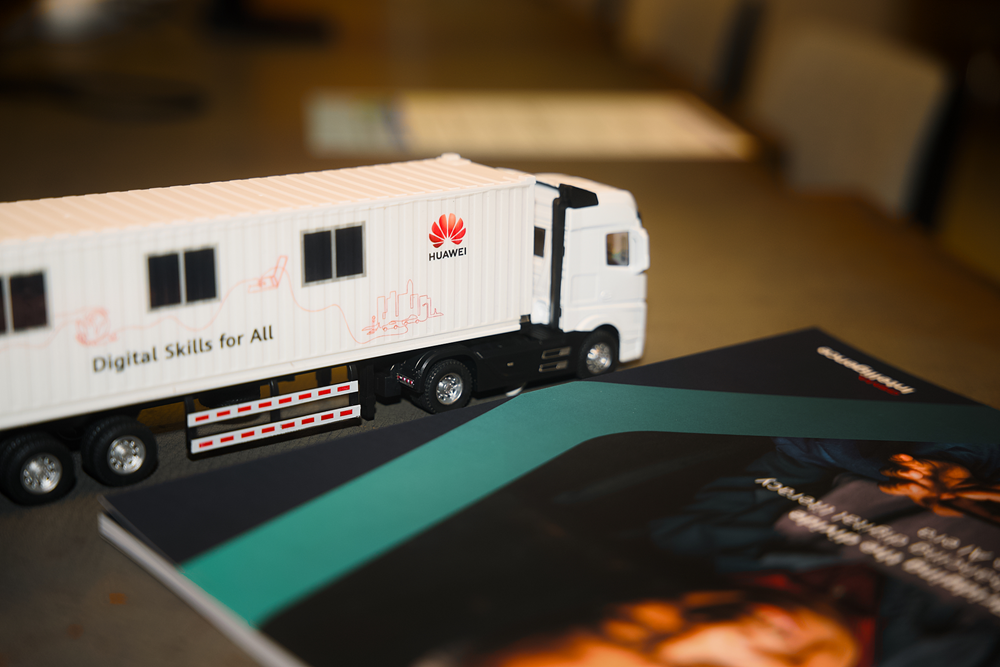
During UNESCO’s recent Mobile Learning Week in Paris, a roundtable was convened to explore how AI is transforming education and widening or narrowing existing digital divides. Major ICT provider Huawei partnered with GSMA Intelligence to commission new research on the global impact of AI on digital literacy, particularly the large usage gap between those covered by mobile networks and those actually using online services.
The event brought together perspectives from industry, international policy and local civil society, including UNESCO STEM initiatives and Konexio’s work in France, while highlighting the expansion of Huawei’s flagship digital inclusion project Skills on Wheels DigiTruck mobile digital classroom to underserved communities across France, building on a programme that has already trained over 7,000 people in 58 French cities.
In this exclusive Q&A, Tim Hatt, Head of Research and Consulting at GSMA Intelligence, explains what this new digital capability gap means for policymakers, operators and communities, and how the latest mobile classrooms can help.
In simple terms, what does it mean to be ‘digitally literate’ in today’s AI era compared to five years ago?
Tim Hatt: Five years ago, digital literacy was largely about being able to use a device, navigate apps and access information online. Today, those foundational skills remain essential, but they are no longer enough. Digital literacy now also includes understanding online safety, evaluating information, protecting personal data and, increasingly, recognising AI-generated content, understanding the limitations of AI systems and using AI tools responsibly and effectively. In other words, digital literacy has evolved from basic access skills to a broader set of capabilities needed to navigate an increasingly AI-enabled world.

How does AI act as both a tool that lowers the barrier to digital access and a complex challenge that demands higher user skills?
TH: AI can lower barriers by making digital services easier to use. Voice assistants, multilingual interfaces and conversational tools can help people with limited literacy or digital confidence access information and services more easily. At the same time, AI raises the skills required for participation. Users increasingly need to assess whether AI-generated information is reliable, recognise misinformation and scams, understand automated decision-making and manage privacy risks. AI can therefore be both an enabler of inclusion and a source of new exclusion if capability development does not keep pace.
Initiatives like Huawei’s Skills on Wheels (DigiTrucks) emphasise physical, mobile classrooms. What makes this hybrid, community-centred model more effective than purely remote or digital self-learning platforms for underserved demographics?
TH: The evidence consistently shows that trust, confidence and human support are critical to digital adoption. Models such as DigiTruck bring devices, connectivity and training directly into communities while providing hands-on support from trusted local facilitators. Community-based learning also allows learners to progress at their own pace, ask questions and see immediate relevance to their everyday lives. For many first-time users, that combination of technology and trusted human support is far more effective than a purely online learning experience.
The report warns us about the ‘digital capability gap.’ How would you characterise this and what specific operational roles should telecom operators and technology vendors play to bridge this gap sustainably?
TH: This is the gap between having access to technology and having the skills, confidence and trust needed to use it effectively and safely. Operators have a unique role because of their direct customer relationships. They can integrate digital and AI literacy into onboarding, provide assisted support, promote trusted educational content and strengthen fraud protection. Technology providers have an equally important role in designing services that are inclusive by default through better language support, simpler interfaces, accessibility features and greater transparency.
In terms of AI literacy, what other developments do you think we will be seeing over the next 2 years, and how should operators approach these?
TH: Over the next two years we expect AI literacy to become more practical and embedded in everyday digital literacy programmes. There will be greater emphasis on helping people use AI tools for common tasks such as information search, job applications, small business activities and access to public services. At the same time, awareness of online safety, misinformation, fraud and data privacy will become increasingly important. Operators should take a layered approach, continuing to build foundational digital confidence while introducing practical AI awareness and skills, particularly through trusted, supported learning experiences rather than assuming users will develop those capabilities on their own.
Looking ahead, what is the ultimate message that GSMA Intelligence hope global industry leaders and policy makers take away from this report?
TH: The key message is that connectivity alone is no longer enough. As AI becomes embedded across economies and societies, digital literacy and AI literacy must develop in parallel. The opportunity is enormous – closing the mobile internet usage gap could contribute around $3.5 trillion in additional global GDP by 2030, with most of that benefit flowing to low and middle-income countries. But achieving that outcome requires coordinated action across governments, industry, educators and civil society. If we want AI to be inclusive, we must invest not only in networks and technology, but also in the human capabilities that allow people to participate confidently, safely and productively in the digital economy.
To read the full report ‘Bridging the divide: Enhancing digital literacy in the AI era’ click here.
