
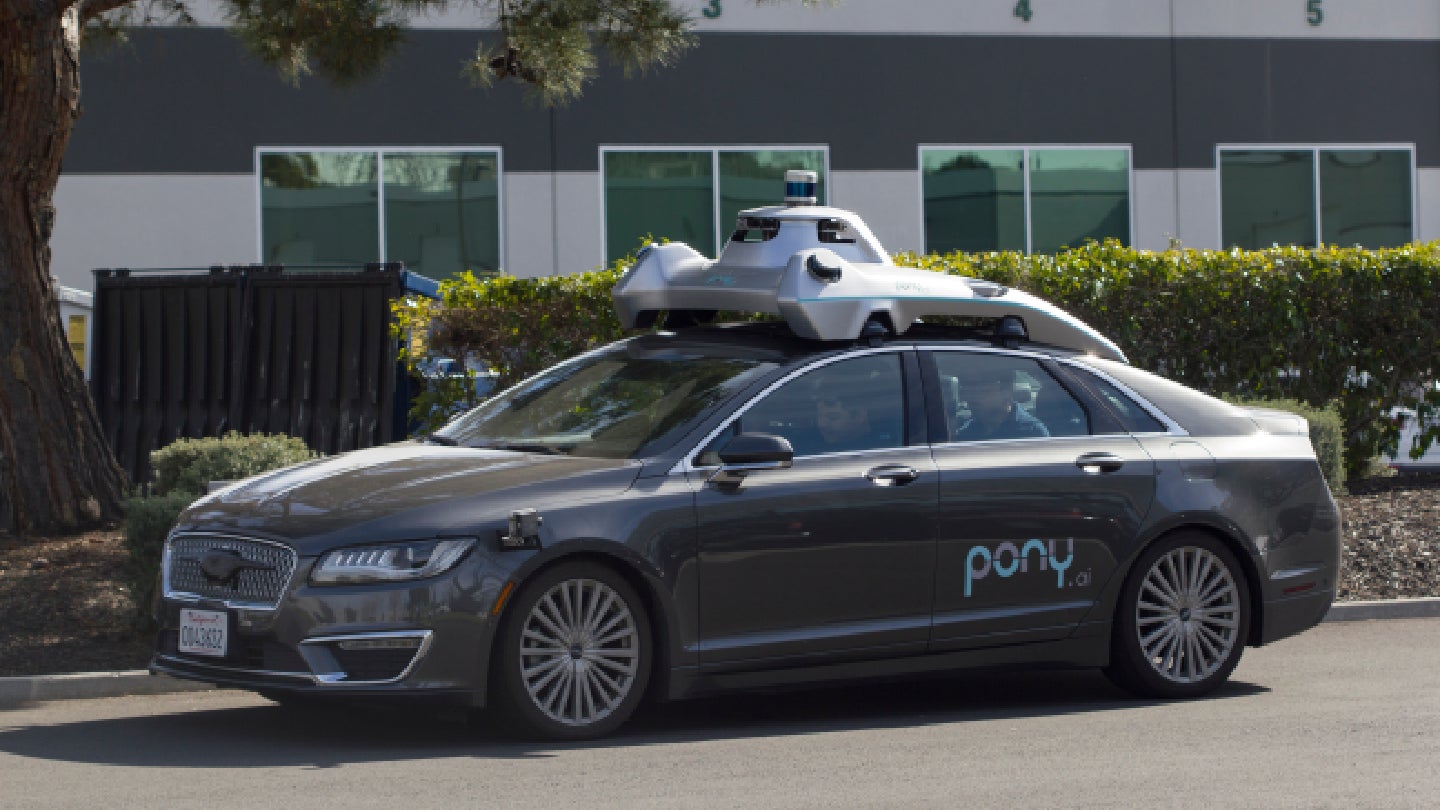
Pony.ai, a Chinese self-driving technology company, has introduced PonyWorld 2.0, a new version of its core training platform for autonomous driving.
According to the company, this development brings increased focus on self-improvement for its AI systems.
Go deeper with GlobalData


Access deeper industry intelligence
Experience unmatched clarity with a single platform that combines unique data, AI, and human expertise.
The upgrade is now in use across Pony.ai’s Level 4 driverless fleet and research and development activities, aiming to support wider commercial deployment and operations in domestic and international markets.
The upgraded platform introduces three principal features. These include the ability for self-diagnosis, targeted collection of data in areas where its performance is lacking, and prioritisation of training on challenging scenarios.
According to the company, as driverless technologies continue to mature, the industry’s focus is shifting from basic technical validation. The emphasis is now on increasing the pace and consistency of improvement for expanded fleet rollouts and sustained business operations.
Pony.ai has outlined plans to expand its fleet to over 3,000 vehicles in more than 20 cities worldwide by the end of the year.
Nearly half of these target cities are situated outside of China. This follows earlier validation of unit economics in two major Chinese metropolitan areas using its seventh-generation robotaxi fleet.
The company has indicated that this step marks the beginning of an accelerated phase of commercial growth in both domestic and overseas markets.
With operations expanding to a larger scale, the technical requirements for safety and performance have evolved.
Pony.ai founder and chief technology officer Tiancheng Lou said: “PonyWorld 2.0 is an important step toward a more self-improving approach to autonomous driving development.
“As AI systems become more capable, they can play a larger role not only in learning to drive, but also in guiding their own improvement — making L4 development more scalable over time.”
Pony.ai said that managing a fleet that is increasing from hundreds to thousands of driverless vehicles puts greater emphasis on the need for ongoing, non-regressive enhancement of operational standards.
PonyWorld 2.0 is intended to address this by increasing the system’s efficiency in updating its own knowledge base and learning from real-world feedback.
The system’s structured intention layer gives the AI a means to internally represent and review its reasoning behind decisions.
With this design, PonyWorld 2.0 can identify specific scenarios where outcomes did not meet intended objectives. It then issues data collection tasks for human teams to gather relevant real-world samples, which are subsequently used to refine the training model.
Pony.ai said that this approach marks a shift in the development of autonomy. Earlier stages of autonomous vehicle development depended on human engineers to design behavioural rules, annotate data, and determine the focus for subsequent training.
Through the new system, AI now assumes a larger role in identifying and addressing its own deficiencies, with human engineers overseeing a data-collection process guided by the AI’s findings.
Pony.ai maintains that this framework, combining high-precision modelling of real world environments, self-diagnosis and focused refinement, could have applications beyond autonomous driving. The company states that it may be relevant to other AI-driven physical systems that require safe and efficient real-world learning.
Last month, Pony.ai expanded its robotaxi ride-hailing service through integration with Tencent Mobility Service, aiming to increase accessibility of autonomous ride-hailing. This move continued Pony.ai’s strategic partnership with Tencent Cloud, which began in April 2025, and includes collaboration on cloud computing, mapping, and AI-related fields.