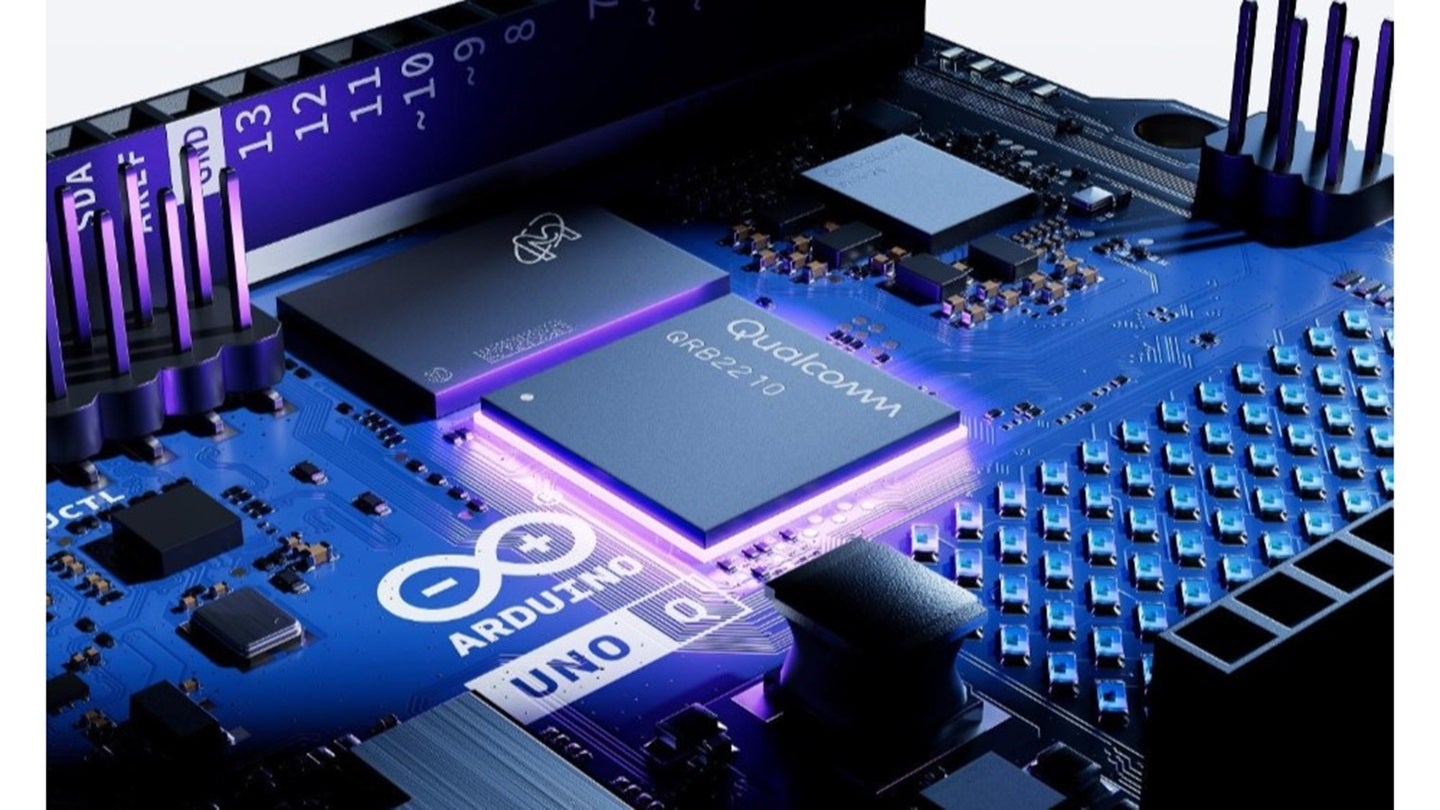
Qualcomm Technologies has agreed to acquire Arduino, an open-source hardware and software platform used across engineering, education, and the developer community.
The financial terms of the deal were not disclosed by the parties.
Go deeper with GlobalData


Access deeper industry intelligence
Experience unmatched clarity with a single platform that combines unique data, AI, and human expertise.
Qualcomm stated that this acquisition supports its intention to broaden access to its portfolio of edge computing and AI technologies, following earlier integrations of Edge Impulse and Foundries.io.
The board, tools, and community-driven mission of Arduino will remain operational under its own brand, according to both companies.
Arduino will continue providing support for a variety of microcontroller and microprocessor architectures from different semiconductor manufacturers.
With this move, Qualcomm aims to provide the Arduino community comprising more than 33 million active users, with access to broader resources. These include advanced processing and AI capabilities as well as industry partnerships.

US Tariffs are shifting - will you react or anticipate?
Don’t let policy changes catch you off guard. Stay proactive with real-time data and expert analysis.
By GlobalDataThe acquisition will see the introduction of the Arduino UNO Q, a single board computer with a dual-core architecture.
The device combines a Linux Debian-capable microprocessor and a real-time microcontroller, both powered by the Qualcomm Dragonwing QRB2210 processor.
UNO Q is intended for use cases such as vision and sound processing with applications in smart home infrastructure and industrial automation.
Arduino CEO Fabio Violante said: “Joining forces with Qualcomm Technologies allows us to supercharge our commitment to accessibility and innovation.
“The launch of UNO Q is just the beginning— we’re excited to empower our global community with powerful tools that make AI development intuitive, scalable, and open to everyone.”
In its initial release, the UNO Q will support the established Arduino IDE and ecosystem and will be compatible with Arduino App Lab, a newly introduced integrated development environment.
App Lab is designed to connect workflows across Real-time OS, Linux, Python, and AI projects, enabling developers to prototype and scale AI-driven solutions using an open-source platform.
The integration of App Lab with Edge Impulse allows users to build, adjust, and deploy AI models for functions such as object detection, anomaly detection, image classification, ambient sound analysis, and keyword recognition.
Qualcomm has indicated that after closing, users will have expanded opportunities to prototype and commercialise solutions utilising its technology stack.
Qualcomm automotive, industrial and embedded IoT group general manager Nakul Duggal said: “Arduino has built a vibrant global community of developers and creators.
“By combining their open-source ethos with Qualcomm Technologies’ portfolio of leading edge products and technologies, we’re helping enable millions of developers to create intelligent solutions faster and more efficiently—including a path towards global commercialisation by leveraging the scale of our ecosystem.”
The transaction is pending regulatory review and other standard closing requirements.
In June 2025, Qualcomm announced the acquisition of UK-based semiconductor company Alphawave Semi for an implied enterprise value of around $2.4bn.