Siemens and Nvidia have announced an expansion of their existing partnership focused on developing industrial and physical AI solutions for industrial applications.
The collaboration will see both companies combining resources to create what they call an industrial AI operating system, integrating AI into manufacturing and production workflows across a range of industries.
Go deeper with GlobalData


Access deeper industry intelligence
Experience unmatched clarity with a single platform that combines unique data, AI, and human expertise.
Siemens will contribute hundreds of specialists in industrial AI, along with its hardware and software expertise, while Nvidia will supply AI infrastructure, including simulation models, frameworks, and technical blueprints.
The initiative includes plans for Siemens to complete graphics processing unit (GPU) acceleration throughout its simulation portfolio, expanding compatibility with Nvidia’s CUDA-X libraries and AI physics models.
This is intended to allow customers to perform more complex simulations at greater speeds.
Both companies aim to further this development through generative simulations that leverage Nvidia’s PhysicsNeMo technology and open models, enabling autonomous digital twins capable of real-time engineering design and self-optimisation.
US Tariffs are shifting - will you react or anticipate?
Don’t let policy changes catch you off guard. Stay proactive with real-time data and expert analysis.
By GlobalDataA key aspect of the partnership involves the creation of fully AI-driven manufacturing sites worldwide.
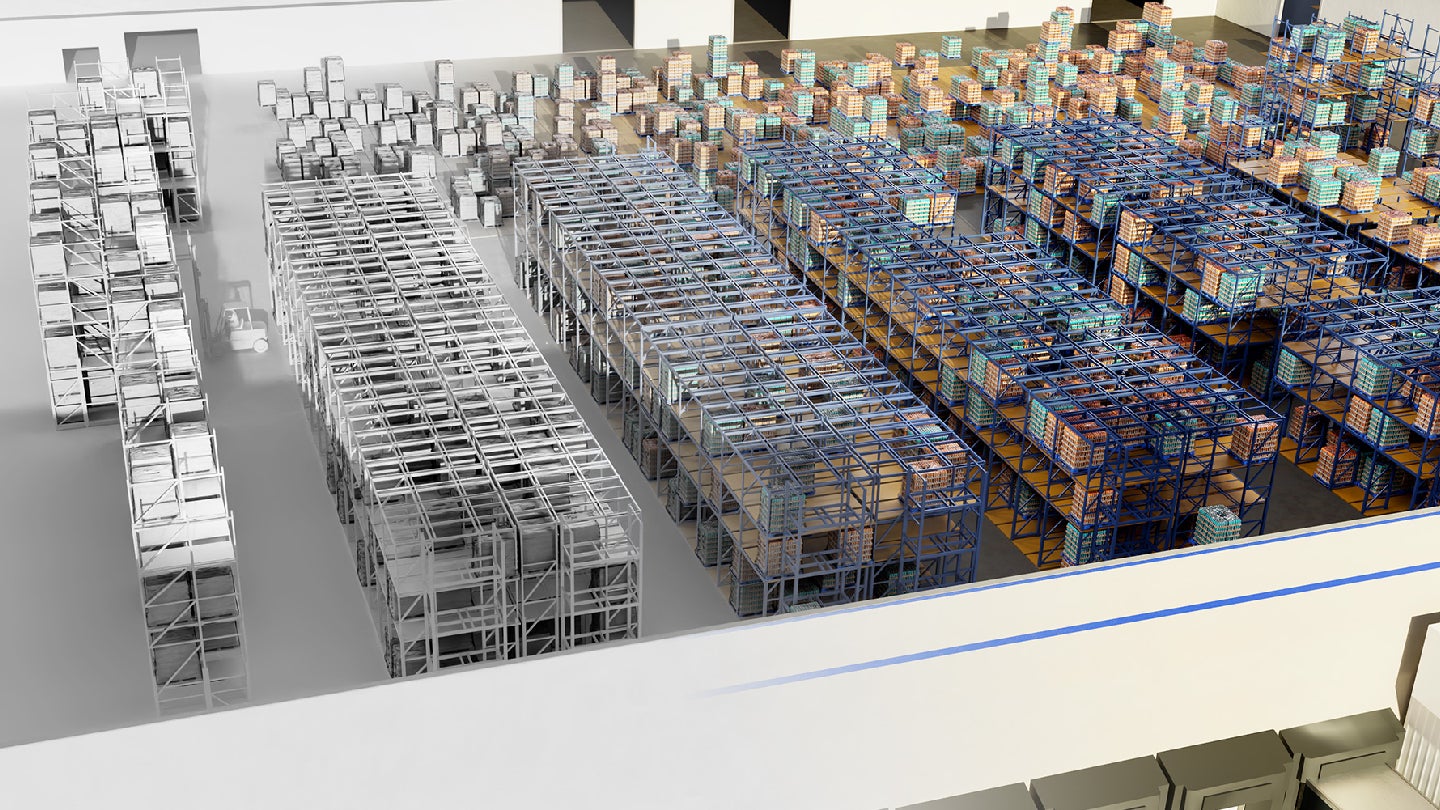
The Siemens Electronics Factory in Erlangen, Germany, has been identified as the first location to implement this approach in 2026.
With the “AI Brain”, the two companies intend to combine software-defined automation with Nvidia Omniverse libraries and infrastructure to enable continuous analysis and virtual testing of factory digital twins. This is expected to drive operational changes based on validated insights.
Siemens and Nvidia are also looking to extend these capabilities into semiconductor design by incorporating the latter’s CUDA-X libraries and PhysicsNeMo tools into Siemens’ electronic design automation (EDA) suite.
This integration targets significant efficiency improvements in verification, layout, and process optimisation workflows.
Siemens president and CEO Roland Busch said: “By combining Nvidia’s leadership in accelerated computing and AI platforms with Siemens’ leading hardware, software, industrial AI and data, we’re empowering customers to develop products faster with the most comprehensive digital twins, adapt production in real time and accelerate technologies from chips to AI factories.”
Additional features such as AI-assisted layout guidance, debugging support, and circuit optimisation are expected to increase engineering productivity while adhering to manufacturing requirements.
Joint development efforts will focus on a repeatable blueprint for next-generation AI factories that address high-density computing demands, power management, cooling requirements, and automated operations from planning through deployment.
This blueprint will combine Siemens’ strengths in electrification and automation with Nvidia’s platform roadmap and simulation capabilities.
Nvidia founder and CEO Jensen Huang said: “Our partnership with Siemens fuses the world’s leading industrial software with Nvidia’s full-stack AI platform to close the gap between ideas and reality — empowering industries to simulate complex systems in software, then seamlessly automate and operate them in the physical world.”
Both companies intend to implement these technologies within their own operations before wider industry rollout.
Existing customers evaluating the new capabilities include Foxconn, KION Group, HD Hyundai, and PepsiCo.