
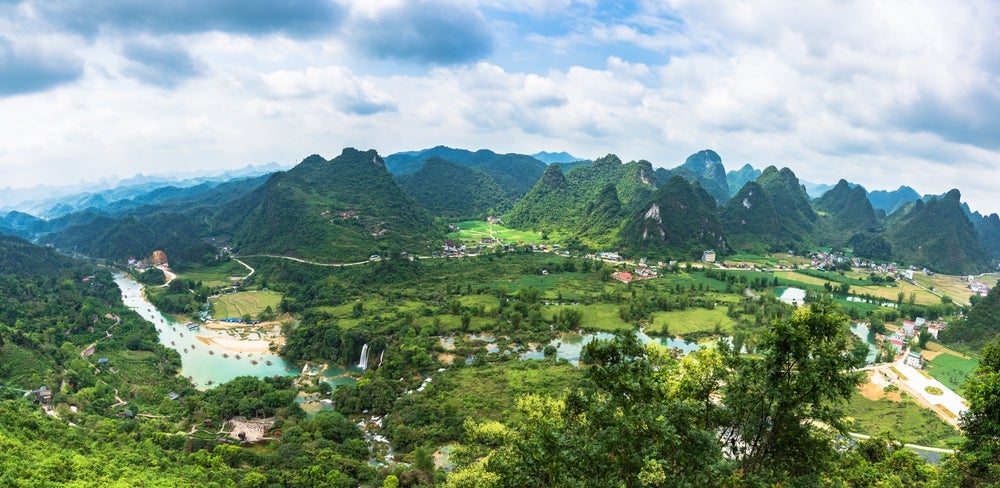
Characterised by rugged mountains and deep valleys, the karst landscapes of Chongzuo, a prefecture-level city in southwest Guangxi, China, pose significant obstacles to 5G network buildout. These remote terrains make it difficult to establish essential infrastructure, such as base stations, crucial for achieving comprehensive coverage. In addition, the high costs of deploying and maintaining this infrastructure in sparsely populated areas, can be prohibitive, particularly where access to reliable power is limited.
To address these challenges, Huawei and China Mobile have come together to implement a suite of innovative solutions tailored to the unique needs of the area, including the deployment of renewable energy base stations, creating an information superhighway of advanced 5G networks.
This superhighway has already significantly improved digital connectivity in Southern China’s rural communities, ensuring universal coverage and providing long-term network support to help businesses effectively utilise the technology and open the region to tourism. Today, almost every community in Chongzuo is connected, with 4G covering 99% of all small traditional village clusters, and 5G already reaching 94%, comparable to those in major cities.
Community benefits from 5G
The introduction of 5G technology has already brought about transformative changes. In Buhua Village, the deployment of 5G has led to substantial increases in local economic activities, with the village developing a digital e-commerce ecosystem. Local products – like the artisanal Buhua brown sugar – can now reach broader markets through platforms such as JD.com and Douyin. These products are now being sold in Beijing, Shanghai, and Guangzhou, and even exported overseas, including to Japan and South Korea.
The digital transformation has significantly increased the village’s collective economic income and improved the livelihoods of its residents, with the village’s annual collective income now exceeding CNY500,000, with per capita earnings rising by CNY18,000.
Further upstream, a CNY100 million safety monitoring and IT system for irrigation is being rolled out along the river. Built on the Bianjiang Zhizhou open AI platform and connected via the region’s upgraded networks, it will span 13 towns across four districts, providing integrated, real-time monitoring of water quality and other ecological indicators while also issuing intelligent early warnings. Once fully operational, it will help safeguard irrigation for 60,000 hectares of farmland, blending precision agriculture with environmental protection.
How do conservation projects benefit from 5G?
5G technology is also playing a crucial role in environmental conservation efforts. In the Chongzuo White-headed Langur National Nature Reserve, Huawei’s AI-powered systems have been instrumental in monitoring and protecting the critically endangered white-headed langur monkey. One of the world’s rarest primates, only around 1,400 white-headed langurs remain in the wild, so protecting their fragile habitat is critical.
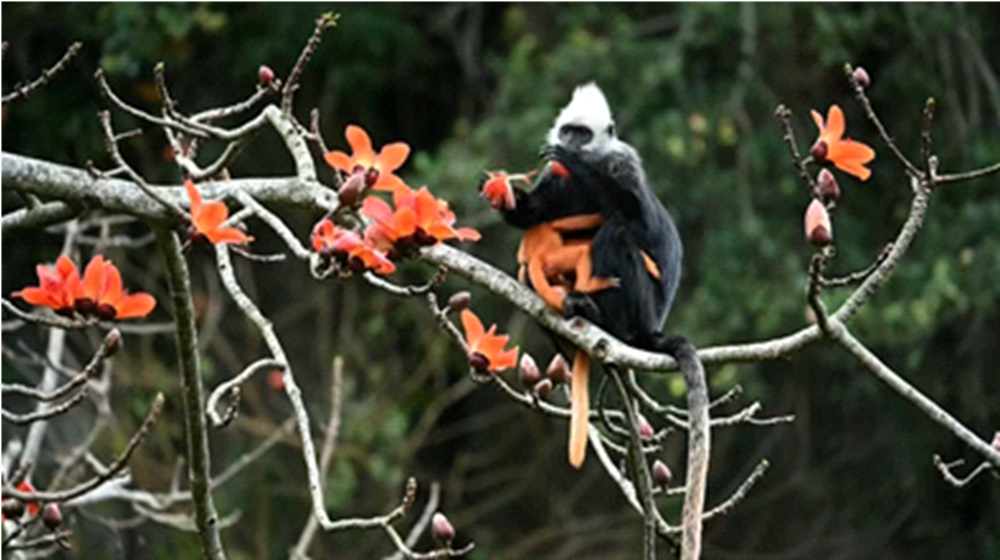
AI and cloud technologies are used to help monitor and protect the endangered species, using real-time data collection and data analysis to enable more precise and efficient management of conservation areas. This also translates into direct benefits for the local tourism industry.
In addition, the technologies employed in conservation projects in China can be applied worldwide. For example, through their Tech4Naturei collaboration projects,
hundreds of thousands of video and sound recordings from camera traps, sensors, and remote devices, can be analysed by Huawei AI and cloud computing to track wildlife and ecosystem health at scale – from African savannas, South American rainforests and even sensitive areas such as coral reefs.
Powered by 5G connectivity, these technologies help monitor vast and remote areas, involve local communities, and coordinate conservation efforts more effectively. They enable wildlife tracking, protect fragile habitats, and allow rangers to respond quickly to threats on land or at sea, strengthening biodiversity protection and long‑term environmental resilience.
How does 5G boost tourism?
When it comes to tourism, the popular scenic spot of the Heishui River features activities such as rafting, boat tours, paddleboarding, and hot air balloon rides. China Mobile deployed an intelligent ticketing platform at the visitor area, covering ticket purchases, access control, and accommodation bookings, and was able to cut average ticket-buying time from about 20 minutes to just three, with online tickets now accounting for 30% of sales and increasing homestay booking rates by 30%.
Digital platforms are also helping to showcase local cultural heritage. Thanks to superfast connectivity, villagers can live‑stream traditional arts such as handmade sugar production to audiences around the world, promoting tourism and raising the profile of the area.
As 5G technology advances, the real opportunity lies in using it to close the digital divide so that even the most remote villages can share in the global digital economy. Tian Yongsheng, Deputy General Manager of Huawei Guangxi says: “We look forward to seeing technology overcome geographical limitations and help more remote villages leapfrog into the 5G and AI era.”
[1] https://www.huawei.com/en/news/2023/5/protecting-jaguars-tech4nature
