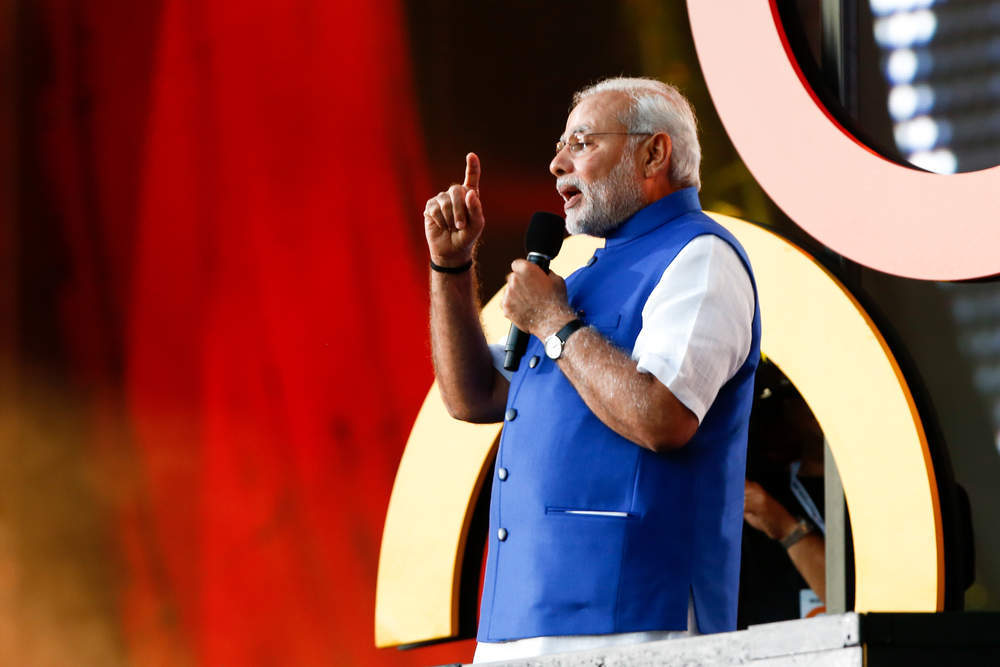
In his fourth Independence Day address, India’s president Narendra Modi promised a “new India” by 2022, part of his push to win the upcoming general election expected in 2019.
He appealed to the country’s youth, inviting them to “take this opportunity to shape the future of the nation and participate in India’s development”.
Go deeper with GlobalData


Access deeper industry intelligence
Experience unmatched clarity with a single platform that combines unique data, AI, and human expertise.
Modi said his government would continue to fight against corruption while leading the country towards economic prosperity, especially in the agricultural sector. He said:
By 2022 the poor shall have concrete houses, the farmer shall double his income, youths and women will get ample opportunities, an India free of casteism, terrorism, corruption. We will continue our fight against black money, corruption and use technology to bring in more transparency.
Last month, India introduced its biggest tax reform in 70 years — the Goods and Services Tax (GST). It replaced a myriad of the country’s existing federal and state taxes.
Modi applauded the GST as the start of many more policies championing economic growth.
The speedy, timebound rollout of GST is an example of what we can achieve. The government looks to deliver what it promises. Without reducing speed. We are taking India to new track.
He discussed the violence in Kashmir, calling for an end to the violence in the region and outlawing the possibility of “being soft on terrorism or terrorists” more generally.
Bullets or abuses won’t solve Kashmir’s problem… change can be brought only by embracing Kashmiris.
Modi’s speech lasted for 56 minutes, his shortest Independence Day address since taking office in 2014.