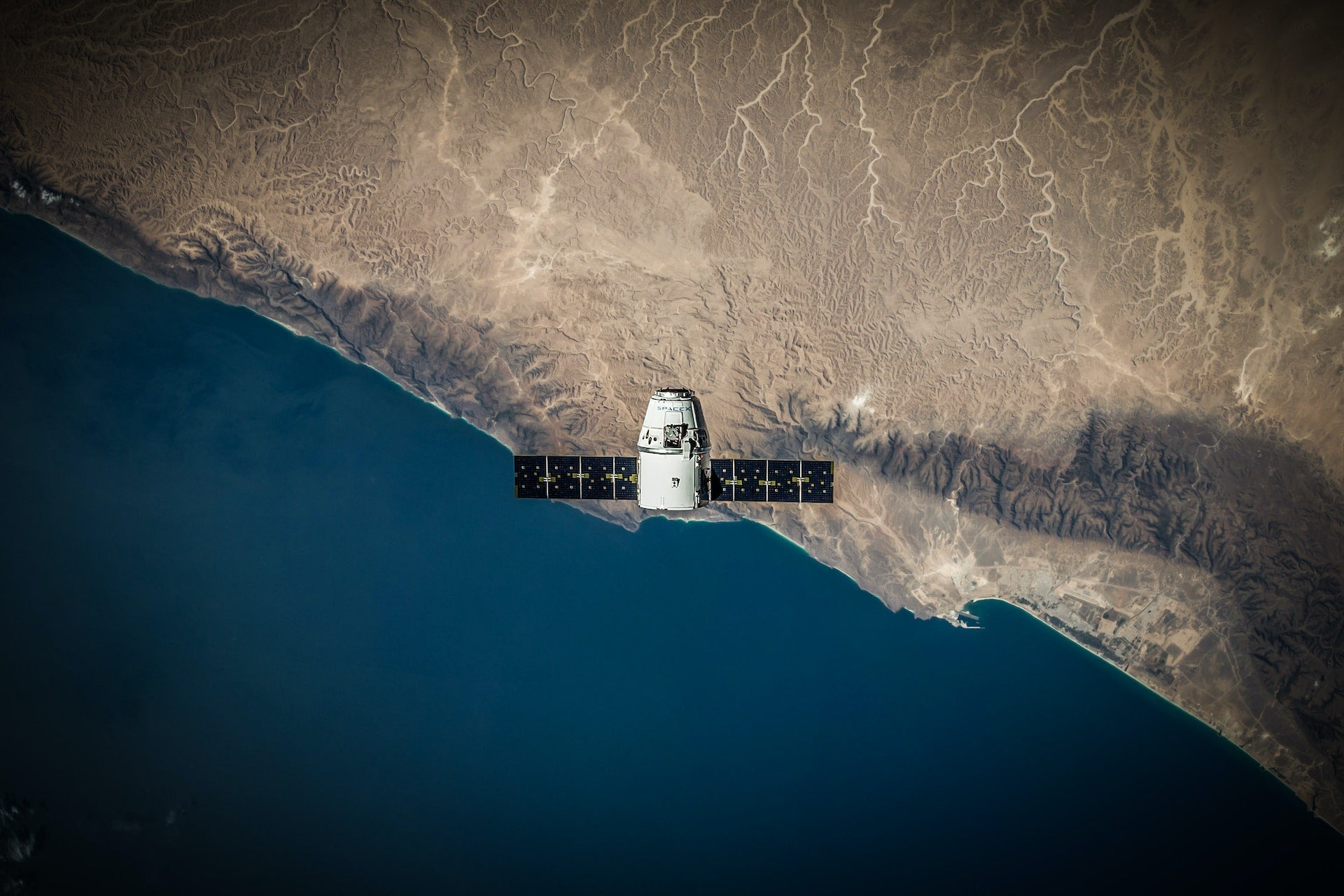
China is planning to build a satellite constellation to provide communications, navigation and remote-sensing capabilities for exploration of deep space, reported Xinhua.
According to Wu Yanhua, who is China’s chief designer for a major deep space exploration project, the relay satellites, called Queqiao, or Magpie Bridge, will be built in three phases, with the pilot to be built by 2030.
Go deeper with GlobalData


Access deeper industry intelligence
Experience unmatched clarity with a single platform that combines unique data, AI, and human expertise.
The pilot is expected to support China’s lunar exploration mission and the construction of the International Lunar Research Station (ILRS).
By around 2040, a basic satellite network will be built to provide local navigation.
It is also expected to offer support for crewed missions to the moon and enable deep space exploration to planets like Mars and Venus, Wu said speaking at the First International Deep Space Exploration Conference.
According to Wu, a bigger version of the satellite constellation is anticipated to be constructed around 2050.
It will offer services for studying giant planets, besides Mars and Venus, as well as the boundary of our solar system.
Construction of the constellation will begin after the launch of a satellite, which will relay communication between the far side of the moon and Earth, in 2024.
The satellite is intended to support China’s unmanned lunar missions in the next ten years.
Around the same time, China plans to launch its Chang’e 6 mission, which will be tasked with collecting samples from the moon’s far side.
Beijing also has Chang’e 7 and Chang’e 8 missions lined up by around 2028, to help further explore the moon and aims to land humans there by 2030.