
The history of theatre dates back more than 2,500 years.
Since ancient Athens, people have been performing and storytelling. Theatre has evolved over the centuries, with costumes, auditoriums, and technology changing how performers act. In recent years, technology has been augmenting theatre. Where it was once a space where audiences would suspend their disbelief to watch performers within the constraints of a box-like stage, theatre is now dominated by the use of cameras and projected video.
The camera as an inquirer
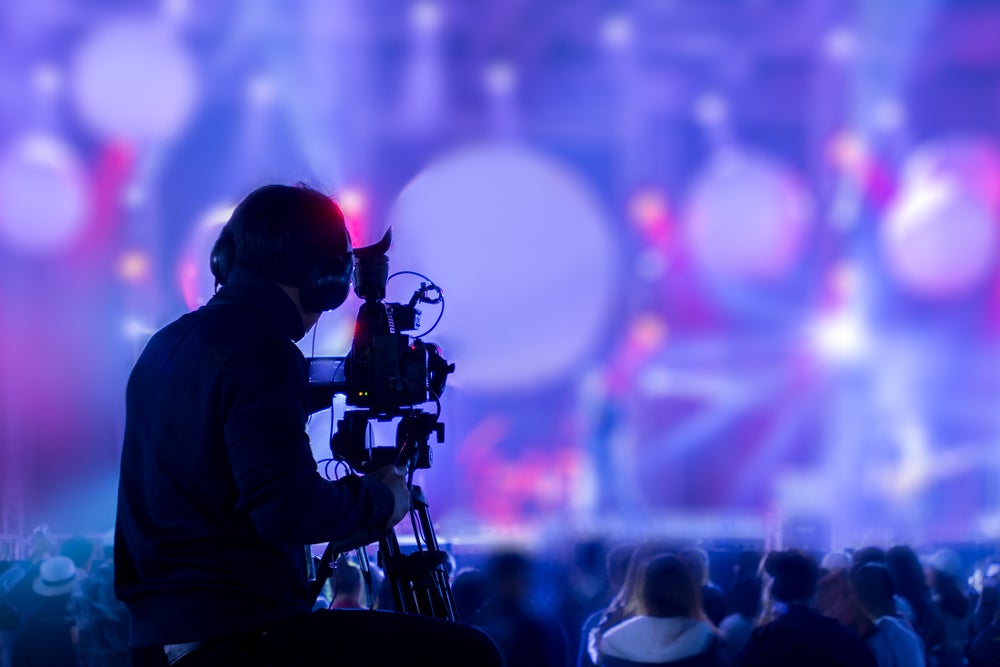
Theatre heavyweight directors like Ivo van Hove and Jamie Lloyd have been incorporating live video feeds into their work in recent years. Camera operators have been part of the company of these two directors in works like Network and Sunset Boulevard. Both works are adaptations of classic films, making the use of cameras an obvious next step.
In Network, Ivo van Hove used cameras to film live news pieces projected behind his performers and took one scene outside onto the South Bank outside of the National Theatre. Jamie Lloyd has used cameras to transport the audience into the film noir world of Sunset Boulevard and down the street as Tom Francis sings the titular song.
In these two works, cameras are used to tell additional aspects of the wider story, bringing audiences closer to performers than theatre has previously known. Close-ups of actors that aren’t usually possible can be seen from the back of the house. The video can investigate performers, allowing for less traditional blocking. No longer do actors have to always face the audience; they can face away from them and still tell a story.
The industry is embracing technology
Jamie Lloyd and Ivo van Hove are far from the only directors infusing cameras into their works. Australian director Kip Williams bought his one-woman adaptation of The Picture of Dorian Gray from Sydney to London and New York in the last year. The London and New York adaptation starred Succession actor Sarah Snook as 26 different characters in the Dorian Gray tale.
A handful of Snook’s work had been prerecorded, with Snook talking to herself on video projection at certain points. The majority of the performance, however, was Snook acting back and forth with a team of camera crews. The use of cameras, projections, and social media filters served the Dorian Gray story, enabling the artifice and the changes associated with the decline of the character.
In a 2019 interview with Forbes, the former head of digital development for the National Theatre, Toby Coffey, said that there is a “whole new wave of technologies that bring with them the potential for new genres of theatre and storytelling”. This is evident in the Royal Shakespeare Company’s 2016 production of The Tempest, where Ariel was played by actor Mark Quartley and rendered as a digital avatar in real time. Sarah Ellis, the Company’s Director of Creative Innovation, said to Forbes in 2019 that “culture develops as technology advances,” indicating the instinct for art and storytelling to break from tradition and follow technology.
Removing the disbelief of theatre
The growing use of cameras, however, is beginning to feel like a one-trick pony and a gimmick to some audience members. Traditionally, theatre is about the suspension of disbelief, watching a story unfold in front of your eyes with the costumes and set that can fit within the stage. Now with cameras, actors and stories can enter the street, removing the intimacy between performers and the audience.
Jamie Lloyd’s recent adaptation of Evita, starring Rachel Zegler at the London Palladium, has seen the musical’s famous “Don’t Cry for Me Argentina” performed on the balcony outside of the Palladium into the street to members of the public each night. Complaints from audience members about the most famous song being performed to the public for free have hit social media. However, those complainers have missed the nuance of this decision, taking Eva Peron’s championship of the poor in Argentina out to the public.
Acting is also changing. Theatre and film traditionally were different mediums to act in. Theatre required projection and grandeur, where film often works closer in smaller moments with nuance. Bringing cameras onto the stage is blurring the lines between a theatrical performer and a film performer.
The use of technology in theatre is inevitable. As technology develops and art with it, the integration of cameras into theatre has brought innovative moments to audiences. However, some audiences are beginning to experience an over-saturation in the use of live-video projection, where the use of cameras can feel like a gimmick rather than serving the storytelling. No longer is theatre about suspension of disbelief, but about ambitious and realistic productions.