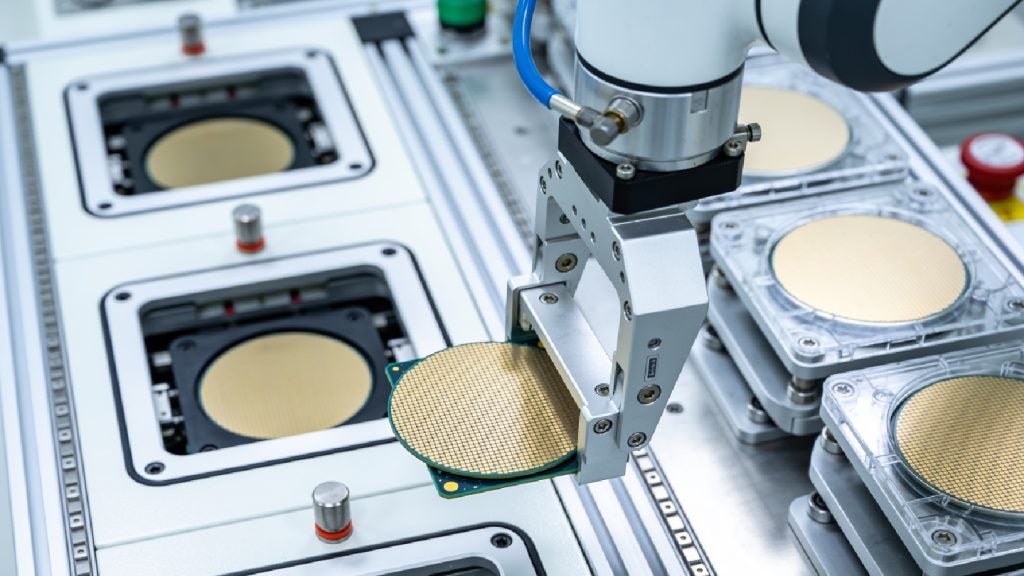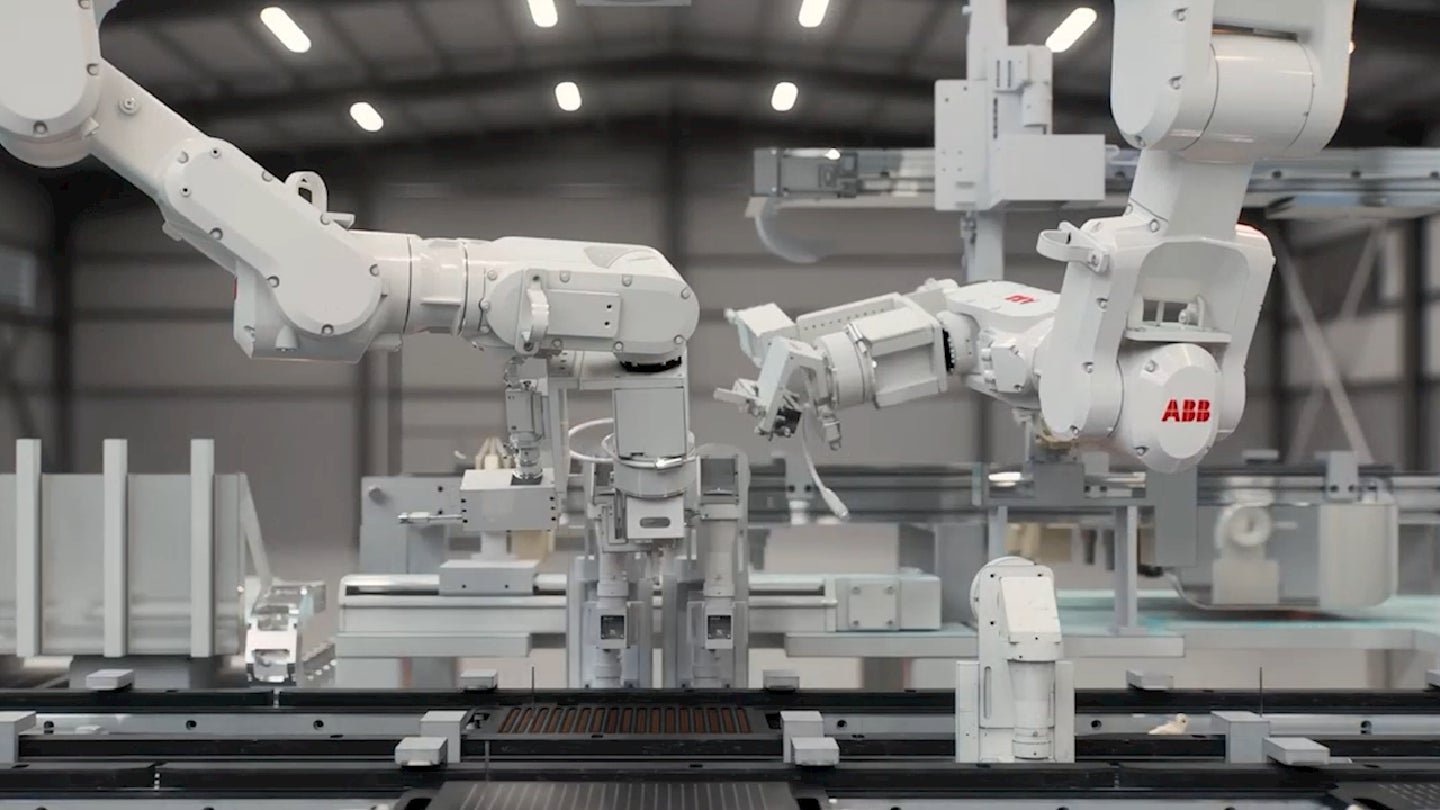
ABB Robotics said that it has begun integrating NVIDIA Omniverse libraries into its RobotStudio software, aiming to support manufacturers in deploying physical AI across real-world robotics applications.
This collaboration between ABB Robotics and Nvidia intends to address the long-standing challenge known as the ‘sim-to-real’ gap, which refers to the difference between digital simulations and actual performance in manufacturing environments.
Go deeper with GlobalData


Access deeper industry intelligence
Experience unmatched clarity with a single platform that combines unique data, AI, and human expertise.
RobotStudio HyperReality, developed from this integration, allows developers to train robots virtually using synthetic data and then apply these models directly to physical production processes.
The system incorporates real-world data feedback to progressively refine its accuracy, enabling consistent training and deployment of ABB robots globally.
According to ABB, this technology aims to allow manufacturers in various sectors to design and optimise production lines digitally before implementation.
ABB claims that the RobotStudio HyperReality system can deliver up to 99% accuracy between simulation and real-world results when combined with the company’s virtual controller and Absolute Accuracy technology. This capability is designed to reduce positioning errors and meet the demands of high-precision industrial applications.
ABB Robotics president Marc Segura said: “Today, using NVIDIA accelerated computing and simulation technologies, we have removed the last barriers to making industrial and physical AI a reality at a global scale by closing the sim-to-real gap.”
According to ABB, manufacturers using this technology may see reductions in setup and commissioning time by as much as 80% while cutting costs by up to 40% through decreased reliance on physical prototypes.
In addition, companies producing complex products like consumer electronics may accelerate their time-to-market by up to half.
The company is also evaluating the integration of the NVIDIA Jetson edge computing platform within its Omnicore controller, seeking real-time AI inference capabilities at the edge for its robotics portfolio.
NVIDIA robotics and edge AI vice president Deepu Talla said: “Integrating NVIDIA Omniverse libraries into RobotStudio brings advanced simulation and accelerated computing to ABB Robotics’ unique virtual controller technology, accelerating how manufacturers of all sizes bring complex products to market.”
This development follows previous collaborations between ABB Robotics and Nvidia, including earlier uses of Jetson technology in autonomous mobile robots and data centre projects.
ABB revealed that certain of its clients are already piloting RobotStudio HyperReality ahead of a wider rollout projected for late 2026, targeting over 60,000 RobotStudio users worldwide.
Foxconn is conducting an initial use case, applying virtual training techniques for consumer electronics assembly with the objective of improving precision in handling diverse components while reducing setup times and engineering effort.
In the US, WORKR, a robotics company based in California, plans to demonstrate AI-enabled robotic manufacturing systems using this technology at next week’s NVIDIA GTC event in San Jose.
These systems are being built on ABB’s robotics platforms and trained via synthetic data generated with NVIDIA Omniverse libraries, allowing deployment without specialised programming skills. WORKR aims to assist small and medium-sized manufacturers in addressing workforce shortages through these solutions.
ABB expects that full commercial availability of RobotStudio HyperReality will begin in the latter half of this year.
Last October, ABB signed a deal worth $5.4bn to sell ABB Robotics to SoftBank Group. The deal is expected to close in mid-to-late 2026, subject to regulatory approvals and other conditions.