
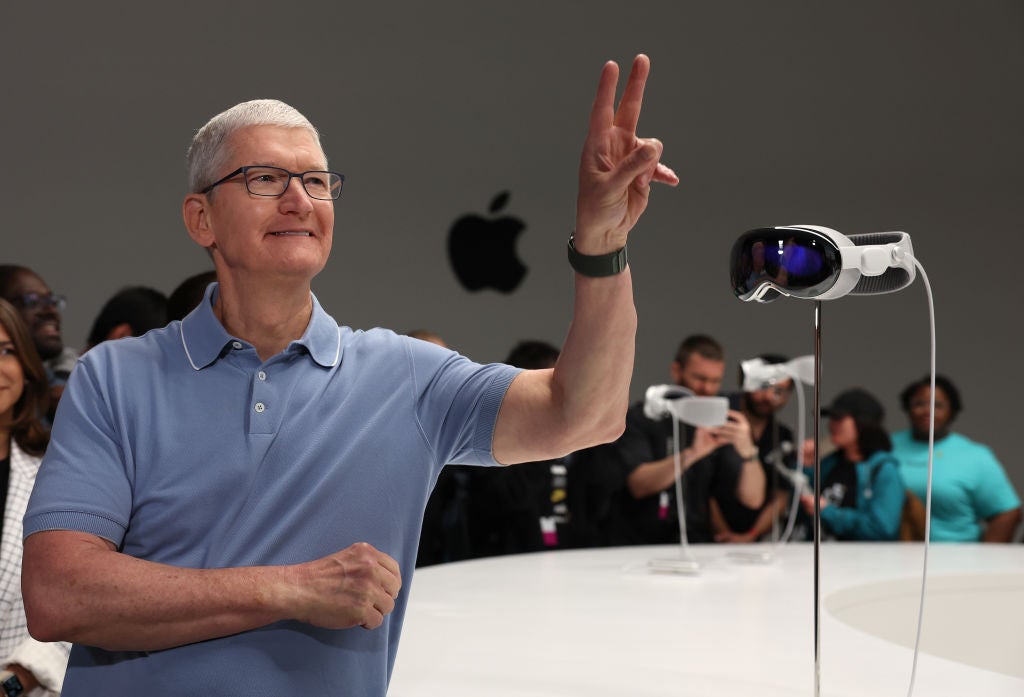
Apple has increased production of its flagship Vision Pro mixed-reality headset with a retail debut planned for February, according to a Bloomberg report, citing people familiar with the matter.
The new headset, which is set to be priced at $3,499, will be fitted with five sensors, 12 cameras and a 4K display screen for each eye.
Go deeper with GlobalData


Access deeper industry intelligence
Experience unmatched clarity with a single platform that combines unique data, AI, and human expertise.
According to the Bloomberg report, production of the new VR and augmented reality (AR) headset has been ramped up over the past few weeks at Apple’s facilities in China.
On Wednesday (20 December), Apple reportedly told software developers to “get ready” for the launch of the headset by providing feedback on how the Vision Pro runs their apps.
“VR and AR have been through a period of intense scrutiny and scepticism in recent times, but if one company has the star power to revive the segment, it is Apple,” Leo Gebbie, principal analyst at CCS Insight, previously told Verdict.
Gebbie said that he believes the Apple Vision Pro will “transform the spatial computing market”.
Sol Rogers, global director of innovation at VR and AR production studio Magnopus, previously told Verdict that the Vision Pro “has the power to catalyse a remarkable expansion of the extended reality industry”.
“With the world’s most iconic tech company [Apple] actively pursuing the medium, it sends a strong message about the value and potential of a unified reality,” he added.
Although the market remains heavily gaming-oriented, VR is gaining traction in areas such as social media and live streaming, according to research company GlobalData’s Thematic Resarch: Virtual Reality 2021 report.
The global VR market, worth nearly $5bn in 2020, will generate revenues of $51bn by 2030, expanding at a compound annual growth rate of 27% over the ten-year period, according to GlobalData forecasts.
GlobalData expects enterprises to become the key market for VR over the next three
years, outpacing the consumer segment. VR is already in use across retail, defence,
airlines, oil and gas, and healthcare, primarily for training.