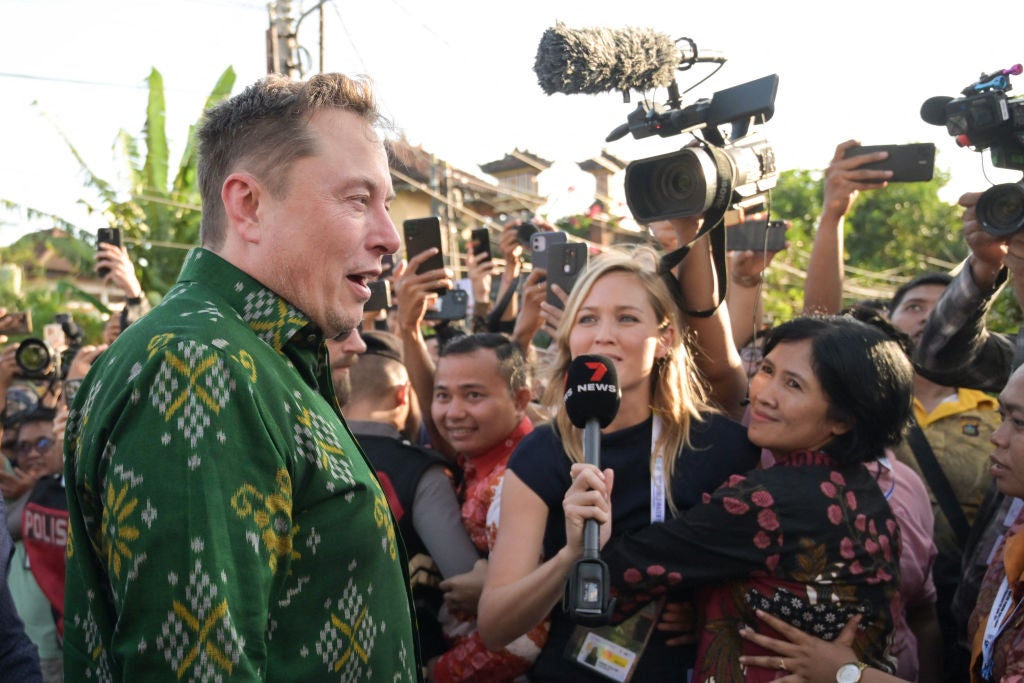
Elon Musk launched Space X’s Starlink satellite internet services in Indonesia on Sunday (19 May), in the latest move from the low earth orbit (LEO) satellite company to operate in areas with weaker internet coverage.
Indonesia, which is made up of over 17,000 islands, has millions of citizens living in areas with limited to no access to internet services.
Go deeper with GlobalData


Access deeper industry intelligence
Experience unmatched clarity with a single platform that combines unique data, AI, and human expertise.
Musk previously opened Starlink in Malaysia and the Philippines, and plans to move into more of Southeast Asia.
Speaking to local media on Sunday, Musk said: “It is really important to emphasise the importance of internet connectivity and how much of a life-changer and a life-saver it can be.”
“When you have access to the internet, you can learn anything,” he added. “But if you don’t have internet connectivity, it is very difficult to learn.”
“And if you have goods and services you wish to sell to the world, and even if you are in a remote village, you can now do so with internet connection. So you can bring a lot of prosperity to [remote] communities,” said Musk.
Launched in 2019, Starlink has over two million customers and serves all seven continents in over 60 countries.
The company’s LEO internet broadband satellite constellation is the largest fleet of satellites in the world, with over 4,000 operating in orbit.
LEO satellites are the most common satellites in space. They are found 500km to 1,200km from the Earth and are used for imaging, communications, and broadband internet.