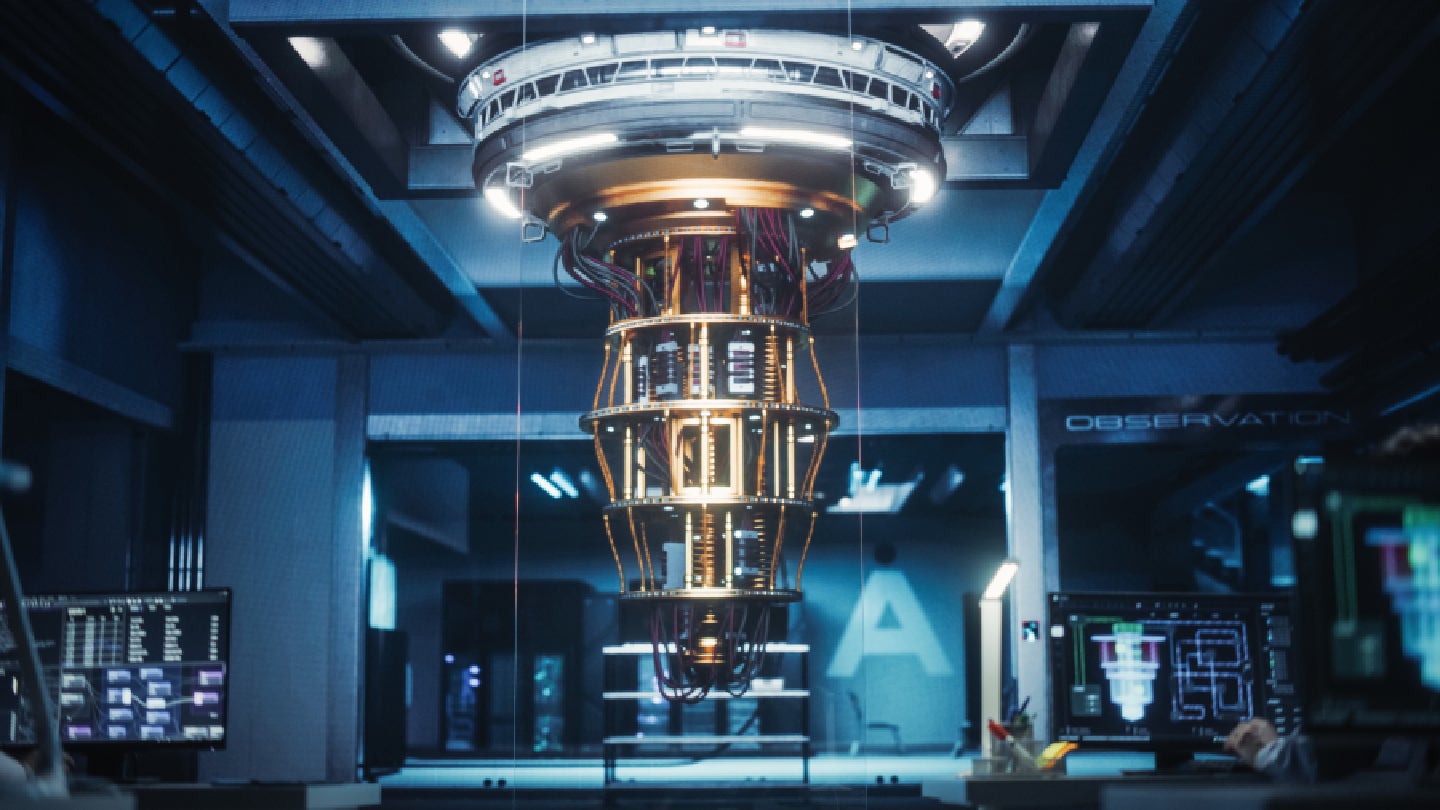
Nvidia has broadened its open-source quantum computing platform with the addition of CUDA-Q Logical, a new orchestration layer designed to support research and development in fault-tolerant quantum computing.
The development was announced as part of the company’s ongoing efforts to provide tools for building useful applications on future fault-tolerant quantum computers.
Go deeper with GlobalData


Access deeper industry intelligence
Experience unmatched clarity with a single platform that combines unique data, AI, and human expertise.
CUDA-Q Logical enables researchers to design and coordinate the multiple components required for quantum applications that rely on logical qubits, which are expected to be key for overcoming errors in quantum systems.
This addition allows users to switch between different hardware and algorithmic options in search of optimal system configurations.
Nvidia quantum vice president and general manager Timothy Costa said: “Quantum computing is maturing into an era of logical qubits, and researchers need an open, customisable platform capable of representing all aspects of a fault-tolerant system.
“The addition of CUDA-Q Logical provides power and flexibility to explore fully integrated, co-optimised systems regardless of qubit type and architecture — drastically shortening the timeline to useful quantum-GPU supercomputing.”
Nvidia said that the new orchestration layer is being used by research institutions and companies such as Fermi National Accelerator Laboratory, IQM Quantum Computers, Infleqtion, QCDesign, Quantum Motion and Sandia National Laboratories.
Iceberg Quantum used CUDA-Q Logical to model a fault-tolerant architecture for Diraq’s qubits, showing that creating 1,000 logical qubits required only 150,000 physical qubits, which is about ten times fewer than previous estimates by Diraq.
Fermilab’s early implementation of CUDA-Q Logical allowed its researchers to validate prior results and evaluate resource requirements such as physical qubits and runtimes across different error correction techniques and hardware. This approach reportedly accelerated development of fault-tolerant algorithms from five months to three weeks.
Sandia National Laboratories developed an independent cross-platform benchmark, QUOPS, to measure progress towards practical quantum computing.
Early results, covering hardware from IBM, Google, and Quantinuum, are accessible via a reference implementation in Nvidia CUDA-Q.
Other organisations are integrating their hardware and software with CUDA-Q and associated technologies.
Infleqtion reported progress in quantum error correction research using CUDA-Q Logical, achieving a physical-to-logical qubit ratio below 10:1.
Qedma Quantum Computing integrated its QESEM error mitigation software with CUDA-Q and made it available for Quantinuum hardware, with plans for wider platform support.
Nvidia’s expanded platform continues to see uptake across the quantum computing sector, with BlueQubit, Quandela, QCentroid, IonQ and other firms launching new projects and integration efforts leveraging its technologies.