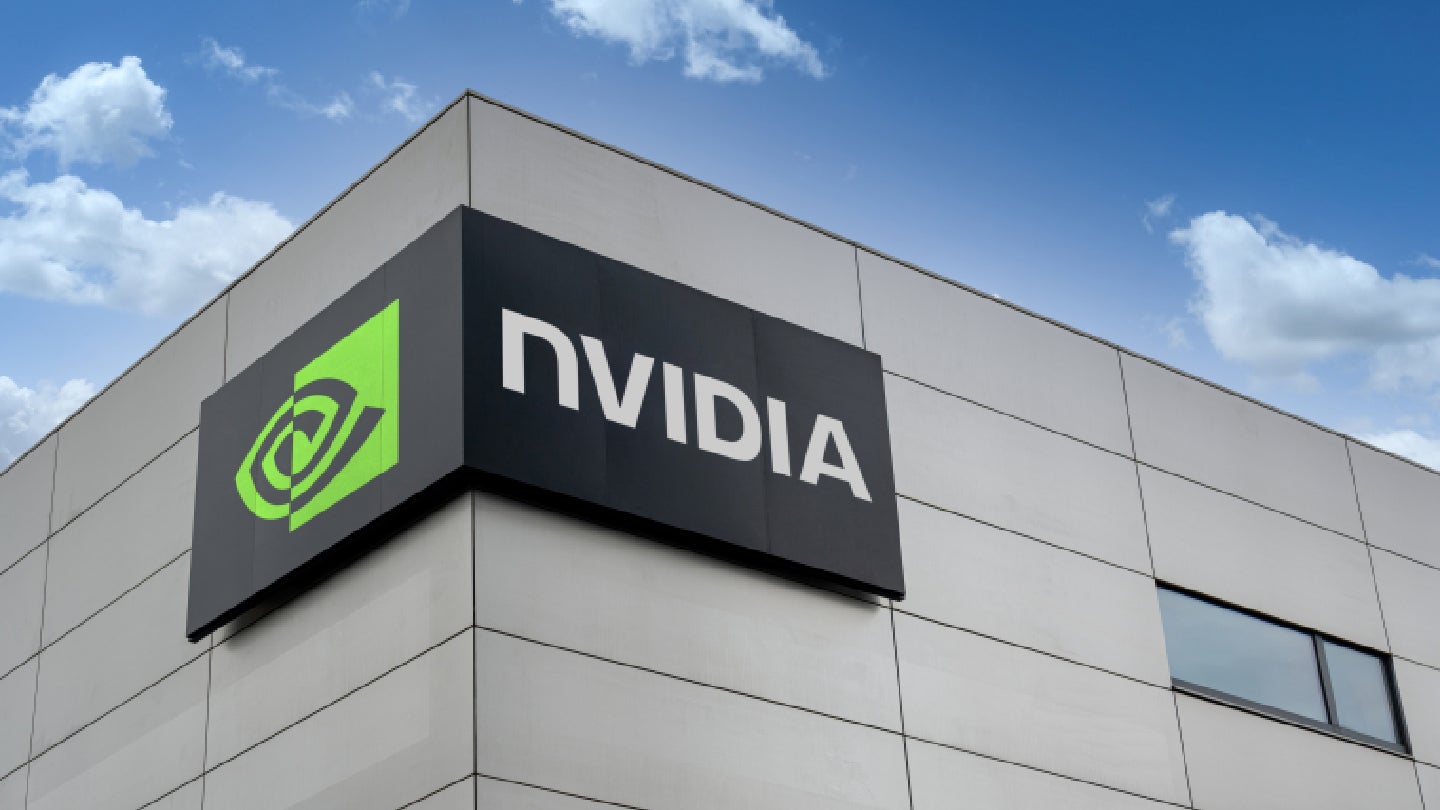
Nvidia has launched Minerva, an AIOps platform purpose-built to provide end-to-end observability across AI factory infrastructure and workloads.
Sitting within the full-stack Nvidia Vera Rubin platform, Minerva gathers telemetry from Nvidia GPUs, Spectrum-X Ethernet, NVLink switches, SuperNICs, data processing units, schedulers such as Slurm and Nvidia Run:ai, and the AI workloads themselves. The collected signals span networking, compute and storage layers, replacing fragmented monitoring approaches that traditionally leave different teams with incomplete views of cluster health.
Go deeper with GlobalData

Access deeper industry intelligence
Experience unmatched clarity with a single platform that combines unique data, AI, and human expertise.
Large-scale AI factories can contain hundreds of thousands of graphic processing units (GPUs) linked by high-speed networks to train models and serve inference.
In such environments, a single degraded component, whether a GPU running hotter than expected or a storage drive losing throughput, can slow an entire job. Minerva is designed to catch those early warning signs, wrote Brian Sparks, senior director of marketing at Nvidia’s InfiniBand and Ethernet networking platforms unit, in a company blog.
Central to the platform is a dynamic knowledge graph that maps the logical relationships between infrastructure elements, including GPUs, SuperNICs, switches and cables, and the workloads running on them. This unified topology allows operators to trace a slow training job back to the specific component causing the issue, even in clusters with vast GPU counts.
Minerva processes billions of telemetry data points per hour, using both supervised and unsupervised machine learning to model normal operating patterns, flag unusual behaviour, anticipate developing faults and link related events based on the factory’s physical and logical layout.
Rather than forwarding every individual symptom, the platform consolidates cascading alerts into focused incidents accompanied by a probable root cause.
Nvidia has also built a native AI assistant into Minerva and enabled connections to external agentic AI tools. This provides a natural-language interface grounded in live telemetry, through which operators can query cluster health and receive remediation recommendations.
Teams retain the option of applying fixes manually or routing them through infrastructure APIs and external automation systems.
The company positions Minerva’s impact around three operational outcomes. These include extending the interval between workload interruptions through predictive maintenance, shortening repair times by rapidly isolating faults, and reducing data noise so that only genuinely actionable alerts reach operators.
Nvidia measures overall AI factory yield through GPU hours, goodput, cluster uptime and token production.
IREN is already using the platform.
IREN chief technology officer Denis Skrinnikoff said: “As we scale our AI factories, the key to providing the best service for our customers is maximising the productivity of our GPUs.
“NVIDIA Minerva gives our operations team one view across the network, the GPUs and the jobs running on them, so we focus more on proactive maintenance rather than troubleshooting. That visibility strengthens our operating model for the infrastructure we’re building next.”
Beyond IREN, Nvidia confirmed that Aolani, Bitdeer AI, IBM, Jio, Lambda, Quake AI and Tesla plan to deploy Minerva. On the systems side, Dell Technologies, Lenovo and Supermicro will incorporate the platform into their respective AI factory operations portfolios, extending its availability across enterprise infrastructure channels.