
Over the past decade, governments around the world have increasingly turned to smart city initiatives to improve the quality, efficiency and sustainability of city services, using digitalised sensors to collect and connect data across an area’s transport networks, pedestrian activity patterns, water consumption, waste levels, air quality, and more. But achieving these important objectives requires action, not just insight.
As we enter the next stage of innovation, how can governments advance their cities from digitalisation to intelligence? From there, how can they turn predictions or requests into timelier services and rapid on-the-ground responses?
Go deeper with GlobalData


Access deeper industry intelligence
Experience unmatched clarity with a single platform that combines unique data, AI, and human expertise.
The answers are found in the ‘AI city’ vision, where digital foundations and data are layered with AI agents that detect patterns, forecast demands, recommend actions, and automate tasks, making services more accessible, responsive and efficient for all.
A proactive approach to urban challenges
Several real-world examples illustrated the AI city potential at the Global Government AI CITY Innovation Summit, held during Huawei Connect 2026 in Shanghai, China. The summit brought together more than 500 participants to highlight the rapid advancements that AI is now making in urban development.
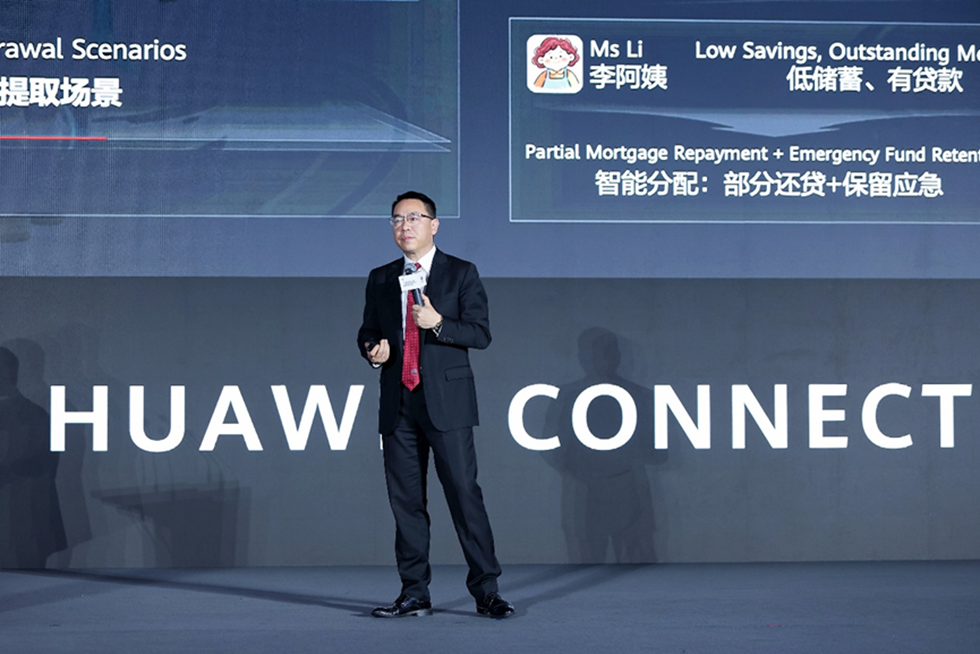
In his keynote speech, Simon Zhou, VP, Government Public Services Digitalization BU, Huawei, presented AI as a way for cities to respond more proactively to the challenges of growing populations and increasingly complex urban needs. In one notable example, he explained how an AI agent called Long Xiao Er (Longgang’s AI-native urban governance agent) played a critical role in helping emergency services in Shenzhen, China prepare for Typhoon Noul last July.
Bringing together weather, sensor, and public report data to monitor vulnerable low-lying areas of the coastal city, the AI agent analysed over 740,000 on-site images, identifying more than 900 abnormal incidents. Over 2,800 early warnings were sent to prepare front-line staff ahead of the typhoon, with patrol and response data compiled afterwards and flood prevention briefings created for review. According to Zhou, the agent has “driven a fundamental shift in city safety operations, moving emergency management from reactive rescue toward proactive prediction and automated response.”
Other examples included using intelligent video terminals, AI, and robotic systems to assist with routine city governance tasks. Zhou described a completely autonomous procedure for detecting and dealing with unlicensed street traders in Shenzhen. He also emphasised how AI can make public services more inclusive for all, sharing the example of a personalised chatbot agent that can help citizens navigate financial services with tailored guidance.
“Technology keeps breaking city boundaries, bringing inclusive services to everyone,” Zhou concluded.
Building the foundations for an AI city
During the summit, Huawei welcomed customers from Angola, Saudi Arabia, Ethiopia, and China to share their experiences and advice with AI city development. Several presenters emphasised the importance of building core foundations before scaling AI. Huawei has helped more than 30 cities build this technical architecture, deploying public cloud and Ascend-powered computing as the unified base for device-edge-cloud collaboration.
The city of Guangzhou in China is already two years into its journey deploying government AI applications, with 20 agents currently active and plans to reach 50 by the end of the year. Adoption is scaling rapidly. As one example, the city’s smart office agent now serves 55 government agencies and 26,000 public servants, with more than 5 billion token invocations.
Nevertheless, Cheng Ou, Deputy Director-General of Guangzhou Municipal Government Services and Data Administration started her speech by explaining eight unifications that had to be made in order to create common foundations for departments to build on.
On top of those foundations, Guangzhou partnered with Huawei to build a citywide intelligent computing platform and launch Huawei’s AI Foundry agent marketplace, where government bodies can access and deploy pre-built agents specifically curated for public sector applications.
Key highlights include Guangzhou’s new hotline agent, which has reducing ticket dispatch time from one hour to mere seconds while maintaining first-contact resolution rates above 69%. In addition, data governance and cataloguing agents have reduced manual workloads by more than 80% and 90% respectively.
Lessons learned in AI city construction
From Angola, Meick Afonso, General Director, Administrative Modernization Institute (IMA) stressed that AI adoption should begin with the needs of citizens. With a median age of 17 and a population size that is expected to double by 2050, the demand for public services is growing rapidly in the country. For AI to deliver the level of transformation necessary to meet these needs, Angola’s government had to overcome significant obstacles regarding fragmented processes. Afonso urged governments not to rush this groundwork: redesign procedures and establish connected, interoperable platforms first, then add the AI layers and automation later.
The Kingdom of Saudi Arabia’s Mohammed Ashgar, CEO, Center for Monitoring City Operations focused on using AI to improve municipal issue management when tackling problems such as road defects, construction waste, and public hygiene. In previous systems, these issues were reported through multiple disconnected channels, leading to duplicated and inconsistent information. Without a closed loop system, officials also had limited visibility into whether a reported issue had actually been fixed.
By establishing an AI-empowered National Command Control Center that brings detection sources together into a unified workflow, the Kingdom introduced a central coordination layer between issue detection and operational response. Many benefits were shared, but Ashgar’s key takeaway was that AI adoption alone is not enough: cities must follow up on whether teams ultimately take the correct action and that issues are actually closed.
The final case study was presented by Melaku, Director of Coordination and Capacity Building at the Modern Ethiopian Service for Organized Benefits (MESOB). MESOB is a digital and physical platform launched by the Ethiopian government in April 2025 to streamline public service delivery and extend services beyond physical offices and major cities.
The presentation highlighted the introduction of a unified application, mobile service buses for citizens in remote areas, and further plans to expand access across diverse communities. Melaku’s key messages were around designing digital government models for local circumstances and adapting systems to Ethiopia’s unique communities, resources, and needs. He also argued that digital systems should be used to support transparency, trust, and accessibility, making processes visible, predictable, and easier to navigate.
Launching the Global AI City Innovation and Development Ecosystem Alliance
Global collaboration in AI and data is entering a new phase of growth, and advancing AI city innovation will depend on partners around the world sharing expertise, bringing ideas together, and working closely towards common goals. By strengthening the computing backbone, building AI-ready data infrastructure, and delivering the applications that governments need to better serve their citizens, Huawei will work closely with ecosystem partners and global governments to explore innovative pathways for the intelligent transformation of city services.
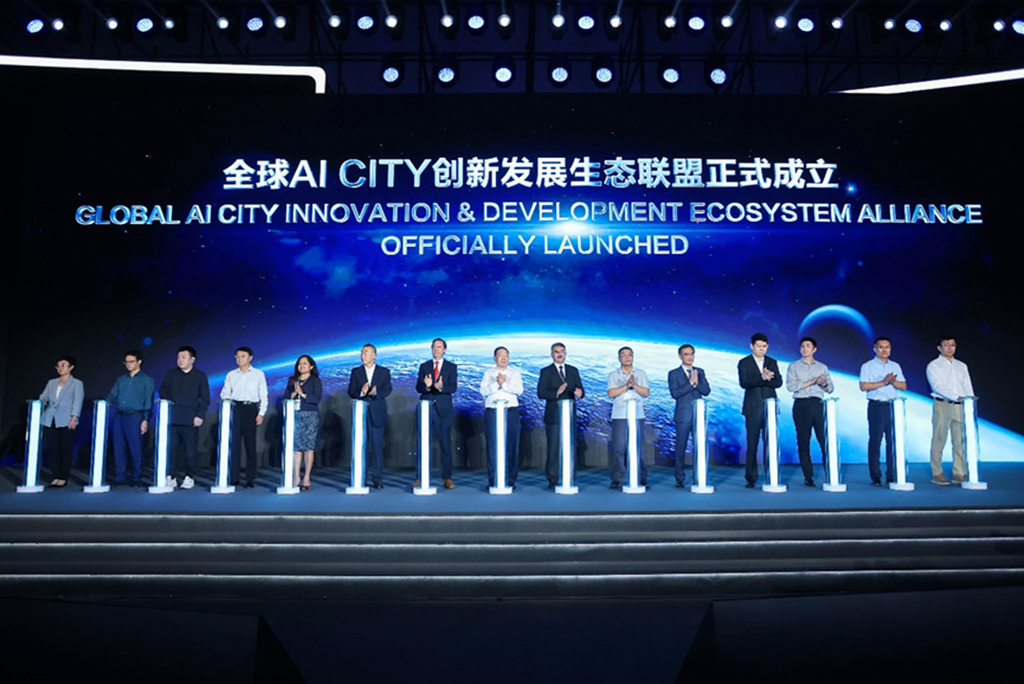
To mark this commitment towards openness and collaboration, Huawei closed the summit by launching the Global AI City Innovation and Development Ecosystem Alliance alongside 14 partners. The alliance was described as a collaborative effort focused on three areas: computing power, data, and scenario innovation. Huawei welcomed representatives from technology and industry organisations to join the launch, framing the alliance as a way to bring ecosystem partners together around the next era of AI city development.