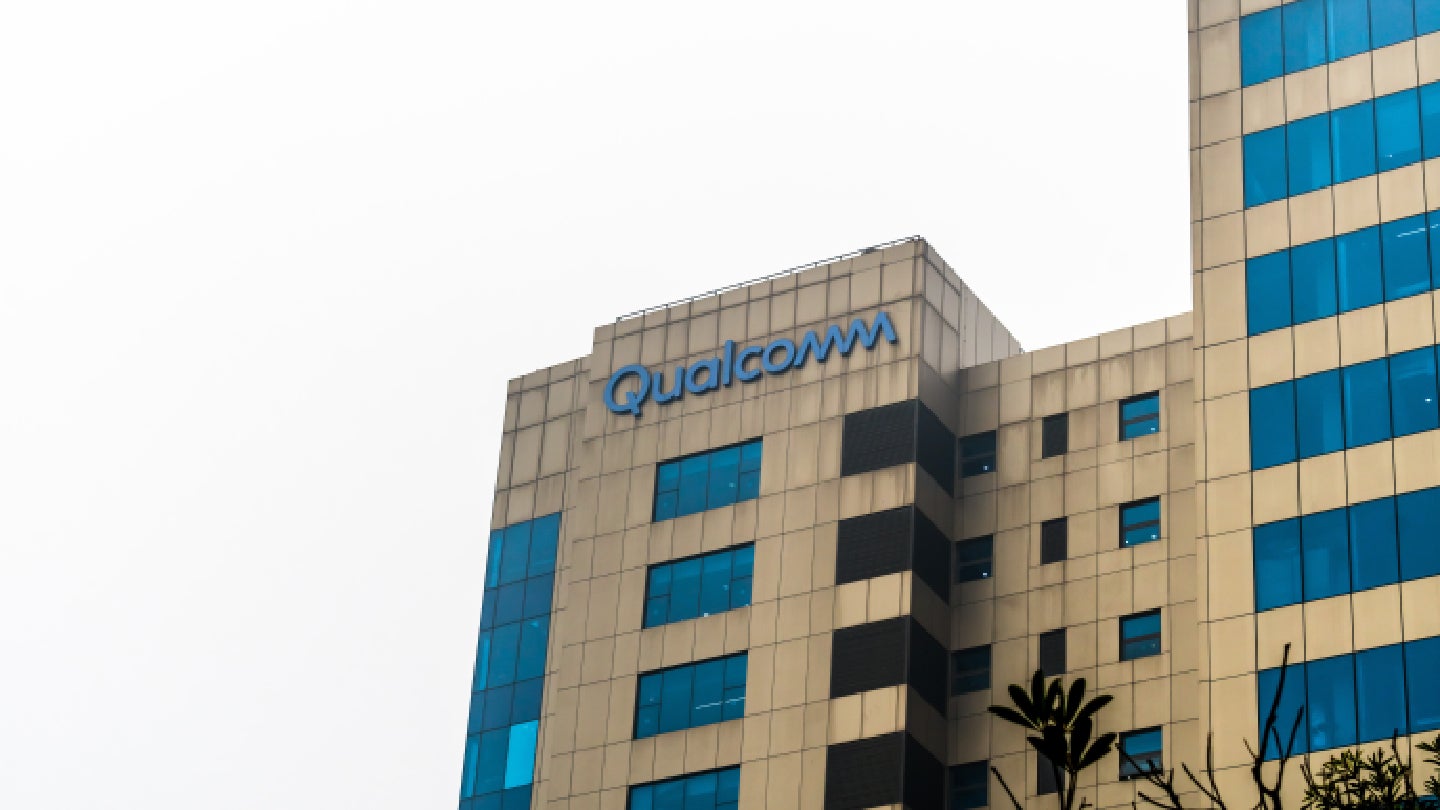
Qualcomm Technologies has agreed to acquire Colorado-based robotics software company PickNik, which develops and maintains MoveIt, an open-source robotics manipulation framework.
The acquisition is designed to reinforce Qualcomm’s commitment to an open robotics ecosystem. It aims to give developers the tools and frameworks needed to move more efficiently from early-stage research and prototyping through to deployment and production at scale.
Go deeper with GlobalData


Access deeper industry intelligence
Experience unmatched clarity with a single platform that combines unique data, AI, and human expertise.
Closing of the transaction remains subject to customary conditions.
MoveIt is set to remain open-source and will also gain closer integration with Qualcomm’s Dragonwing robotics platforms. This is expected to create a more direct route for developers between AI models such as vision-language-action and vision-language systems and the planning, manipulation and real-time control functions needed to run a robot.
Qualcomm executive vice president and automotive, industrial and embedded IoT, and robotics group general manager Nakul Duggal said: “Robotics is one of the most exciting frontiers of physical AI, and software is the connective tissue that turns great hardware into great robots.
“PickNik has earned tremendous trust within the global robotics community through its stewardship of MoveIt and its commitment to open-source innovation.”
MoveIt is built on the Robot Operating System (ROS) and is used by developers, students, researchers and commercial robotics organisations. Its applications span industrial automation, service robotics, mobile manipulation and the emerging field of physical AI.
Qualcomm has said it intends to keep MoveIt open-source under its existing licence, with roadmaps continuing to be shaped by the community. The company also plans to maintain support for the framework across hardware from other suppliers, preserving MoveIt’s ability to work independently of any single robot, compute platform or sensor set.
Both Qualcomm and PickNik are founding members of the Open Source Robotics Alliance. Qualcomm has also said it will continue to back Space ROS, a version of the ROS framework hardened for demanding applications such as space missions.
PickNik founder and chief product officer Dave Coleman said: “Since our founding, PickNik’s mission has been to provide industries with a powerful, open platform that accelerates innovation and development of advanced robotics, well beyond traditional factories.
“Joining Qualcomm Technologies will allow us to accelerate that mission, expand investment in MoveIt as a leading AI training platform for robotics, and deliver even more value to developers while preserving the openness, community collaboration, and cross-platform support that have always been central to our approach.”
PickNik CEO Dave Grant said MoveIt was “entering an exciting new chapter with the resources and support to help expand its impact”, adding that the company looked forward to “building on MoveIt’s momentum” as part of Qualcomm.
As part of the deal, MoveIt, PickNik’s commercial MoveIt Pro platform and future PickNik technologies are due to be more closely integrated with Dragonwing.
Qualcomm said this should let developers draw on Dragonwing’s AI, heterogeneous computing, connectivity and real-time robotics functions when building robots. It added that the aim is to give developers dedicated support for MoveIt’s motion planning, manipulation, perception and kinematics tools, helping speed the move from prototype to production.
Separately, MoveIt is also being extended to Arduino hardware, beginning with the Arduino VENTUNO Q boards. Qualcomm said the goal is to widen access to advanced robotics, edge AI and heterogeneous computing for a broader developer base.
The semiconductor major added that the integration is intended to shorten the path from prototype to production-ready robots for what it described as millions of developers.
Prior to this, Qualcomm announced the acquisition of AI-native software platform Modular in June this year. The all-stock transaction was completed in the following month.