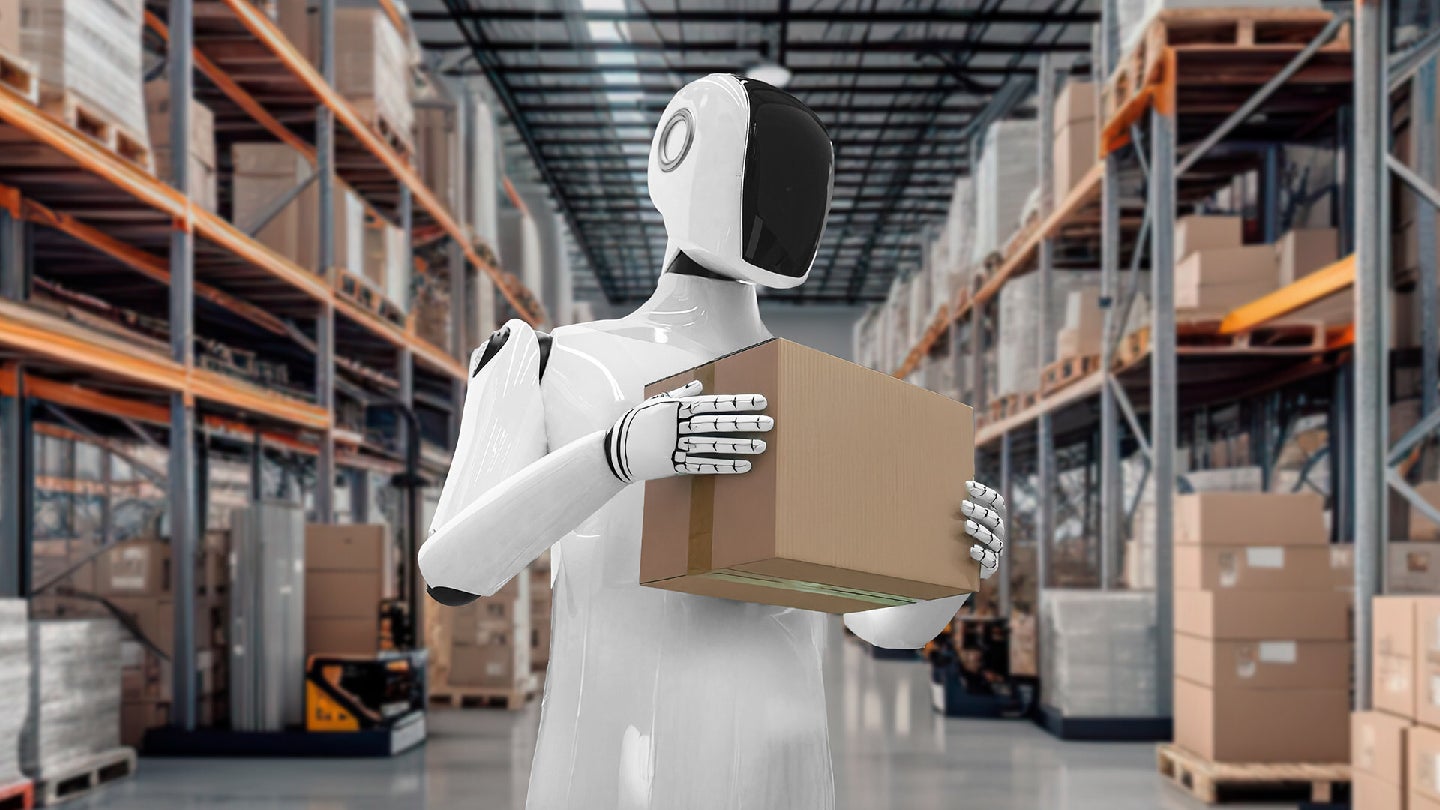
Texas Instruments (TI) and Nvidia have collaborated to advance the deployment of humanoid robots by integrating real-time motor control, sensor fusion, and robotics computing technologies.
The partnership aims to enable robotics developers to improve the validation of perception, actuation, and safety in robotics systems during earlier development phases.
Go deeper with GlobalData


Access deeper industry intelligence
Experience unmatched clarity with a single platform that combines unique data, AI, and human expertise.
The companies have combined Texas Instruments’ motor control, sensing, radar, and power management expertise with Nvidia’s robotics compute platform and simulation tools to connect physical AI applications to real-world use cases.
This collaboration is designed to accelerate the transition from virtual development environments to production-ready robotic systems that meet scalability and safety requirements.
As part of the joint effort, TI has created a sensor fusion solution that leverages its mmWave radar technology integrated with Nvidia Jetson Thor through the Nvidia Holoscan Sensor Bridge.
This setup is intended to deliver low-latency 3D perception and enhanced safety awareness for humanoid robots.
By merging data from both cameras and radar sensors, the system supports improved object detection, localisation and tracking while reducing the incidence of false positives.
According to Texas Instruments, this capability remains effective in diverse lighting conditions as well as environments affected by glare, fog or dust.
TI industrial automation and robotics general manager Giovanni Campanella said: “TI’s comprehensive portfolio bridges the gap between Nvidia’s powerful AI compute and real-world applications, enabling developers to validate complete humanoid systems earlier in development.”
The mmWave radar sensor model IWR6243 connects via Ethernet to Nvidia’s Jetson Thor platform in order to achieve scalable performance for physical AI tasks.
The combination seeks to address longstanding challenges associated with detecting transparent or reflective obstacles such as glass doors.
By providing consistent detection where cameras may fall short, the solution aims to facilitate reliable navigation for robots in locations such as office buildings, hospitals and retail environments.
Nvidia robotics and edge AI vice president Deepu Talla said: “The integration of Texas Instruments’ sensing and power management technologies with the Nvidia Jetson Thor platform provides developers with a functional safety-capable foundation to accelerate the deployment of next-generation physical AI.”
TI will present its joint developments at Nvidia GTC from 16–19 March 2026 in San Jose, California.
The company will exhibit at booth 169 in the San Jose McEnery Convention Center alongside D3 Embedded, which will provide a live demonstration of real-time sensor fusion using Texas Instruments’ radar technology within the Nvidia Holoscan ecosystem.
The demonstration will include an end-to-end software processing chain and visualisation provided by D3 Embedded.