
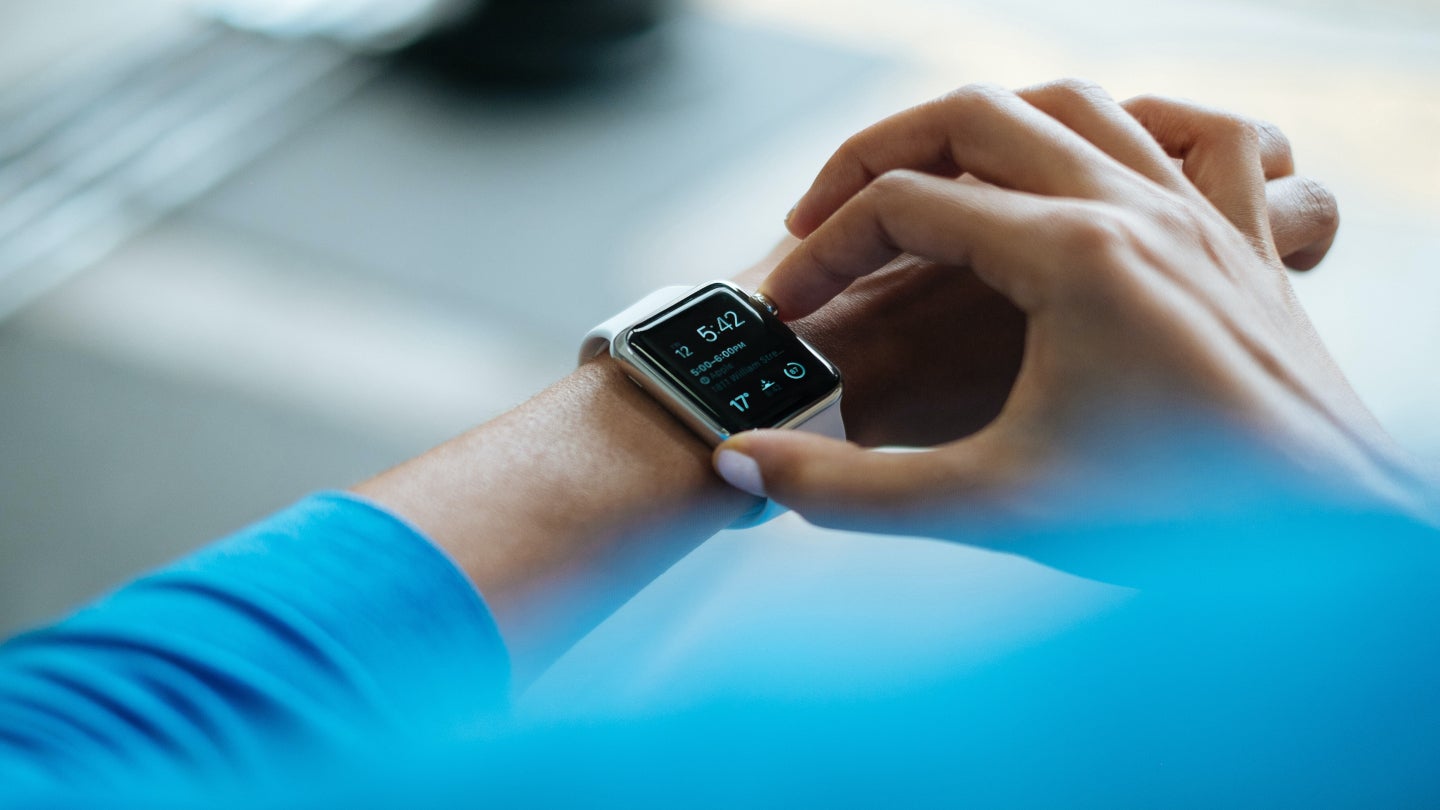
TheU.S Department of Defense (DoD) has announced plans to invest in wearable devices that can detect infectious diseases in service members.
Earlier, the Defense Innovation Unit (DIU) collaborated with private sector partners to develop a wearable device that identified the Covid-19 infections during the pandemic.
Go deeper with GlobalData


Access deeper industry intelligence
Experience unmatched clarity with a single platform that combines unique data, AI, and human expertise.
The DIU’s Rapid Assessment of Threat Exposure (RATE) project uses a predictive artificial intelligence algorithm that leverages biometric data from commercial wearables to enable early detection of infectious diseases.
With the current move, the DoD plans to extend the RATE project to new user groups within the department to aid military readiness.
An additional funding of $10m has been earmarked for the expansion, the statement said.
As part of the programme, the department will add 4,500 more users across the department, including the Air Combat Command’s first sergeants.
RATE program manager Jeff Schneider said: “With RATE, the DOD can use commercial wearables to noninvasively monitor a service member’s health and provide early alerts to potential infection before it spreads.”
The current deployment of wearable is expected to include Garmin watches and Oura rings, Schneider added.
The DIU has been working with technology company Philips to develop the algorithm and expand efforts on a global scale to accelerate commercialisation and scaling.
The algorithm is device agnostic, allowing biomarker data from any commercial wearable to be used.
Philips head of integrated technology Navin Natoewal said: “Not only do they get AI that has gone through several years of field testing and a peer-reviewed study, it is a cost-effective way to add the technology, while we continue to expand the data sets and the research working with leading academic institutions.”