Since the early days of the Renaissance, whenever someone’s artistic innovation or creative skill is recognized, you can expect a battle over intellectual property or copyright to follow.
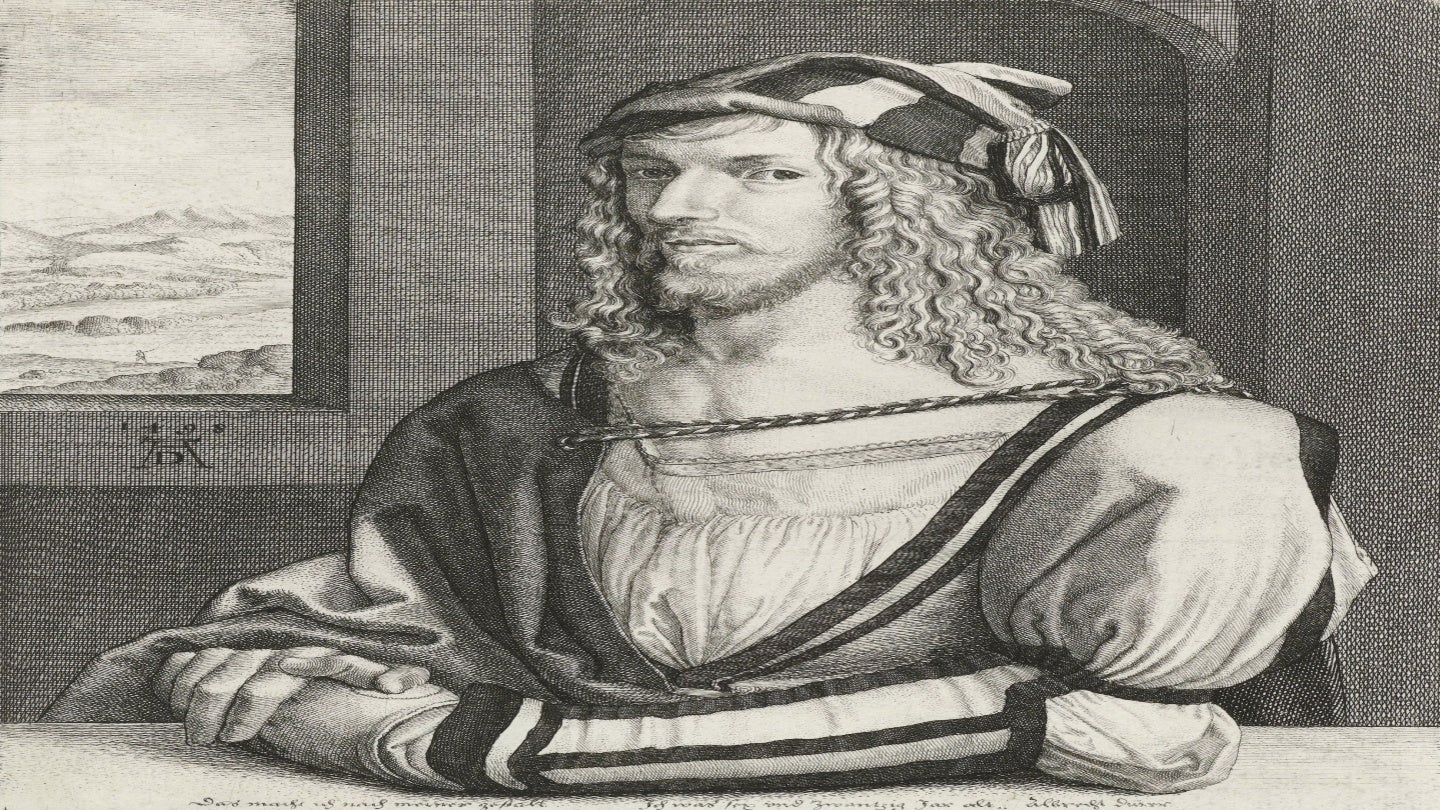
The German Northern Renaissance artist Albrecht Dürer knew the importance of safeguarding the value of his work, conceiving a distinctive AD monogram, which consistently accompanied his work. He had become one of the most famous artists in Europe for his woodcut and engraved prints and, in the early 1500s, Dürer was also one of the most copied artists of his day. He was also, perhaps necessarily, one of the most litigious.
Fast forward 700 years, and though technology has changed, the legal battles about art continue. Last week, Getty Images commenced legal proceedings in the High Court in London against Stability AI, claiming Stability AI infringed intellectual property rights including copyright in content owned or represented by Getty Images.
The case will set a precedent for how the UK legal system, which is regarded as one of the most restrictive in the world on copyright law, will treat companies building so-called ‘generative AI’, which can be defined as artificial intelligence that can generate unique images and text.
Lessons from Dürer
Dürer began to use his now-famous monogram in 1495. Prior to that, he signed drawings usually with an “A” placed next to a small “d.” In his earliest engraving with a monogram, ‘The Virgin with the Dragonfly’, Dürer identifies his work with a small “d” within a capital “A.” Undated drawings that have a monogram are considered to have been produced after 1495 and those with only initials before 1495. This distinction is important to the attribution of real Dürer works from fake ones.
Getty Images said its position was that Stability AI “unlawfully copied and processed millions of images protected by copyright and the associated metadata owned or represented by Getty Images absent a license to benefit Stability AI’s commercial interests and to the detriment of the content creators.” Getty Images said it believes artificial intelligence has the potential to stimulate creative endeavors, and it provided licenses to leading technology innovators for purposes related to training artificial intelligence systems in a manner that respects personal and intellectual property rights. Getty said that Stability AI did not seek any such license and instead chose to ignore viable licensing options and long‑standing legal protections in pursuit of their standalone commercial interests.
Stability AI has said it is reviewing the documents and will respond accordingly.
The relation of aesthetics and art to trademark law
Dürer once warned those that would copy his work, “Beware, you envious thieves of the work and invention [laboris et ingenii] of others, keep your thoughtless hands from these works of ours. We have received a privilege from the famous Emperor of Rome, Maximillian, that no one shall dare to print these works in spurious forms, nor sell such prints within the boundaries of the Empire.”
You probably would not have thought that Dürer’s trademark disputes would be of much interest in 2023. But last year, a Boston law school, New England Law, published a research paper on Dürer’s enforcements, arguing that Dürer’s cases hint at an important insight into the relation of aesthetics and art to trademark law.
The paper points out that legal historians have made the point that trademarks are the stuff of industry, and art is relegated to a trademark’s periphery, if allowed in at all. The paper asks, what might it mean for trademark theory and history if the essence of trademark law is an artist’s personal connection to a work of authorship?
As well as discussing the dispute between Getty Images and Stability AI, the Financial Times recently reported that three artists filed a class-action suit in the US against Stability AI and other companies Midjourney and DeviantArt for their use of Stable AI’s product Stable Diffusion, after the artists discovered their artwork had been used to train these companies’ AI systems. Such products create an existential threat for creators and graphic designers, lawyers representing the artists said. Midjourney and DeviantArt have yet to comment on the lawsuit. That famous litigant, Albrecht Dürer, would be fascinated by the outcome.