
In recent years, the use of AI tools and chatbots has skyrocketed, but is our increasing reliance on artificial intelligence damaging our own intelligence?
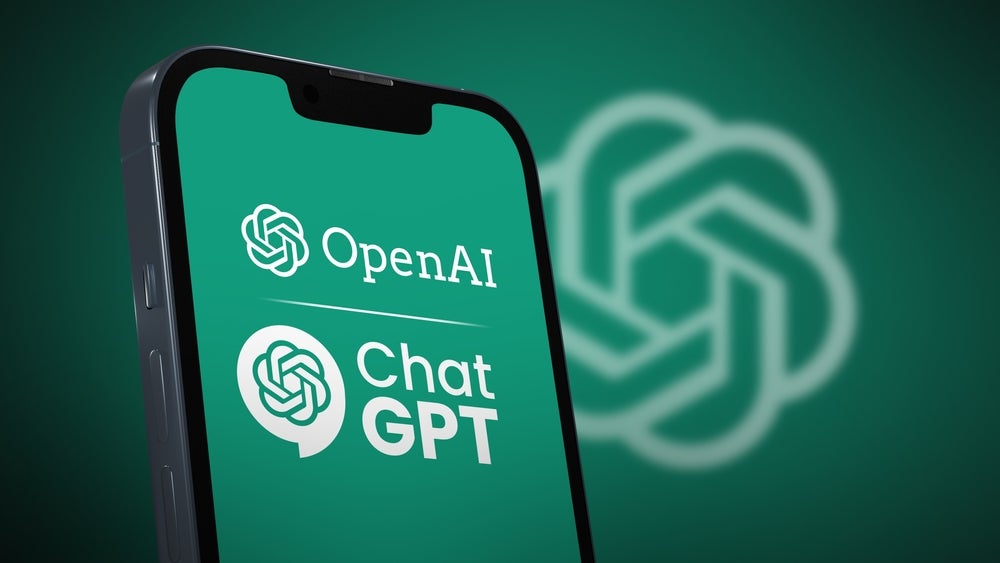
In July 2025, AI Overviews on Google reported more than two billion monthly users, and in August, ChatGPT surpassed 700 million weekly active users.
It seems that generative AI tools are inescapable, used increasingly for tasks such as responding to emails, summarising articles, drafting essays, or simply for conversation. Advocates for artificial intelligence argue that offloading these time-consuming tasks onto AI can free up time for more important work.
The decline of critical thinking
Cognitive offloading involves using external tools to reduce the mental effort required for a task. For example, when we use AI as a substitute for thinking through a problem, this is a form of cognitive offloading. However, while this can save mental resources for other tasks, it can also stop us from thinking for ourselves.
Recent studies have highlighted that the frequent use of AI tools might be harming our critical thinking skills. A study by Dr. Michael Gerlich from the SBS Swiss Business School surveyed 666 participants in the UK on their use of artificial intelligence tools and measured their critical thinking skills.
It found that increased AI tool use was associated with lower critical thinking skills, particularly among younger participants. Some of the participants voiced concerns regarding their AI dependency, with one commenting, “I rely so much on AI that I don’t think I’d know how to solve certain problems without it.”
Education and AI
This trend is also seen in education. A study by researchers at MIT found that students who relied on ChatGPT to write their essays exhibited lower brain activity than those who wrote essays without assistance. Furthermore, the group that used AI performed worse and struggled when they were required to complete tasks without assistance. It is therefore even more concerning that a recent study at British universities found that almost nine out of ten students used AI tools, such as ChatGPT, for their assessments, with only 8% of students not using AI at all.
A prolonged reliance on artificial intelligence for cognitive offloading could harm essential cognitive skills such as analytical thinking, problem-solving, and memory retention. It is well known that if people do not use their muscles, they will lose muscle mass. It is the same with our cognitive abilities. If we do not actively continue to develop these abilities, they could atrophy, leading to diminished long-term memory and cognitive health.
Digital amnesia
The idea that technology is making us ‘dumber’ is nothing new. Since the 2010s, there have been concerns surrounding “digital amnesia,” or the “Google effect.”
This phenomenon suggests that when digital tools like search engines are available, people no longer retain information that can easily be found online. Instead, they remember how to find this information. This can leave us dependent on technology, treating it as an extension of our own memory. Now, with the introduction of AI Overview, which provides an AI-generated summary of the user’s search, it seems that this phenomenon will only be exacerbated.
The AI algorithm
AI chatbots are not the only example of AI eroding our cognitive abilities. Personalised AI algorithms have also begun to dominate our lives, particularly through social media. The success of sites like TikTok and Instagram hinges upon their addictive AI algorithms, with users often either being unaware of how much time they have spent scrolling or being unable to stop.
When we use social media, we are not even choosing which content to consume; we are merely passively deciding when to scroll to the next thing. What makes these algorithms even more addictive is the fact that they are never-ending—if you wanted to, you could scroll forever.
Ultimately, despite the overwhelming evidence that AI is making us less intelligent, chatbots like ChatGPT only continue to grow in popularity. It seems that for many people, the convenience of AI doing the thinking outweighs the cost to their own cognitive abilities. As psychologist Robert Sternberg at Cornell University has said: “The greatest worry in these times of generative AI is not that it may compromise human creativity or intelligence, but that it already has.”