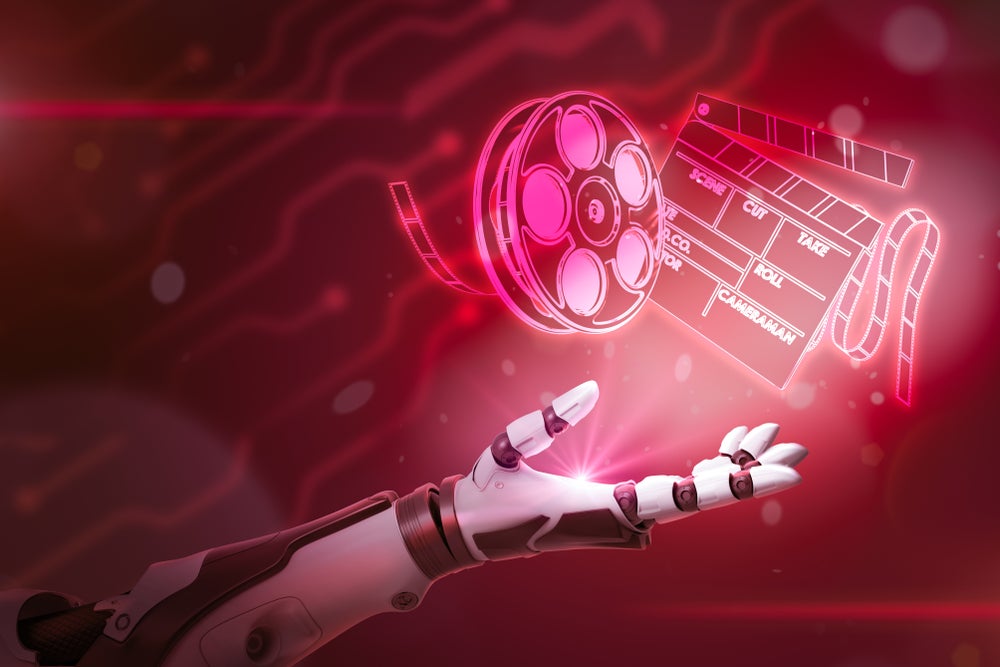
At the Zurich Film Festival in September 2025, British production company Particle6 unveiled Tilly Norwood, the world’s first fully AI-generated actor.
The launch marked the debut of Xicoia, Particle6’s new AI talent division focused on creating, managing, and monetising hyperreal digital performers. Tilly stands at the forefront of this bold experiment, an AI actor set to blur the line between technology and human artistry.
Go deeper with GlobalData

Access deeper industry intelligence
Experience unmatched clarity with a single platform that combines unique data, AI, and human expertise.
According to Particle6, several talent agencies are clamouring to represent Norwood. Norwood has none of the issues that usual Hollywood stars may present to agencies and film crews. No unreasonable riders for dressing rooms, no lateness to set, no risk of tense relationships with co-stars that could blight the reputation of a film or TV show, and she will never age out of the spotlight. Norwood does not need to be paid directly, never gets tired, and can be made to do anything an actor, director, or writer requests.
However, not all agencies are convinced. Several prominent firms, including WME Group, have explicitly declined to represent Norwood, stating that they “represent humans” only.
Actors and unions are speaking out against Tilly Norwood
Yet Tilly Norwood’s selling point is exactly what makes her existence, virtual though it may be, so troubling. The Screen Actors Guild-American Federation of Television and Radio Artists (SAG-AFTRA) has argued that Norwood has been trained on the work of countless human performers without permission or compensation. The performing arts union Equity has also spoken out, threatening mass direct action over tech companies’ use of its members’ likenesses, images, and voices without permission.
Unions have ethical concerns about consent and ownership of creative labour, and questions remain about who should be credited for whatever future performances Tilly may deliver.
AI actors raise questions about the morality of complex emotional performances that an AI actor can produce. Tilly has taken in performances by other actors, which may have drawn on personal emotional experiences. Reproducing them as an AI avatar feels like an unfair exploitation of a real actor’s life, as well as their own abilities.
Hollywood actors voice disapproval of their AI counterparts
Several Hollywood actors have also voiced their sentiments towards AI actors. Emily Blunt described the emergence of AI actors as “very, very scary” and described it as “taking away our human connection.”
Whoopi Goldberg has spoken on the unfair advantage of going up against an actor who has been “generated with 5,000 other actors,” and therefore holds the nuances or notable skills of a plethora of film stars.
Actor Melissa Baron has called for those represented by agencies expressing interest in Tilly to drop their representation. This highlights the risks agencies take by partnering with AI stars: as it damages the very real relationship with the human actors they represent.
Tilly herself lies in danger of exploitation
Given a history of women being sexually exploited in Hollywood, it feels concerning that Tilly has been given the appearance of a young woman who, according to her creators, will never complain.
While Tilly represents a sense of threat to actors’ jobs, she also brings a tug of sympathy. Tilly is not available in physical form to be groped or physically assaulted, yet her digital imprint remains without rights. Tilly has no say in what she may be made to do or wear. Tilly is a woman who cannot say no.
This fact is unnerving for Nashville-based musician Stella Hennen. At the announcement of Tilly Norwood, Hennen found herself looking at her doppelganger. Releasing a video on TikTok demonstrating her likeness to the actor, Hennen has since expressed her concerns about what her AI double may be made to do on screen.
The future of AI actors remains uncertain
Ultimately, the space of the AI actor is determined by the viewers themselves. When, if ever, will AI actors be accepted by film and TV audiences? Part of the appeal of human actors is not simply their appearance on screen but the person behind the performance, and their glamorous life.
Furthermore, storytelling through film is so deeply tied to human authenticity that AI actors cannot hope to recreate it. Tilly’s appeal is troubling; that agencies might favor an avatar over a trained, talented human feels dystopian.
Tilly herself is not a novelty. She symbolises a crossroads in entertainment ethics. It leaves questions of what is valued in performance and how companies safeguard and protect creative labour, while the arts and entertainment industry is left to solve the problem of how exactly AI fits into its future.
The question remains: If the camera no longer needs a human face, what happens to the soul of cinema?