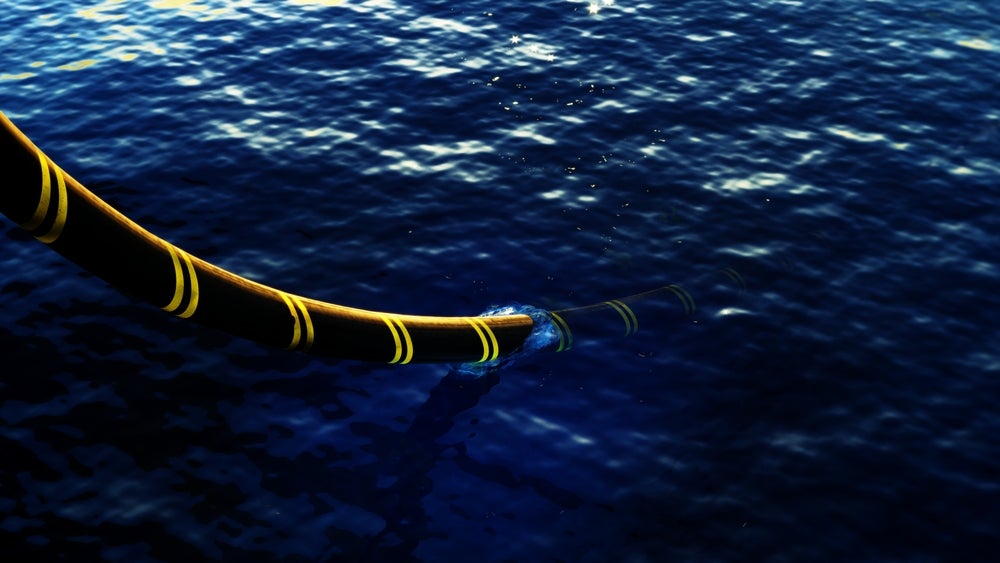
Over the last six months, there has been a significant shift in the number of new subsea and terrestrial fibre announcements as hyperscalers and telcos race to keep pace with the growing demand in AI adoption and cloud expansion, and on paper, it looks like a global infrastructure expansion is well underway.
The industry has put forward a wave of announcements aimed at staying ahead of demand. Several newly unveiled projects of subsea activity include Meta unveiling its plan for its Candle Subsea Cable System, a new 8,000-kilometer cable designed to boost connectivity across Japan, Taiwan, the Philippines, Indonesia, Malaysia and Singapore by 2028. In the Black Sea, Vodafone Group and Vodafone Ukraine have partnered with Xtera on the Kardesa, a €116m ($136m) cable system that will connect Bulgaria, Georgia, Turkey, and Ukraine with the first cable landing planned in Bulgaria in 2027.
Go deeper with GlobalData

Access deeper industry intelligence
Experience unmatched clarity with a single platform that combines unique data, AI, and human expertise.
On land, Nokia and Gulf Bridge International (GBI) announced a new high-capacity terrestrial route through Iraq, designed to reinforce links between Europe, the Middle East, and Asia with the project expected to be online by 2030. While these projects underscore the urgent need to expand network infrastructure, they also highlight the long complex path required for subsea and terrestrial fibre capacity to move from announcement to reality.
Construction of new infrastructure builds is more strained
However, despite all the press releases, the reality is that the construction of new infrastructure builds is more strained. With geopolitical tensions, manufacturing backlogs, and limited vessel availability all converging, not to mention key maritime choke points, for example, in the Red Sea Suez corridor impacting Asia Europe, traffic also adding further delays, and the timelines for bringing new systems online continue to be impacted.
As we continue to sail into the new era of bandwidth intensive AI and cloud workloads, the question becomes increasingly urgent: are we building digital infrastructure fast enough to support the connected future we are creating?
Brendan Swan, Senior Analyst at GlobalData said “Although the AI infrastructure era is only just beginning, it’s already putting pressure on global networks and supply chains”. Telcos and hyperscalers are working aggressively to expand their digital infrastructure to meet the rising bandwidth demands, however they must continue to work more collaboratively especially with geopolitical tensions on the rise and with the approximately (only) 20 cable-laying vessels available worldwide adding further strain on capacity builds and bottlenecks”.
Swan concludes: “To meet the rising demand, it will require an expansion of both terrestrial and subsea routes to support low-latency traffic and emerging use cases, making long-term planning essential. Operators should look to forge deeper strategic alliances and adopt a more future focused mindset to develop networks that deliver both scalability and resilience.”