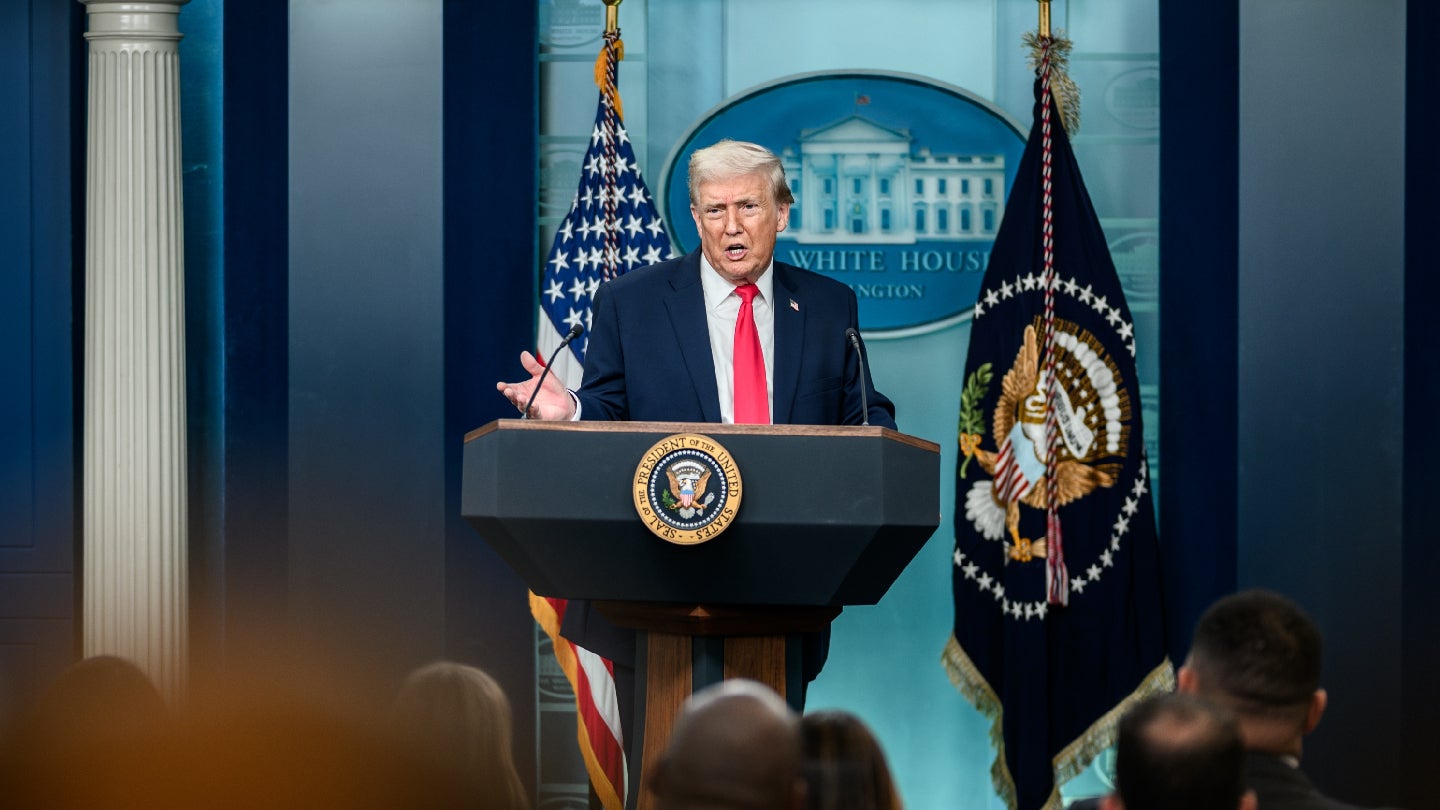
Top executives from several US-based technology companies have signed a voluntary agreement with US President Donald Trump to establish internal and external oversight of AI development.
The meeting took place at the White House, amid increased public scrutiny of AI and its potential risks for society.
Go deeper with GlobalData

Access deeper industry intelligence
Experience unmatched clarity with a single platform that combines unique data, AI, and human expertise.
The signatories of the voluntary accord include President Trump, Google CEO Sundar Pichai, Anthropic CEO Dario Amodei, OpenAI president Greg Brockman, Meta CEO Mark Zuckerberg, Nvidia CEO Jensen Huang, and Elon Musk, founder of xAI, now part of SpaceX.
The agreement was made public by Trump via his Truth Social platform after the discussion.
According to the accord, the companies have committed to four measures. They will put in place “robust internal controls,” work with an independent external auditor to review those controls and establish a board-level committee to assess internal and external audit findings.
The accord states, “Over time, it may make sense to codify these steps into laws and regulations.”
Trump told reporters, “I think I’m seeing tremendous self-policing. And they understand that they have to self-police.”
The US President indicated that a committee of about ten people could be formed to supervise the initiative, calling the accord “morally binding.” Trump said he would soon appoint an industry-vetted overseer of the agreement.
House Speaker Mike Johnson attended the event, where leaders acknowledged both the benefits and risks posed by rapid AI development.
The discussion also addressed local opposition to new data centres being built by technology firms nationwide.
Trump said companies had agreed to mitigate bipartisan concerns in affected communities by offering financial support for local schools or reducing energy costs. “You’re going to see, data centres are going to be very popular,” Trump said.
Industry leaders expressed varied perspectives on the initiative.
Anthropic’s Dario Amodei said: “The technology has very real risks. And, you know, the mechanism, how we address those risks is still under discussion.”
OpenAI’s Sam Altman said in a television interview that OpenAI had recently halted a new model rollout for safety reasons, adding, “We are pacing our progress, which includes sometimes not training a model.”
The initiative drew mixed reactions from academic and policy experts. Robin Jia, from the University of Southern California, questioned reliance on self-regulation, saying it is crucial that AI developers’ objectives align with public interest, particularly given recent hacking incidents.
Berkman Klein Center executive director Alex Pascal said: “The only way to reduce the risks and harms of AI to Americans is through robust legal liability, regulation and fundamentally changing the race dynamics that are driving unsafe decision-making by frontier AI developers whose costs are borne by the American people.”
On the same day, Trump introduced an AI-powered chatbot, America.gov, aimed at helping users access government services.
“I will never stifle the growth of a technology that will be bigger than the industrial revolution,” Trump stated during the launch event, indicating the administration’s position against restricting AI development.
Trump also described the AI sector as a central focus in competition between the US and China.
He referenced a new communications channel with China over AI incidents but said, “I didn’t want to do anything, because we’re leading. Why would I want to do anything?”