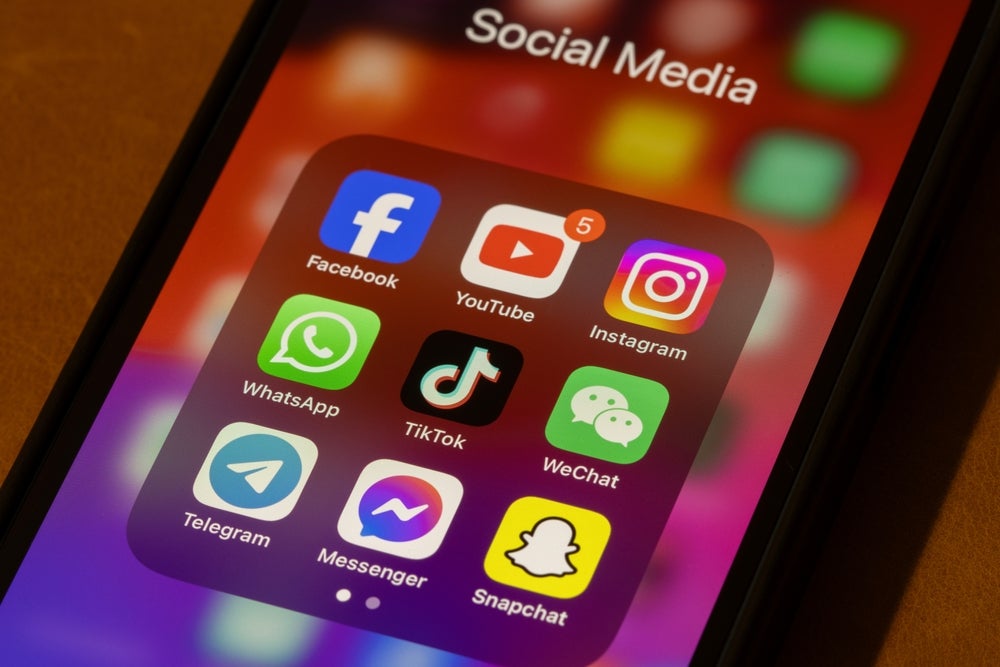
Scrolling through short-form videos on platforms such as TikTok, Instagram Reels, and YouTube Shorts is often perceived as a harmless way to unwind; however, growing evidence suggests these activities can lead to negative effects on the brain known as “brain rot”.
This phenomenon is defined in the Oxford dictionary as “a perceived loss of intelligence or critical thinking skills, especially on account of the overconsumption of unchallenging or frivolous content posted online.” The Centers for Disease Control and Prevention (CDC) has estimated that half of teenagers spend four hours or more watching screens, making these effects on the brain critical to study.
Go deeper with GlobalData

Access deeper industry intelligence
Experience unmatched clarity with a single platform that combines unique data, AI, and human expertise.
However, new evidence suggests that even AI is not immune to the effects of brain rot.
The effects of inane posts on AI
A preprint on arXiv by Xing et al. has described the effects of “brain rot” on four different large language models (LLMs). The experiment used “short but highly popular posts that often engage users longer online” to show its effects, which revealed “non-trivial declines (…) on reasoning, long-context understanding, safety, and inflating ‘dark traits’ (such as psychopathy, narcissism).” This also showed a dose response, meaning the level of exposure to junk content equated to the severity of brain rot.
The effects that short-form “junk” content has on LLMs reveal how this is not a problem for just some members of society susceptible to “dark traits” but for everyone, making the effects of doomscrolling highly concerning, even for the AI tools themselves.
Research is needed to determine which controls and guidelines can promote safer use of social media and AI. Potential measures include setting limits on screen time, encouraging activities away from screens, and redesigning algorithms to prioritise longer-form engagement and mental well-being. Establishing evidence-based standards for platform design and user controls should be a priority for policymakers and industry.
Shortform content and the human brain
Social media, through AI, has become so passive that most people do not even choose which content they consume; we are merely passively deciding when to scroll to the next thing. Positive feedback means any engagement or slight extensions in watch time will lead to more of that content, making it highly addictive as well as never-ending.
A review in Brain Sciences also linked doomscrolling to emotional desensitisation, reduced attention spans, depression, and poor self-esteem. The effects described in these studies show the damaging effects that high screen times and short-form junk content can cause, meaning doomscrolling is not a harmless way to relax or procrastinate.
Brain rot contributors
Social media may not be the only current contributor to cognitive decline. OpenAI CEO Sam Altman revealed in October 2025 that ChatGPT now has 800 million weekly active users, and Google’s AI overviews have two billion monthly users.
These tools are used extensively to reduce manual and time-consuming tasks, but can also replace critical thinking and problem-solving. This reduces the mental effort required for tasks, with a study by MIT finding that students using ChatGPT for their essays exhibit lower brain activity.
The evidence is clear: passive consumption of short-form, sensational content, whether on social media or via convenient AI summaries, can erode attention, critical thinking, and emotional resilience.
This can even affect AI, suggesting it is not humans with susceptible traits leading to brain rot, but problems directly from consuming the content. Doomscrolling and overreliance on AI tools for cognitive work are not harmless habits but contributors to a broader “brain rot” that grows with exposure.
Recognising these risks is the first step; mitigating them will require mindful media habits, deliberate cognitive effort, and design choices that prioritise long-form engagement and mental well-being.