A new year means that it’s prediction season in the knowledge industry. As part of that tradition, GlobalData’s Consumer Services, Platforms, and Devices team has served up a fresh batch of predictions for 2026, touching on everything from B2C network and services go-to-market to devices, AI, and the regulatory landscape. Below are three top-line items for the consumer network services space.
Intelligent connectivity and the rise of in-app control
While establishing efficiency for customers’ AI workloads and applications will play a significant role in driving network evolution, it is AI tools built into the network itself which will enhance customisation, personalisation, and automation; those customisation and personalisation trends will rev up in 2026. For consumers, this will result in providers deploying ever-more substantive personalisation capabilities and enhancements to their customer care or customer experience (CX) suites.
Much of the customisability that consumers will come to expect from a higher-end broadband connection is a byproduct of more seamless network convergence and an increase in in-app personalisation. Consequently, operators’ consumer-facing app interfaces will play an enormous role in this dynamic; one prominent example will be in-app fixed or hybrid connection optimisation, i.e., features within the operator app that allow subscribers real-time control of dedicated bandwidth or latency, granting a higher degree of service assurance when customer needs demand a level of certainty beyond ‘best effort’.
Constant connectivity and the steady drumbeat of satellite news
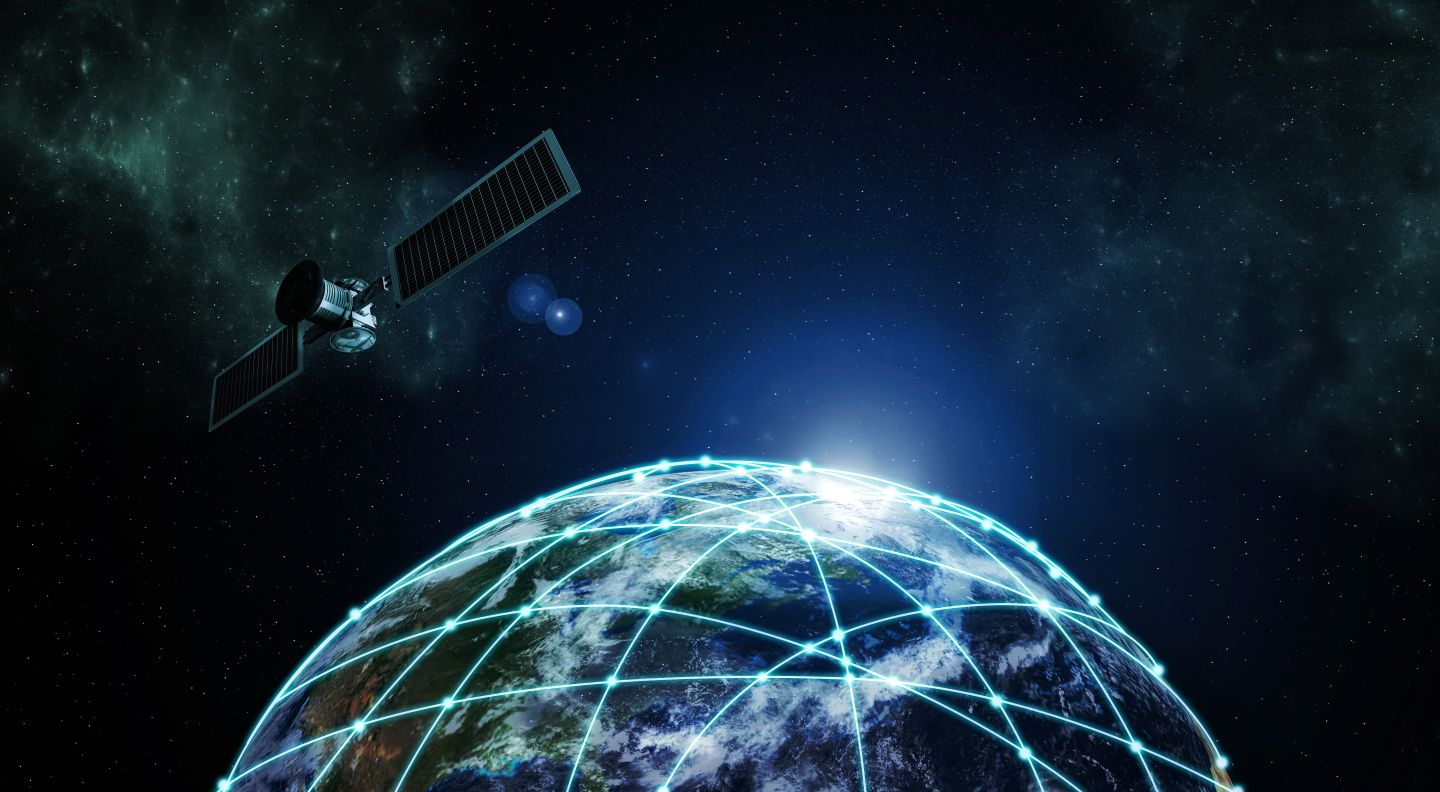
Alongside performance transparency, constant connectivity will become increasingly central to making a holistic consumer pitch. For the latter angle, the rapid evolution of operator partnerships to provide satellite direct-to-device (D2D) capability for mobile users or backup internet failover will continue throughout 2026.
However, as the exclusivity windows close for SpaceX’s initial D2D partners in their respective markets, those partners’ primary telco rivals will have a hard decision to make: either jump on board with SpaceX’s established constellation to eradicate an early-to-market advantage for their most significant direct competitors or continue propping up potential SpaceX rivals to avoid getting locked into a relationship subject to the unpredictable whimsies of Elon Musk. It’s a brutal bit of calculus, and 2026 will see operators worldwide falling on both sides of that particular either/or equation.
Meanwhile, hard truths about a satellite’s fixed broadband capabilities and cost will also become topical in 2026. While the satellite’s ability to connect locations where fibre deployment is unfeasible will continue to be a boon for closing the digital divide, the reality is that satellite service remains cost-prohibitive for a lot of consumers, and the space-based access tech simply cannot escape physics: a satellite’s download and upload characteristics still struggle to meet modern definitions of suitable broadband service. In the US in particular, that’s a problem, which will only get worse once a wave of government-funded connections starts siphoning off precious bandwidth.
Double-edged swords: Multiservice convergence and digitisation open new vectors for competition
Maximising the acquisition and retention benefits of multiservice convergence will stay at the forefront of operators’ go-to-market considerations in 2026. While that will mostly mean scenarios akin to standard fixed, mobile, and content convergence in the US, more forward-looking markets in Europe and Asia—where the evolution in convergence trends is much further along—will continue to see multiplay proliferation beyond the bounds of traditional telecom into utilities, insurance, banking, and more.
Yet, since that encroachment into adjacent markets cuts both ways, operators will also see a rising tide of alternative MVNOs entering the competitive mix in 2026 as more neobank, retail, and ‘cult of personality’ MVNO brands appear in-market. Many potential digital-native entrants—e.g., fintechs—have sizable app installed bases already, translating into established relationships with existing, engaged users familiar and comfortable with the entrant’s service platform and management capabilities. That’s a sandbox in which extending an MVNO offer becomes a natural ecosystem play, particularly if there are loyalty-associated pricing perks on tap.
Furthermore, in addition to enjoying a brand awareness head-start among their existing installed base, where the ecosystem marketing shout carries little to no cash burden, digital-native alternative MVNOs are also divorced from the huge operational and capital overhead that comes with network ownership. That leaves more resources to invest in R&D, develop new and innovative products and services, and iterate forward on platform-related service capabilities at a cadence most network operators will have trouble replicating.
The result is a competitive threat that traditional operators must monitor throughout 2026—a threat where the danger lies less in any single alternative MVNO reaping a groundbreaking number of subscribers and more in their presence en masse, establishing a whole new set of pressures on the mobile pricing landscape. On a long enough timeline, escalating price pressure in a mature market space is a recipe for margin erosion.