
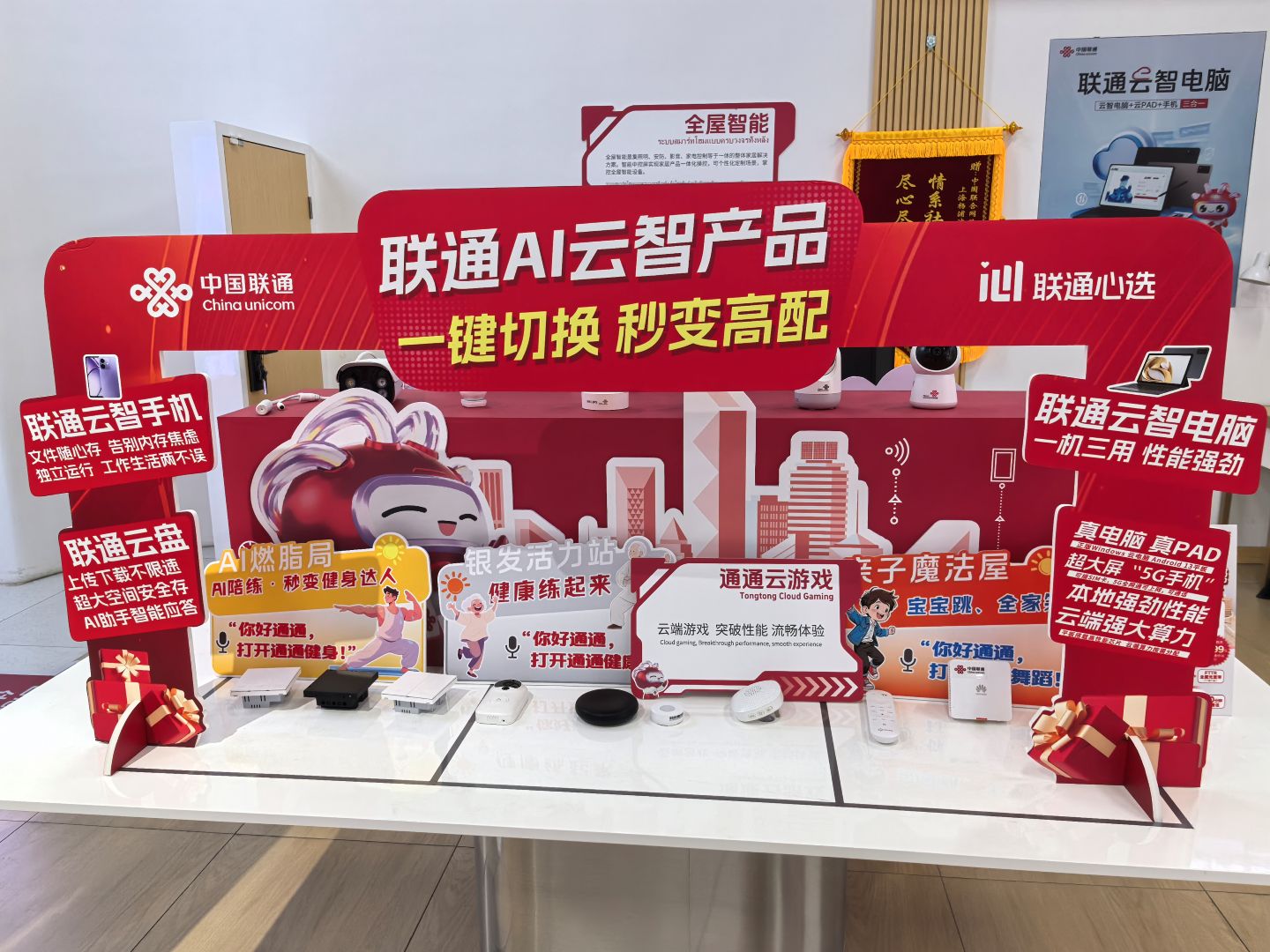
All telcos are currently looking to upgrade their legacy role as a network pipe and reposition themselves in the market as a provider of monetisable next-generation consumer user experiences – but how, exactly? The answer could be in the juxtaposition between AI and cloud computing. In China, China Unicom has taken the lead with what is proving to be a successful strategy integrating cloud AI devices and cloud phone services, with converged network-computing infrastructure for a suite of new Cloud AI home and personal services.
The rationale is already established outside of the telco domain, thanks to services such as ByteDance’s Volcano Engine, which provides a personalised recommendation algorithm, besides data analysis and AI for enterprises. Alibaba Cloud’s Wuying Cloud Phone leverages cloud AI in a similar way, providing enterprises with computing power and application execution in the cloud. Both enterprise initiatives essentially allow enterprises to radically reduce the cost of deploying next-generation AI services for a growing suite of use cases, from advertising to mobile office, with lower-cost devices. However, China Unicom has fashioned this concept for the personal and residential market in a new way.
Go deeper with GlobalData


Access deeper industry intelligence
Experience unmatched clarity with a single platform that combines unique data, AI, and human expertise.
China Unicom’s case study is already quite mature, with inspirational use cases, benefits and promising uptakes to date. After less than one year in the market, the telco is reporting over 15 million customers for its flagship Cloud AI phone service, with around another half a million currently using the sister Cloud AI PAD service, together with its ‘Tone’ AI Agent, and a growing number of users of the company’s latest AI cloud product enhancement: ‘Tone’ Home Robot service, for a ‘seamless AI’ Cloud Intelligence experience to all screens, via a unified Cloud AI OS.
The Cloud AI OS is the lynchpin in this personal and residential cloud AI service ecosystem. On the Cloud AI Phone and Pad side, China Unicom has launched a number of AI-rich services such as Intelligent Q&A and automatic task execution, further enhanced with the benefit of having a single AI cloud ‘profile’ that can be extended seamlessly across both phone and tablet devices. The accompanying AI assistant Tone Home Robot is now allowing customers to access a range of personal services, from AI Learning to AI Exercise and more, besides, of course, AI Voice Calling.
In the case of AI Fitness, China Unicom has partnered and integrated content and services from a third-party platform provider of online fitness services. The collaboration allows customers to access AI personalised data from the partner’s fitness content, from video tutorials to live interactive classes, together with AI-assisted personalised programmes to make the classes more customised with real-time performance feedback and reporting. According to China Unicom, the service now boasts an action correction accuracy level of above 90%, moving home fitness to a new and far more personalised level.
In the case of AI Education, China Unicom has partnered with China National Knowledge Infrastructure (CNKI) to advance digital education with enhanced, AI-optimised online learning resources. The partners aim to build a national digital public service system for education, providing a wide array of courses, resources, and services across various educational levels.
In terms of monetisation, China Unicom has seen some success with its Cloud AI service strategy. Combining a connectivity package with a Cloud AI service can bring significant DOU [data usage per user] and ARPU [average revenue per user] upticks. According to JiLin University, an increase in data usage of between 30GB and 60GB per month can potentially lead towards a 50% increase in ARPU.
Another promotion for students, entailing a bundled PAD and Education course, demonstrated a paid conversion rate of 19.7%, and yet another targeting the senior segment with a bundled Home TV box and AI Home Assistant and Health Monitoring service yielded a paid conversion rate of 32.1%. In all cases, one of the most compelling sales arguments of personal and residential Cloud AI services is that they can be adopted using virtually any smartphone device and OS, including relatively low-end devices – essentially bypassing the storage and computing limitations in this class of devices. With no device upgrade required, telcos can position freemium promotions of AI services faster and with fewer adoption issues than typically associated with next-generation digital services.
Going forward, China Unicom is likely to extend its portfolio of AI services for individuals with new content partners, to broaden the appeal of personalised services, or even bundles of services and subscriptions, to a wider section of the consumer market.
This case study comes at a time when virtually all wireless operators worldwide are interrogating their existing 4G and 5G monetisation success to date – and questioning the rationale of future network upgrades ahead, given the relative paucity of success to date. Not only does Cloud AI, together with partnership content, enable telcos to position AI to consumers in meaningful, monetisable ways, but it also opens the accessibility of these promotions to owners of lower-grade devices with inferior storage and computing power. In other words, telcos can take next-gen, fully personalised AI services to the mass market for the first time.