

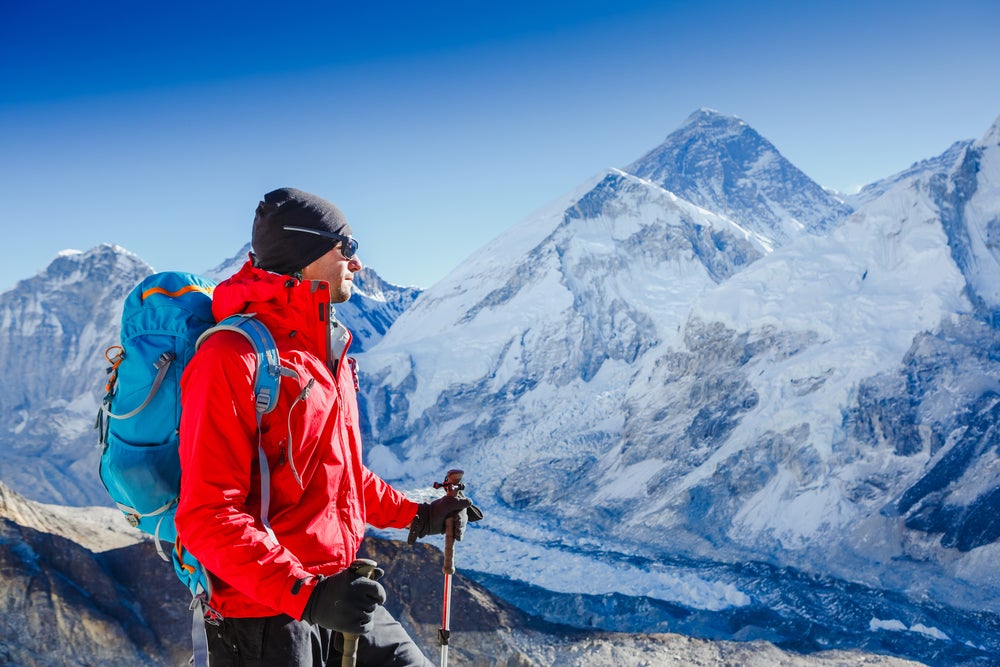
Mount Everest is the tallest mountain on Earth, standing at 8,849 meters.
For decades, it has attracted climbers from across the world, all eager to stand on its famous summit. Reaching the top, however, is not just about skill; it is about survival. Every climber knows that one wrong step, a sudden storm, or a lack of oxygen could mean death. For those who attempt it, the journey is about making it back alive.
With such life-or-death stakes, the idea of worrying about human waste might sound trivial, but the reality is that the thousands of climbers who attempt Everest each year leave behind more than footprints. Alongside oxygen bottles, tents, and general rubbish, large amounts of human waste have been left frozen on slopes and in camps. It is a problem that threatens the mountain’s fragile environment as well as public health.
Nepal’s struggle to control the waste on Everest
The Nepalese government, which manages access to Everest from the south side, has long recognised the problem. Back in February 2024, officials announced new rules requiring climbers to bring back their waste in special bags. This was part of an effort to reduce pollution on the mountain and protect local communities downstream, where melting glaciers often release waste into water supplies.
But in practice, these policies have not always worked. Rules about carrying waste have failed because of weak enforcement. The government has said that officials would accompany expeditions to supervise, but this has rarely happened. As a result, the mountain continues to collect waste year after year. For locals and environmental groups, this has become a major concern, both for the dignity of the mountain and for its long-term preservation.
Heavy-lift drones take flight
Now, attention is turning to technology for solutions. One of the most promising ideas comes from using drones to help carry waste down from high camps. Normally, helicopters cannot fly safely at those extreme altitudes because of the thin air and dangerous conditions. But specially designed drones are proving capable of flying in thin air while carrying heavy loads.
A Nepalese start-up called Airlift Technology has teamed up with DJI, the Chinese drone giant, to deploy DJI FlyCart 30 drones on Everest. These machines are not hobby drones; they are heavy-duty aircraft able to transport up to 15 kilograms per trip. In 2025, the drone test flights removed 300 kilograms of waste from Everest’s Base Camp 1 and more than 600 kilograms of waste from Mount Ama Dablam, located in Nepal’s Khumbu region.
Built for the extremes
Flying on Everest is no small feat. Thin air at high altitudes reduces lift, while bitter cold saps battery power. To overcome this, the FlyCart 30 was engineered to operate in temperatures as low as –20°C and at heights of around 6,000 meters. It can also withstand winds of up to 40 kilometers per hour. Airlift asserts that this marks a record for the highest drone delivery. During a run, special load-stabilising systems keep cargo steady as it crosses dangerous features such as the Khumbu Icefall, where human porters traditionally risk their lives carrying supplies.
Sherpas responsible for gathering the supplies simply attach bags filled with trash to the drones for their return journey. According to a local Sherpa interviewed by Bloomberg, drones are estimated to have removed around 70% of the waste that would usually be carried down the mountain on foot this year.
However, this solution has its limitations. The thin air and sudden gusts of wind at the highest points of Everest make it difficult for drones to work at some of the final camps before the summit. As a result, climbers trying to reach the top will still need to be careful to avoid frozen waste for the time being.
A cleaner future for Everest
For decades, the glamour of Everest has been tarnished by headlines calling it “the world’s highest garbage dump.”
If drones continue to prove their worth, that label may finally fade. By taking over the dangerous task of waste transport, they not only reduce risk for Sherpas but also make it realistic to enforce Nepal’s waste-return rules.