The “manosphere” is a network of online communities, blogs, social media channels, and influencers promoting men’s issues.
Although different groups vary in their beliefs, they are mostly united by their misogyny, the promotion of traditional masculinity, and a belief that feminism has resulted in the subjugation of men. Factions within the manosphere include men’s rights activists (MRAs), pick-up artists (PUAs), involuntary celibates (incels), and Men Going Their Own Way (MGTOW).
Who’s who in the manosphere?
A prominent figure in the manosphere is Andrew Tate, a self-proclaimed misogynist who was banned from Twitter (now X) in 2022 after stating that women should “bear some responsibility” if they had been sexually assaulted. Although later reinstated, Tate and his brother Tristan were detained in Romania for alleged human trafficking and rape and were charged in 2023. They also face charges relating to human trafficking, rape, and actual bodily harm in the UK.
Other figures include Myron Gaines and Walter Weekes, who host the Fresh and Fit podcast. Gaines is also the author of Why Women Deserve Less. In a post to X, the Fresh and Fit podcast wrote that “simps, the government, and society as a whole pedastalises [sic] women for having a vagina. Give them less so they respect you and give you more.”
The language of the manosphere
The manosphere almost has its own dictionary. It certainly has its own terms and slang. Men are categorised as high-status and dominant “alphas” or inferior and weak “betas”. Women are frequently referred to using dehumanising terms such as “femoids” (female humanoids).
One of the key ideas in the manosphere is being “red pilled”, a reference to the 1999 sci-fi film The Matrix. It entails waking up to the supposed harsh truth that men are oppressed in today’s society, instead of continuing in blissful ignorance. Another commonly shared belief among incels is the 80:20 theory. This dictates that 80% of women are only attracted to 20% of men, leaving little hope for the remaining majority.

US Tariffs are shifting - will you react or anticipate?
Don’t let policy changes catch you off guard. Stay proactive with real-time data and expert analysis.
By GlobalDataThe real-world implications
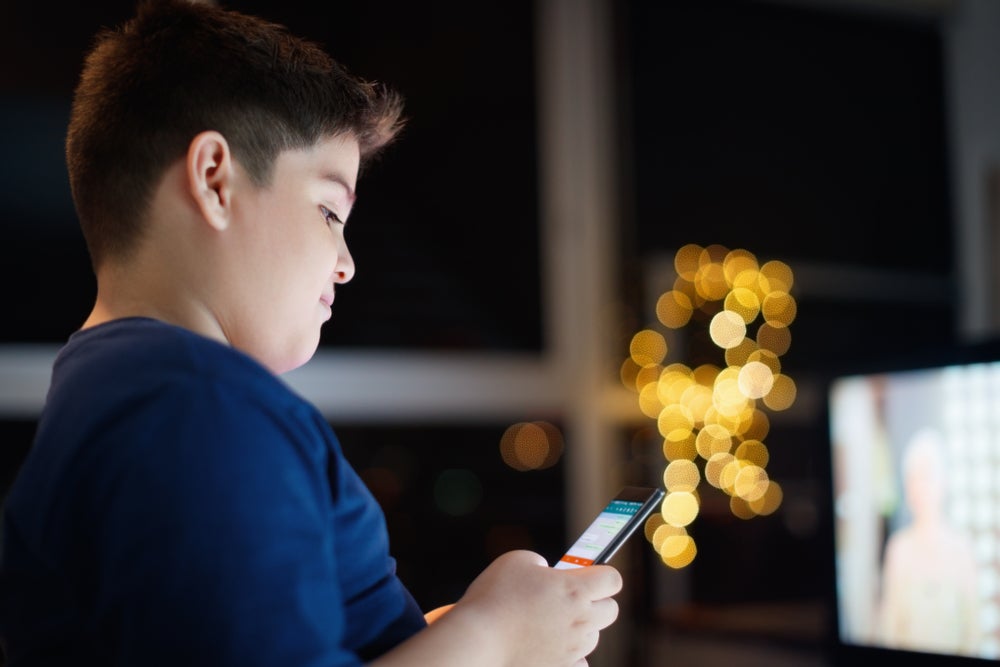
While it may be tempting to dismiss these ideas as extreme, fringe views confined to dark corners of the internet, there is growing recognition of their real-world implications. Algorithmic technology pulls users into echo chambers, where misogynistic or harmful content is repeatedly angled towards them. But harmful content does not only appear to those who search for it. Many are pulled into the manosphere after searching for fitness or dating tips. Recent polling commissioned by Amnesty International UK revealed that 73% of Gen Zs who use social media have seen misogynistic content online.
Increasingly, data is showing that misogynistic content on social media is contributing to a worrying normalisation of misogyny, especially for young boys. The Amnesty polling showed that 62% of Gen Zs believe online misogyny mirrors real-life misogyny. In a survey by the National Association of Schoolmasters Union of Women Teachers, 59% of teachers believed that social media was negatively affecting pupil behavior.
No less than 53 teachers referred to Andrew Tate as a source of the increase in misogynistic abuse faced by female teachers and pupils. Other female teachers reported boys “barking at female staff and blocking doorways”, as well as students as young as ten years old refusing to speak to them due to their gender.
The impact of radicalisation can be devastating. In July 2024, Kyle Clifford murdered his ex-girlfriend Louise, her sister Hannah, and her mother Carol in a brutal attack in their home. Clifford had watched Andrew Tate’s videos and podcasts in the days before the attack. In a BBC interview, Louise and Hannah’s sister commented that there was an “undeniable link” between the content he watched and the murders he committed.
Similarly, in another misogyny-fueled attack, incel Elliot Rodger murdered six individuals and injured a further 14 near the University of California, Santa Barbara, in May 2014. He specifically targeted the Alpha Phi sorority because he deemed its members to be “the kinds of girls I’ve always desired but was never able to have.”
Calls for action
Despite the bleak landscape, calls for urgent action are becoming louder. Amnesty International has urged social media companies to step in and address online misogyny. The release of Adolescence in March 2025 prompted a roundtable discussion between Prime Minister Kier Starmer and the show’s creators.
In May 2025, the Women and Equalities Committee launched an inquiry into the manosphere and online misogyny, aiming to examine both the impact of misogynistic behavior and how to combat it. However, responsibility over the issue remains contested, with many asking whether it lies with schools, parents, social media companies, or the men and boys themselves.