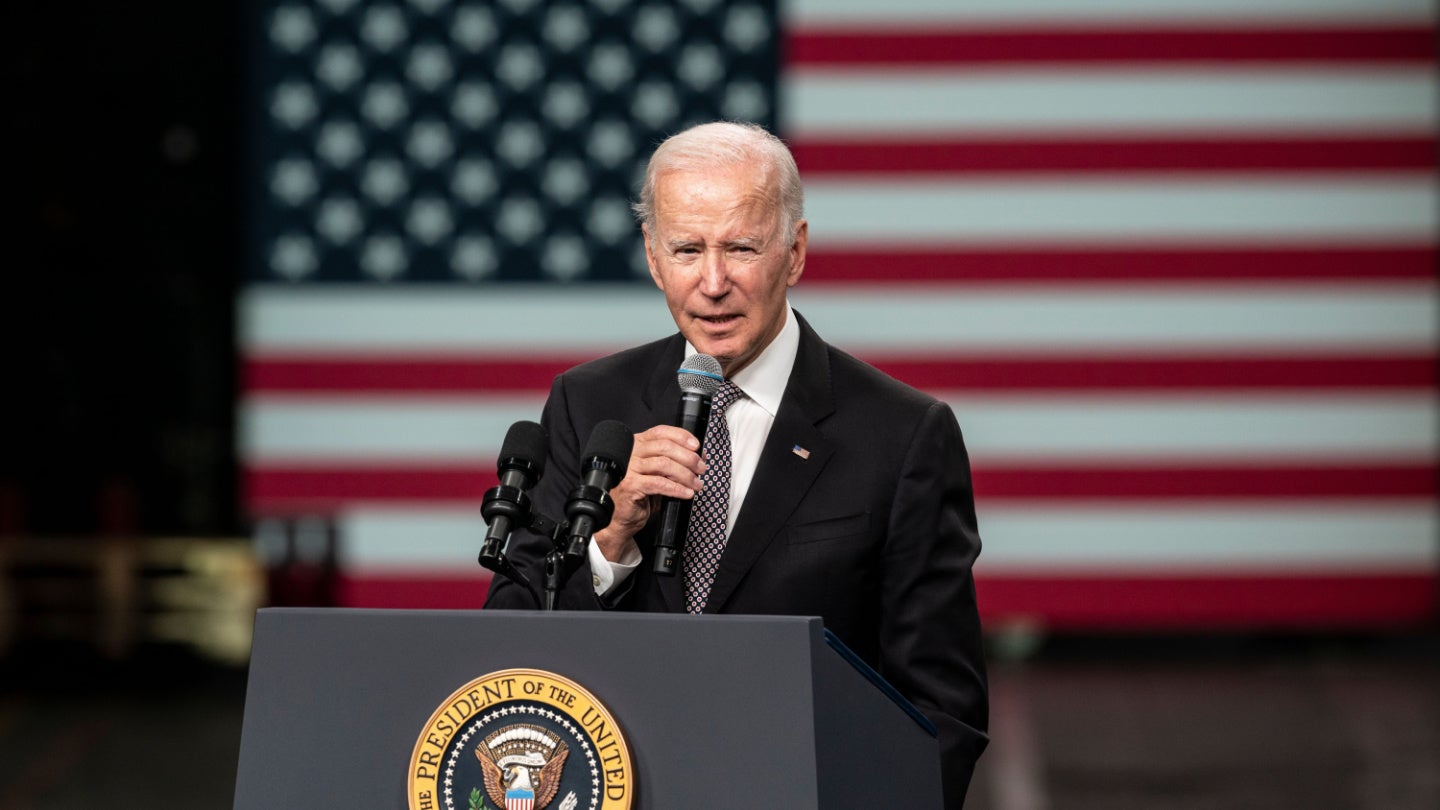
Democratic state attorney generals have filed an appeal against a court ruling that limited the contact between the Biden administration and social media companies.
In his original ruling to limit communications between government and social media companies, US District Judge Terry A. Doughty argued that the government’s attempts to curb political misinformation online “blatantly ignored the First Amendment’s right to free speech”.
Go deeper with GlobalData


Access deeper industry intelligence
Experience unmatched clarity with a single platform that combines unique data, AI, and human expertise.
However, this ruling is currently on hold after the Biden administration appealed against it.
The appeal maintains that keeping an open line of dialogue between the Biden administration and social media companies is “productive, mutually beneficial and non-coercive”.
Arguing that this ruling is strictly “contrary to the public interest”, the appeal makes a case for open dialogue between the government and social media companies as helping keep online users safe.
The document outlines how multiple states have “engaged in open dialogue” with social media companies over many years, such as Meta or Twitter, to control the spread of hateful or extremist content.
The Buffalo mass shooting in New York, in which the perpetrator posted a Twitch livestream link to the attack on Discord, was used in the document as an example.
Whilst both Twitch and Discord took down the initial content posted by the attacker; the appeal notes that the Office of New York Attorney General “performed its own search” across social media for the content to control its spread.
The appeal clearly states that State officials and social media companies need this open communication to investigate the role social media sites play in harbouring violent content and ideas.
Speaking on the role of media in “lone wolf terrorism,” Manfredi Pozzoli, on the Global Network of Terrorism and Technology, writes that social media’s “algorithms and platform mechanics” can contribute to the “probability the message will go viral” and reach its intended audience.
Furthermore, the appeal document also outlines the longevity of such communication between government agencies and social media companies.
Stating that an open dialogue between the two dates to the “mid-2000s”.
GlobalData’s 2023 thematic intelligence report into tech, media and telecoms states that it expects extremist content and “political disinformation spread by social media platforms to be heavily scrutinised in 2023”.
As the US nears its upcoming 2024 presidential election, more dissections of social media companies’ responsibility to remove misinformation will arise.