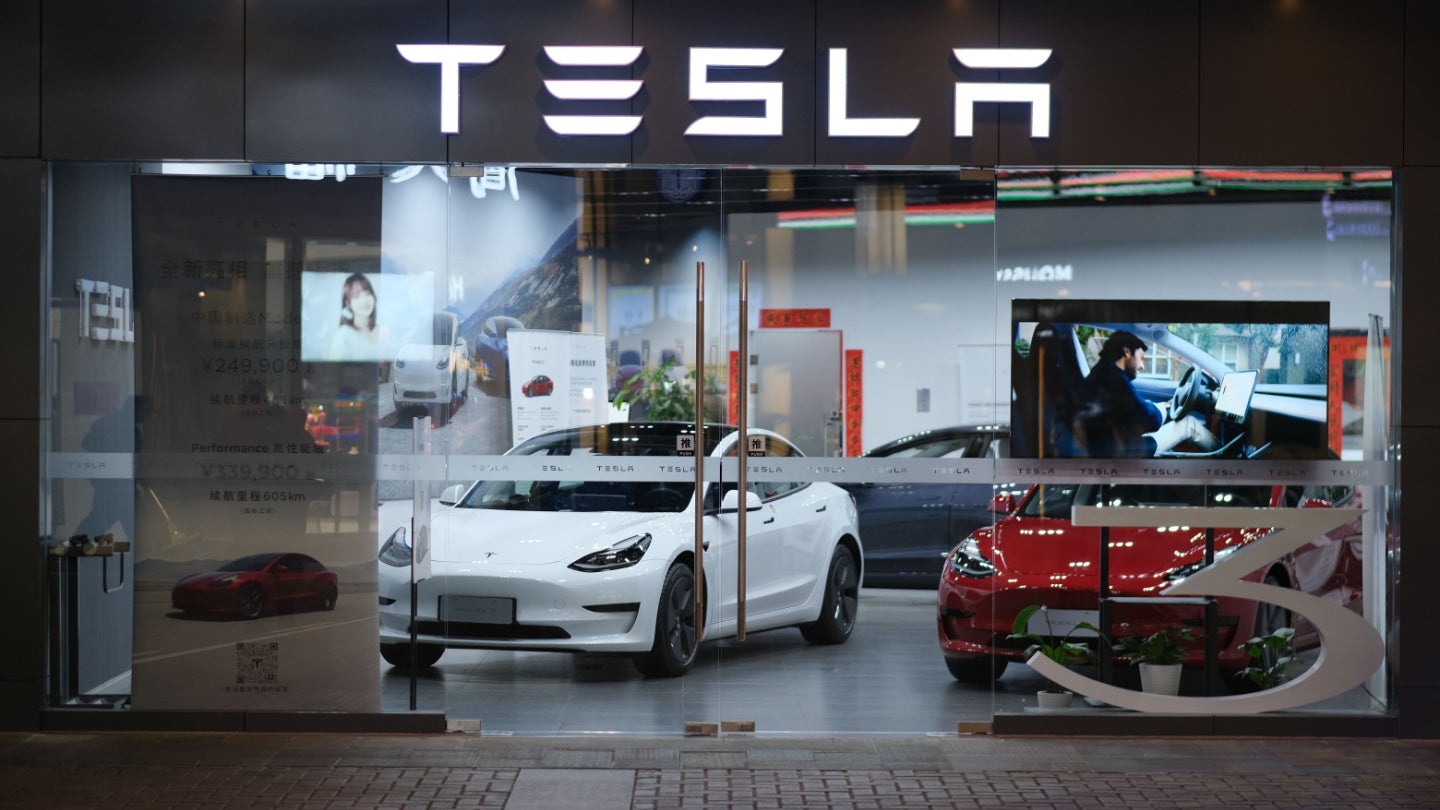
Tesla’s rollout of its Dojo supercomputer into autonomous vehicles (AVs) could boost its market share by over $500bn according to research notes by investment bank Morgan Stanley as reviewed by Bloomberg.
In July this year, Tesla announced, alongside its earnings, that it had begun mass production of its supercomputer. Dojo training computers are expected to expand opportunities for Tesla’s autopilot team.
Go deeper with GlobalData


Access deeper industry intelligence
Experience unmatched clarity with a single platform that combines unique data, AI, and human expertise.
This, according to Morgan Stanley, could result in “new addressable markets” as AVs become more widespread.
Previous reports claim that Musk has already touted the Dojo supercomputer’s ability to perform at an ‘exaflop’ – meaning the computer could process one quintillion operations per second.
According to Morgan Stanley the extraordinary compute power could give Tesla an “asymmetric advantage” in creating safer AVs that could be used as robotaxis or other public transportation.
Following the August 2023 launch of Cruise’s self-driving taxis in California and the subsequent collisions and traffic that ensued, scepticism over self-driving public transport is high.
US Tariffs are shifting - will you react or anticipate?
Don’t let policy changes catch you off guard. Stay proactive with real-time data and expert analysis.
By GlobalDataResearch analyst GlobalData states that although its data shows an increase in news stories and social media posts written about AVs, the theme is slowing down in terms of investment.
Hiring related to self-driving vehicles was down 6% last year, whilst deals and patents also saw a decrease of 12% and 26% respectively.
“The frothy early days of autonomous vehicle development have ended,” explains GlobalData, “and early optimism has given way to a more cautious tone.”
In February, Tesla already had to issue a recall of over 363,000 cars due to faults in the self-driving software. GlobalData predicts it could be as late as 2035 before any “meaningful deployments” of self-driving vehicle fleets.
Tesla’s newest installment of its updated self-driving system is expected to be released by the end of 2023.