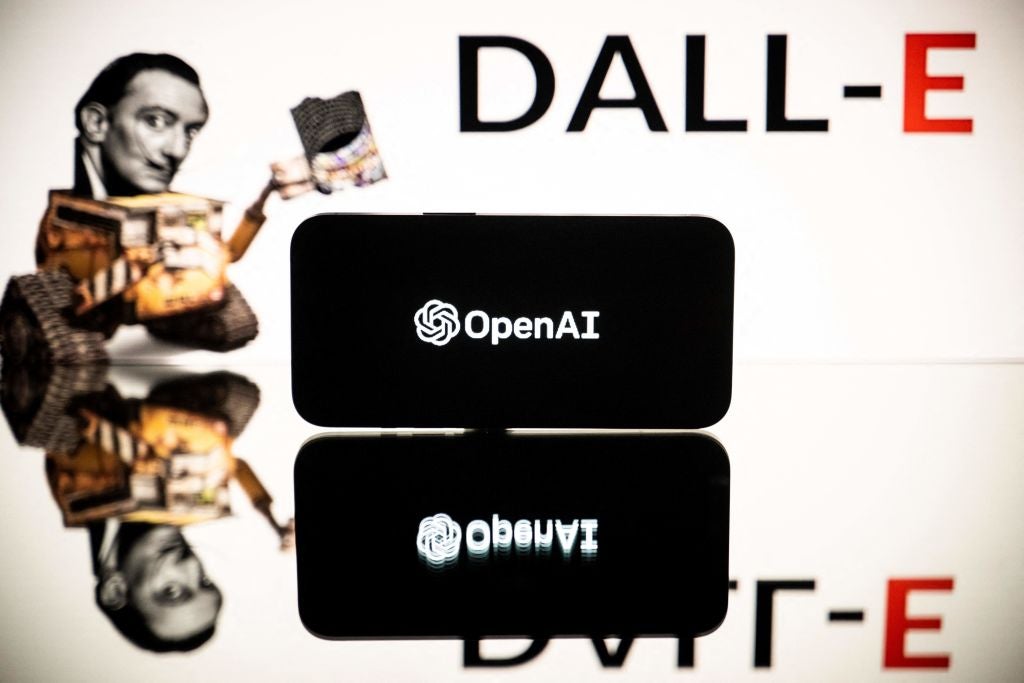
OpenAI unveiled the latest version of its popular text-to-image tool on Wednesday (20 Sept), which will be released with a range of new safeguards.
The safeguards, which include options to decline requests for images in the style of someone’s work, allow artists to opt out of having some, or all, of their work used in the training of future generative AI models.
Go deeper with GlobalData


Access deeper industry intelligence
Experience unmatched clarity with a single platform that combines unique data, AI, and human expertise.
The upgraded tool, DALL-E 3, will be available for OpenAI’s enterprise and ChatGPT Plus customers in October.
A survey conducted in February 2023 by research company GlobalData found that 29.2% of businesses had already implemented generative AI software like DALL-E and ChatGPT into their work flows.
As more businesses in a wide-array of industries sign up to use ChatGPT’s enterprise version in the workplace, pressure on OpenAI to safeguard its generative AI applications will continue to rise.
The news comes as the DALL-E and ChatGPT creator has faced major criticism over its stance on copyright.
In August, a US court ruled that a work of art created by AI without human input will not be able to be copyrighted under US law.
OpenAI, which first released DALL-E in January 2021, is also facing lawsuits from successful authors over the use of their work in its other generative AI chatbot product, ChatGPT.
On Thursday (21 Sept), a trade group for US authors sued OpenAI in a federal court on behalf of writers including John Grisham and George R.R. Martin, accusing the company of using their work to train its ChatGPT chatbot.
The lawsuit follows a growing list of others before it, with three successful authors, Michael Chabon, Rachel Snyder and Ayelet Waldman also suing the company this month.
Several generative AI companies, including OpenAI, maintain their use of training data from the internet qualifies as fair use under US copyright law.
Copyright lawsuits are piling up in the generative AI space and these lawsuits will decide the terms and future applications of the technology, according to GlobalData.