Robin AI, a legal-tech business, has raised $26m in new funding for its legal AI copilot assistant.
This new funding has been spearheaded by global investment company Temasek, other investors also include QuantumLight, Plural and AFG Partners.
Go deeper with GlobalData


Access deeper industry intelligence
Experience unmatched clarity with a single platform that combines unique data, AI, and human expertise.
Robin AI was founded in 2019 by lawyer Richard Robinson and machine learning research scientist James Clough. Robin AI hopes to speed up the legal process of drafting contracts and information retrieval.
In February 2023, Robin AI also announced that it would be incorporating Anthropic’s AI models into its tech.
CEO and co-founder Richard Robinson stated that he was optimistic about Robin AI’s new funding and a future expansion in the US.
“Our AI will help people tackle every legal task,” Robinson said, “This will help level the playing field between big and small law firms and help more people access legal services. This investment will help us to realise this vision.”
US Tariffs are shifting - will you react or anticipate?
Don’t let policy changes catch you off guard. Stay proactive with real-time data and expert analysis.
By GlobalDataWhilst previous artificial intelligence (AI) hiring and usage has been limited to the technology sector, AI is now set to disrupt nearly every sector, according to research from analyst company GlobalData.
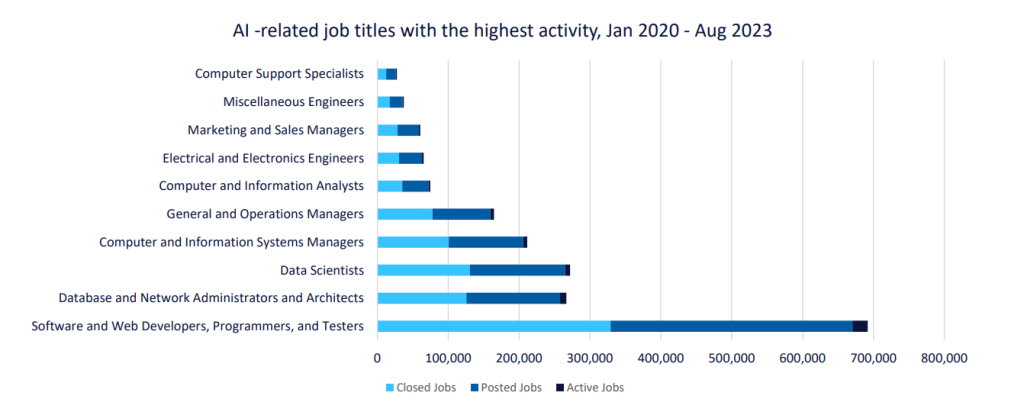
In a 2023 GlobalData survey nearly 17% of businesses responded that they already had a high adoption rate of AI into their daily workflows. However, 50% of respondents also stated that they believed AI was already disrupting their sector significantly.
As more and more businesses outside of technology begin to adopt AI, demand for AI related skills will increase outside of tech.
Looking towards 2024, legal firms may also need to hire people with AI knowledge if they wish to adopt and maintain AI tools into their workflows.
Our signals coverage is powered by GlobalData’s Thematic Engine, which tags millions of data items across six alternative datasets – patents, jobs, deals, company filings, social media mentions and news – to themes, sectors and companies. These signals enhance our predictive capabilities, helping us to identify the most disruptive threats across each of the sectors we cover and the companies best placed to succeed.