As the North Korean missile threat intensifies, translation technology is being deployed to address the kind of confusion reported in northern Japan, where an evacuation order was issued and then retracted within 30 minutes.
Reports have emerged today (13th April, 2023) of a North Korean missile launch for which which Japan mistakenly issued an evacuation order and South Korea labelled a ‘grave provocation’.
Go deeper with GlobalData

Access deeper industry intelligence
Experience unmatched clarity with a single platform that combines unique data, AI, and human expertise.
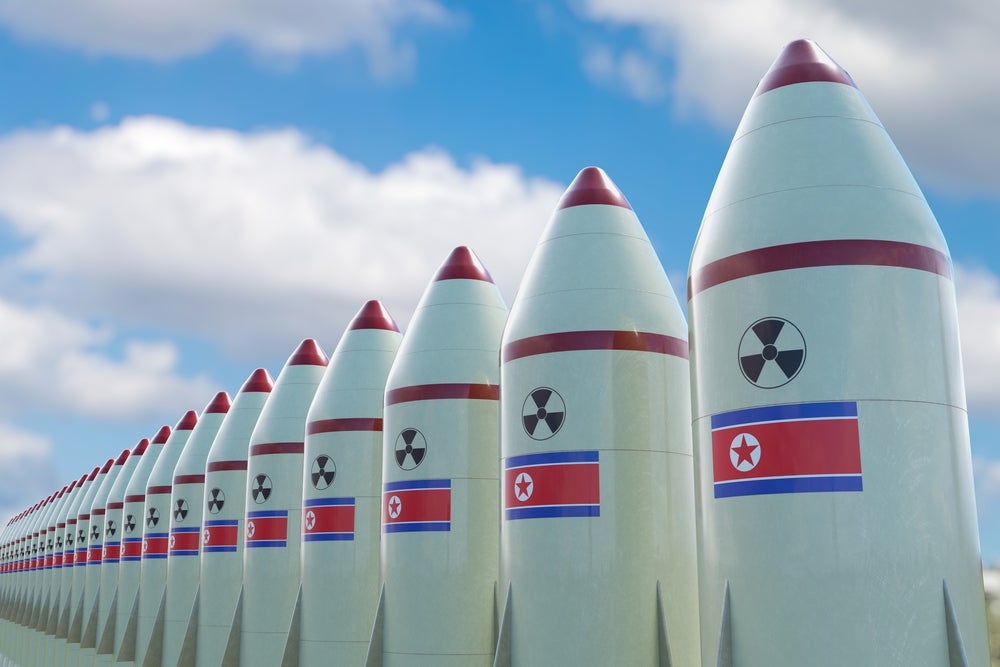
Tensions have been rising in the region as North Korea has reportedly tested 27 missiles this year as well as revealed an arsenal of small nuclear warheads capable of hitting targets in South Korea.
The unveiling of such tactical nuclear weapons comes as the longstanding South Korean US alliance steps up military drills across the border.
US military forces have been stationed in South Korea since 1957. They work closely with South Korean army personnel and Pacific allied forces, as well as foreign militaries acting as security peacekeepers.
With the growing threat of aggression in the Pacific region, effective real-time communication between non-English speaking allied militaries has become critical. A growing deployment of translation technology based on machine translation or natural language processing (NLP) is helping to address cross-border failures in communication.
For example, the US military has been using a platform called Language Weaver for secure communication between its personnel and South Korean military personnel. The platform has increased translation capacity between the two militaries from 2,000 words per day per location to 2,000 words a minute. The communication platform can help with anything from translating email, immediate chat translation and translation of secure radio transmissions as well as instant face-to-face translation.
Mihai Vlad, general manager at Language Weaver told Verdict that the company’s translation technology complies with the strict security requirements of both US and South Korean military personnel. “Modern machine translation tools, powered by AI, are transforming how efficiently and securely businesses and governments interact on a real-time basis, streamlining productivity and assuring accuracy of content throughout,” says Vlad.
Machine translation or NLP is a field of AI focused on enabling computers to analyse, understand and derive meaning from human language (both text and speech), according to GlobalData thematic research.
NLP in machine learning trains algorithms to understand interactions with machines and formulate responses. NLP is used daily in chatbots, voice recognition products like Siri and Alexa, and even spell-check tools.
The analyst warns that NLP still has some development challenges. For example, it can usually compute positive and negative sentiments, but it struggles with context, irony, colloquialisms, and textual errors.