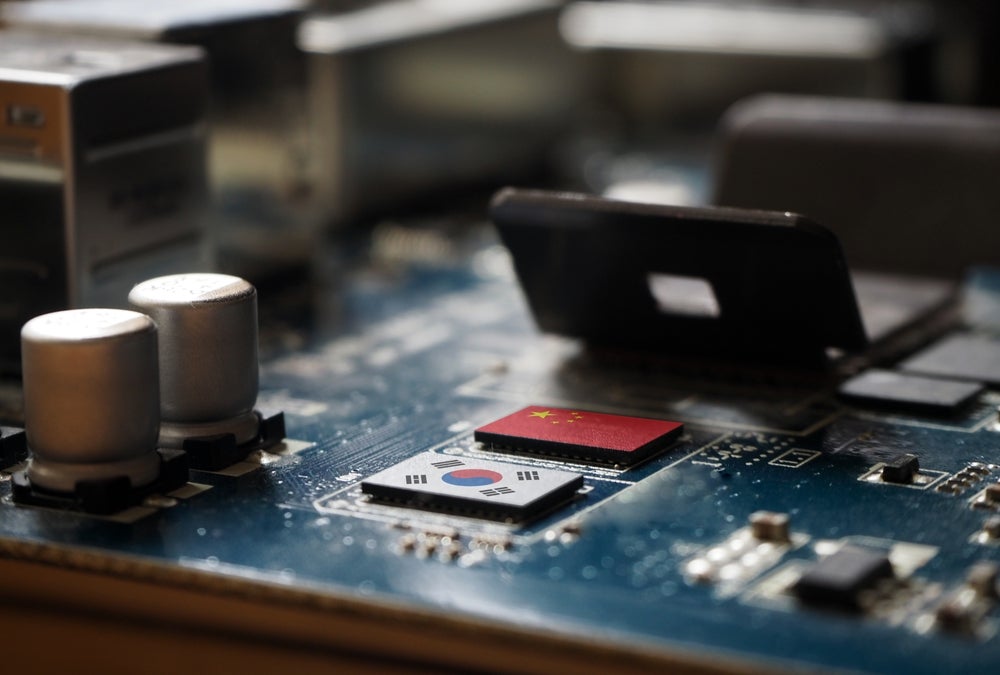
South Korea has expressed concern over the the US blocking foreign investment incentives in chips manufacturing, mitigating Western dependency on China
South Korea has requested that Washington reviews its new semiconductor subsidies criteria. A US public filing showed that South Korea is concerned over the impact of US restrictions on chip investment in countries such as China.
Go deeper with GlobalData


Access deeper industry intelligence
Experience unmatched clarity with a single platform that combines unique data, AI, and human expertise.
In March 2022, the US commerce department proposed the US CHIPS Act, which included $52bn foreign investment incentives to increase the US semiconductor manufacturing capacity. The move was designed to mitigate Western dependency on Asian chip manufacturing.
One of the rules South Korea is now asking the US to review prevents recipients of US CHIPS Act funding from building new facilities in China and other countries deemed to have national security concerns.
According to Reuters, South Korea said, “The Republic of Korea believes guardrail provisions should not be implemented in a manner that imposes an unreasonable burden on companies investing in the United States,”
While giving no further details, the South’s Yonhap news agency said Seoul had asked to raise the limit from 5% to 10%.
US Tariffs are shifting - will you react or anticipate?
Don’t let policy changes catch you off guard. Stay proactive with real-time data and expert analysis.
By GlobalDataChina is in danger of ceding AI leadership if US chip restrictions continue. Last year, Washington intensified its efforts to slow Chinese manufacturing and sales of semiconductor chips by banning US chipmakers from working in China.
Beijing called for closed-door emergency meetings with some of its biggest tech companies after the introduction of the new chip restrictions against China.
US chip maker Micron said the ban on selling to Chinese companies working on key infrastructure projects could cost as much as a “high single-digit” percentage of its annual revenue, according to CNN.