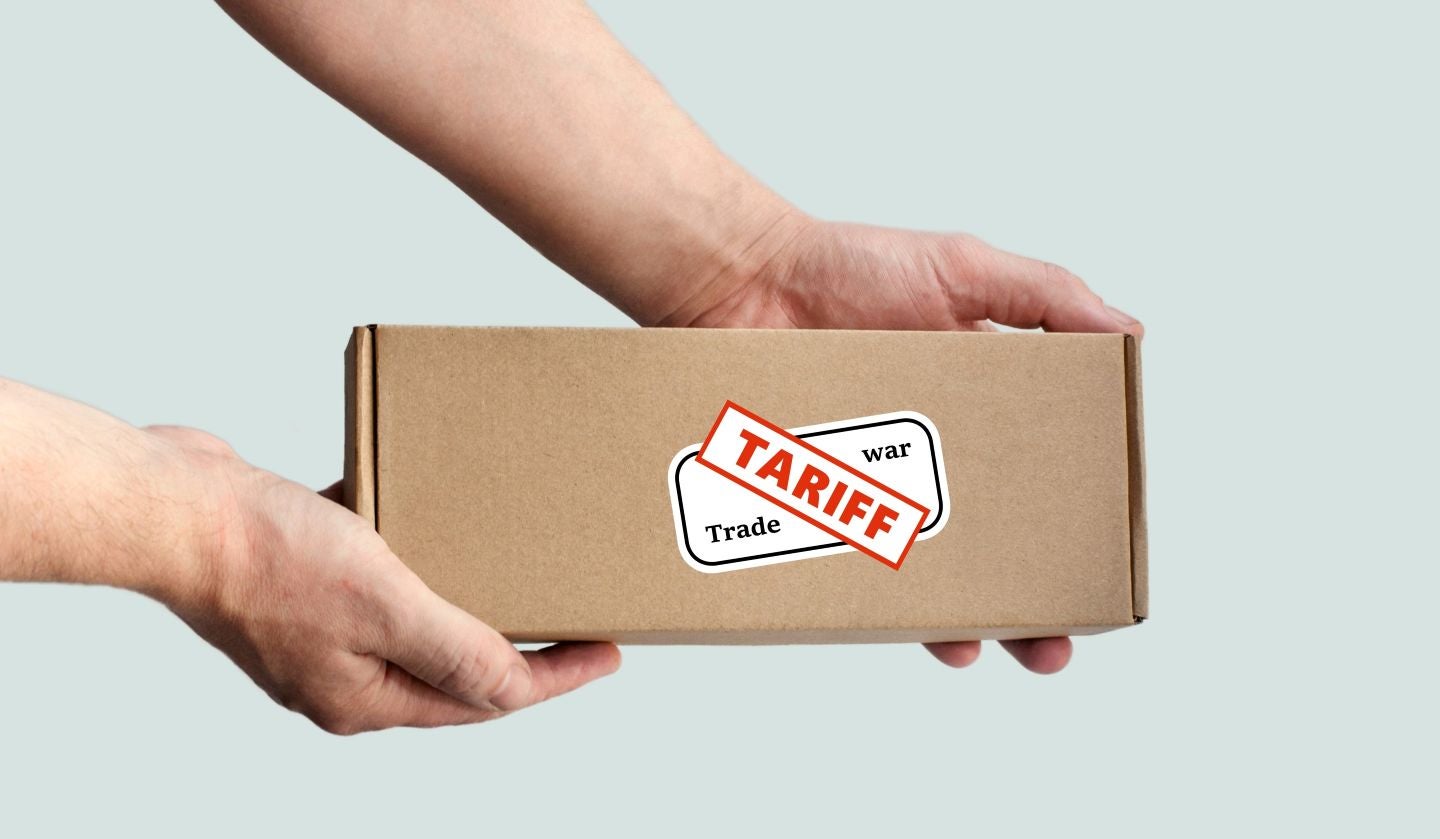
US trade policy under President Trump has leaned heavily on protectionist measures, especially steep “reciprocal” tariffs that impose high duties on goods from countries that are seen to have high import barriers themselves. While the stated goals have been to protect American manufacturing and reduce trade deficits, the effects ripple far beyond the US economy. For many non-aligned or semi-aligned states, nations that do not want to be forced into binary alignments like “for or against” the US or China, these protectionist policies are creating incentives to shift away from the US.
In August 2025, the Trump administration placed a punitive 25% tariff on Indian goods, citing the country’s ongoing purchase of Russian oil. This was added to an earlier 25% tariff imposed in early August after trade negotiations between the two countries faltered. This resulted in a total tariff of 50% on most Indian goods. Trump has also tried to pressure G7 and Nato members to impose close to 100% tariffs on China and India for their purchases of Russian oil imports, an act that’ll likely drive the two nations closer together.
The Trump administration’s aggressive tariff strategy isn’t just about protecting US industry or balancing trade sheets; it is fast becoming a blunt instrument that alienates non-US-aligned countries and allies alike. These policies are accelerating a drift away from the US, both economically and diplomatically. India provides a glaring illustration of this cost. Other nations are moving in parallel. This poses the question: Is the US willing to alienate vast swathes of the global economy for short-term gain?
India is the clearest example
Under Trump 2.0, the US began imposing duties on Indian goods in response to India’s higher tariff measures, under a “you impose high tariffs, we will do the same” logic. Tariffs on many Indian exports have risen, sometimes to as high as 50%, especially when additional punitive rates are imposed (for example, related to India’s purchase of Russian oil). India shipped about $89.81bn worth of goods to the US in 2024. Given the current tariff regime, the Global Trade Research Initiative (GTRI) estimates that India’s exports to the US will drop by approximately $5.76bn in 2025, representing a 6.41% decline.
US tariffs will impact Indian fishing, iron and steel products, gems and jewellery, vehicles and auto parts, and consumer electronics the most, with each industry being projected to decline from 12% to 20% in 2025. Millions of jobs tied to these sectors will also be put at risk due to the Trump administration’s tariffs. Tariffs do not solely concern trade volumes; they force countries to diversify and adapt their trade policy. With US tariffs making exports less profitable or more uncertain, Indian exporters are looking for other markets: Europe, Southeast Asia, and Africa. These nations will benefit from closer ties to a rising economic powerhouse, while the US will struggle to competitively bolster domestic manufacturing.
Tariffs will, and already have, forced India to rework its trade regime. For countries that do not want to choose sides (non-aligned), stable expectations in trade are crucial. Sudden imposition of high tariffs—especially when linked to political or geopolitical actions (e.g., India’s oil trade with Russia)—erodes confidence. The US is seen less as a reliable partner and more as someone whose demands can shift wildly with politics.
The US will likely come to regret this
India has denounced the new 50% tariff level on many goods (25% base + 25% punitive over Russian oil imports) as “unjustified,” pointing out inconsistencies in US policy, given the US and EU trade with Russia to some degree.
India is hence accelerating talks and trade agreements with other countries (in Asia, the Middle East, and Africa) to hedge against volatility in US relations. Also, India is building value chains and production capacities domestically or within trusted partner nations to avoid US tariffs. Historically, India has sought a non-aligned foreign policy, one not wholly in any great power bloc. The US’s behaviour reinforces the perception that alliances based on goodwill alone can be unstable. India is likely to invest more in being “self-reliant” in critical sectors such as defence, semiconductors, and energy. These punitive measures have forced India to seek alliances with the US’s strategic arch-rival China, with the two nations pledging to be ‘partners not rivals’ at the end of August (mere weeks after the new reciprocal tariff regime was finalised.
Other nations will take notes
New US reciprocal tariffs implemented in 2025 are pushing several key countries closer to China by making trade with the US less viable and amplifying existing economic ties with Beijing.
In July 2025, the US imposed a 50% tariff on Brazilian goods, a move linked to a diplomatic dispute over the prosecution of former President Jair Bolsonaro. This will only deepen Brazil’s reliance on China, its top trading partner since 2009. Vietnam was targeted with significant tariffs, preferring exporting to China in the face of a 46% initial reciprocal tariff.
It is not only non-aligned countries that are reworking their supply chains. Tariffs on the US’ United States-Mexico-Canada Agreement (USMCA) members and neighbours, Canada and Mexico, have resulted in a fall in GDP and increased unemployment. Canada responded with retaliatory tariffs, while Mexico has looked elsewhere to plug the hole left by the US.
Punitive tariffs are strategically unsustainable
Trump-era tariffs are doing more than tweaking trade balances—they are forcing non-aligned states like India to rethink economic dependencies and alliances. US trade policy, especially when seen as unpredictable or punitive, risks pushing countries away rather than pulling them closer.
India, and others, are doubling down on self-reliance, value chain diversification, shifting sourcing, and manufacturing hubs outside the US jurisdiction to avoid tariffs. Free trade agreements, regional trade blocs, and south-south trade have all become more appealing in the face of the new US trade regime.
In the long run, this could contribute to a more multipolar trade world in which non-aligned nations enjoy greater bargaining power—but also must navigate more complex, tangled webs of risk. How the US responds, whether with more transparency, more stable rules, or more cooperative trade policy, will strongly influence whether these trends continue