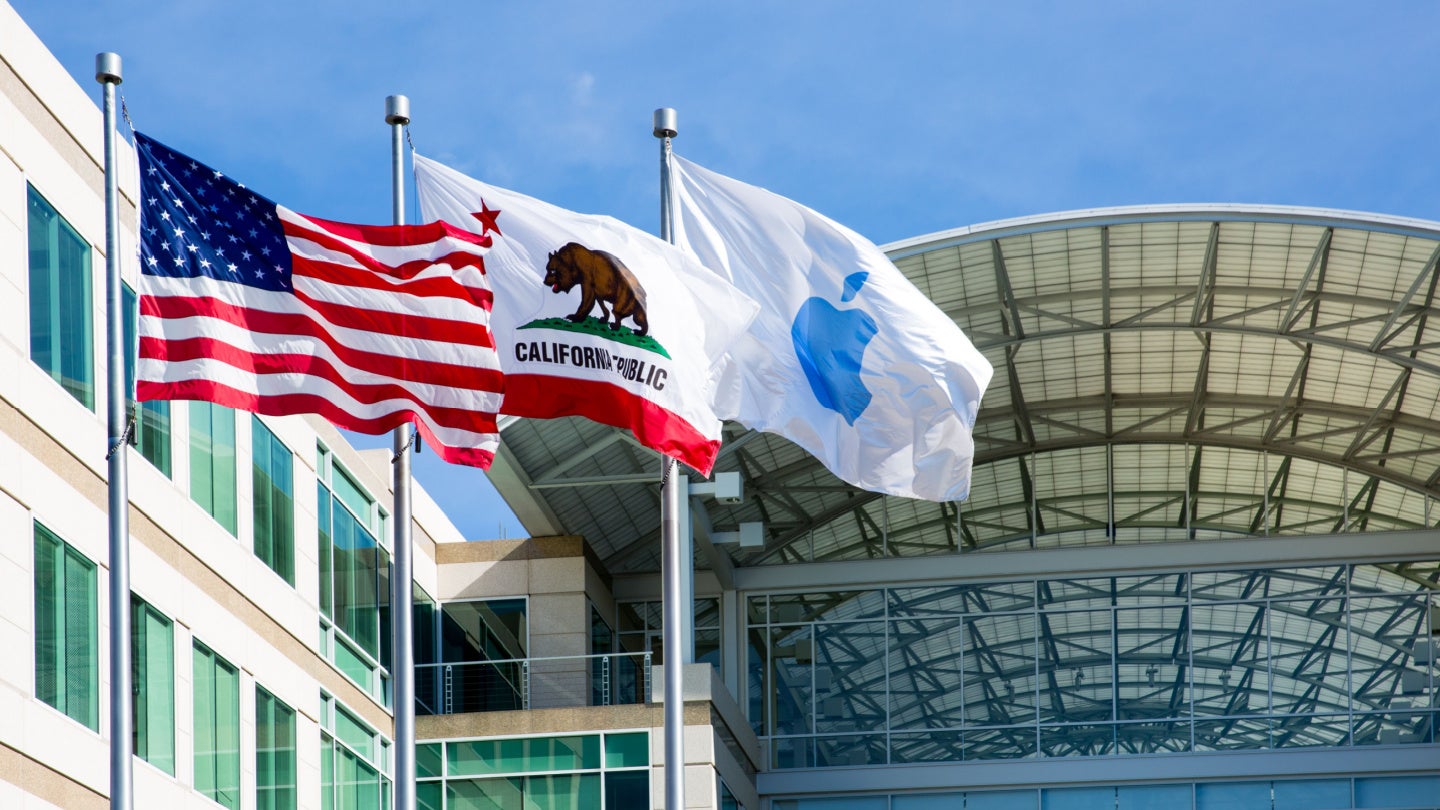
Apple has endorsed California’s upcoming Climate Corporate Data Accountability Act in a letter addressed to US Senator Scott Wiener.
The letter, posted on X (formerly Twitter) by Wiener, states that fighting climate change remains one of Apple’s top priorities and claims the company has measured its carbon emissions over the last decade to aid its effort to become carbon neutral.
Go deeper with GlobalData


Access deeper industry intelligence
Experience unmatched clarity with a single platform that combines unique data, AI, and human expertise.
The Act will require businesses with annual revenues over $1bn working within California to publicly disclose their carbon emissions.
Adobe and Microsoft have already voiced support for the Act according to claims made by climate activist Ceres this August.
In the letter, Apple applauds the inclusion of Scope 3 emissions within the carbon reports, believing the inclusion will improve accuracy and transparency.
Scope 3 emissions, according to the National Grid Group, are emissions which although not directly produced by the company itself are the “result of activities” from across a company’s supply chain.
Because of this, Apple does acknowledge that reporting on Scope 3 emissions involves “educated assumptions” but states that they are critical for understanding the entire range of a company’s climate impact.
Considering Scope 3 emissions in ESG legislation is likely to become a greater concern for companies according to analyst GlobalData.
“Although still at the proposal stage, regulation to improve sustainability and reduce carbon emissions will dictate environmental standards for tech companies,” GlobalData predict in its 2023 thematic intelligence report into tech regulation.
Apple states that it hopes to be carbon neutral across its global supply chain and product lifecycle by 2030.
This is despite Apple’s recent $500m payout over its “batterygate” court case.
The case alleges that Apple deliberately released software updates that slowed down older smartphones and tablets, artificially limiting the lifespan and repairability of devices.
“The production and shipment of new devices, including smartphones, to replace unfixable ones has come under increased scrutiny,” clarifies GlobalData. Decreasing a device’s lifespan could increase a company’s Scope 3 emissions as consumers need to replace their products sooner.
Despite its overall support for the Act, Apple does include some opportunities for improving the legislation within the letter.
Apple asks Wiener to consider other international standards for measuring carbon emissions outside of Greenhouse Gas Protocol.
Additionally, deadlines for reporting emissions must also be announced soon according to Apple. So far, the timeline for company reports has not been made public. In setting the deadlines, Apple encourages Wiener to consider allowing for “sufficient time” for data collection and third party review.
In response to Apple’s letter, Wiener wrote on X (formerly Twitter) that he commended Apple’s support for this “doable” and “critically important” climate legislation.