MWC 2026 in Barcelona (Spain) made one thing unmistakable: The industry’s next competitive cycle won’t be decided by marginal spec gains, but by how well companies build adaptive systems—devices and services that can change shape, shift roles, and increasingly act on a user’s behalf.
The show felt like a pivot away from standalone “hero gadgets” toward an ecosystem mindset where hardware, software, and networks cooperate to reduce friction in daily life. The verdict is clear: Flexibility, agency, and trust are becoming the new pillars of differentiation.
Go deeper with GlobalData


Access deeper industry intelligence
Experience unmatched clarity with a single platform that combines unique data, AI, and human expertise.
Hardware is becoming configurable—thin, foldable, and modular
On the hardware side, form factor has returned as a primary battleground. Foldables are no longer presented as experimental indulgences; brands are positioning them as default premium phones. Honor’s Magic V6 pursued extreme thinness while also emphasising higher water and dust resistance—an implicit admission that foldables must conquer durability scepticism to win mainstream adoption.
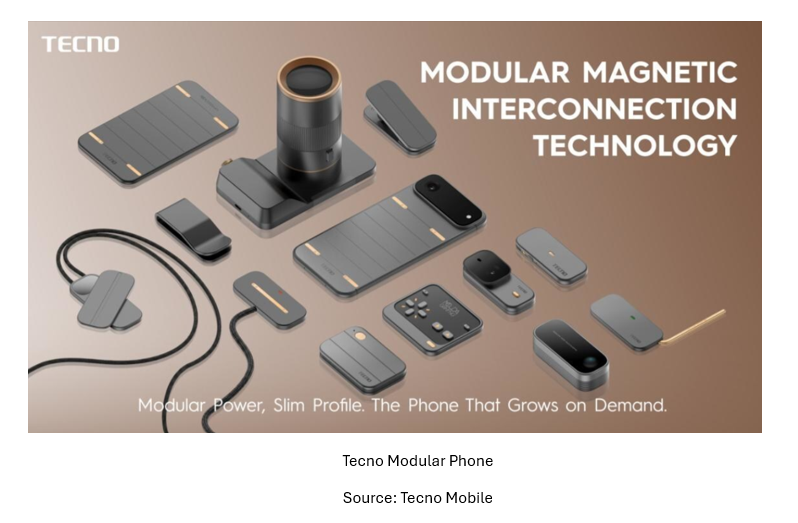
Motorola’s razr message was similarly blunt: this is a “no compromises” flagship, not a fashion accessory. Alongside foldables, modularity resurfaced, but in a more realistic form. Tecno’s modular concept avoids the old trap of rebuilding the entire phone around replaceable internals, instead using magnetic snap-ons for targeted upgrades such as lenses, battery packs, and controls. The industry seems to have learned that consumers want optional expansion without sacrificing a slim, simple base device.
Agentic AI is turning interfaces into intermediaries
The biggest shift, however, was software—specifically “agentic” AI. MWC’s AI narrative advanced beyond summarising and recommending toward completing tasks end-to-end. T-Mobile’s call assistant, which can manage, translate, and summarise calls, illustrates the new expectation: communication tools should reduce effort, as opposed to merely transmitting information. This push also elevates privacy from a niche concern to a core feature. Samsung’s Privacy Display underscores the reality of modern life: as screens become more central to identity and work, users will demand built-in, contextual protection—not optional enterprise add-ons.
Desktop companions and “tabletop AI” hint at a post-phone interaction layer
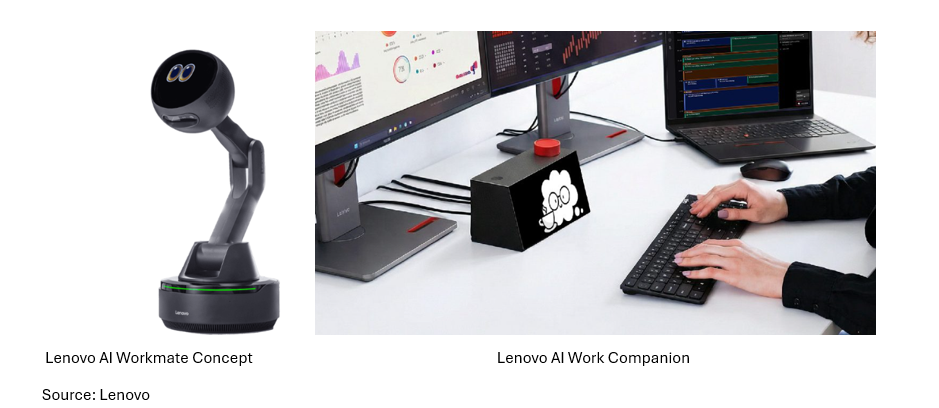
A parallel trend emerged around new interaction surfaces. Desk companions and “tabletop AI” concepts from Lenovo hint at a post-phone layer: always-on, glanceable helpers that orchestrate calendars, documents, and presentations without demanding constant handheld attention. Even children’s companion devices echoed the same logic—shape-shifting endpoints that become more present and engaging when docked, reinforcing “ambient assistance” as a cross-demographic design goal.
Wearables, meanwhile, appear poised to add a controversial capability: vision. Qualcomm’s Snapdragon Wear Elite messaging and the show floor’s glasses concepts suggest the next leap isn’t more health metrics—it’s cameras, displays, translation, and real-time contextual help. That creates obvious utility (e.g., hands-free guidance, subtitles, scene understanding) and equally obvious privacy pressure. The brands that win here will be those that pair “always available” assistance with credible “privacy-first” on-device processing and transparent controls.
Finally, MWC 2026 reminded everyone that infrastructure is no longer background. AI-native networks, 6G readiness, and satellite connectivity are becoming foundational to these experiences. Reliability—especially emergency resilience—will matter as much as speed. Verdict: The future belongs to adaptive hardware, agentic AI, and distributed interfaces—provided the industry can earn trust. As devices become more present, more perceptive, and more autonomous, privacy, safety, and user control won’t be nice-to-haves; they’ll be the deciding factors.