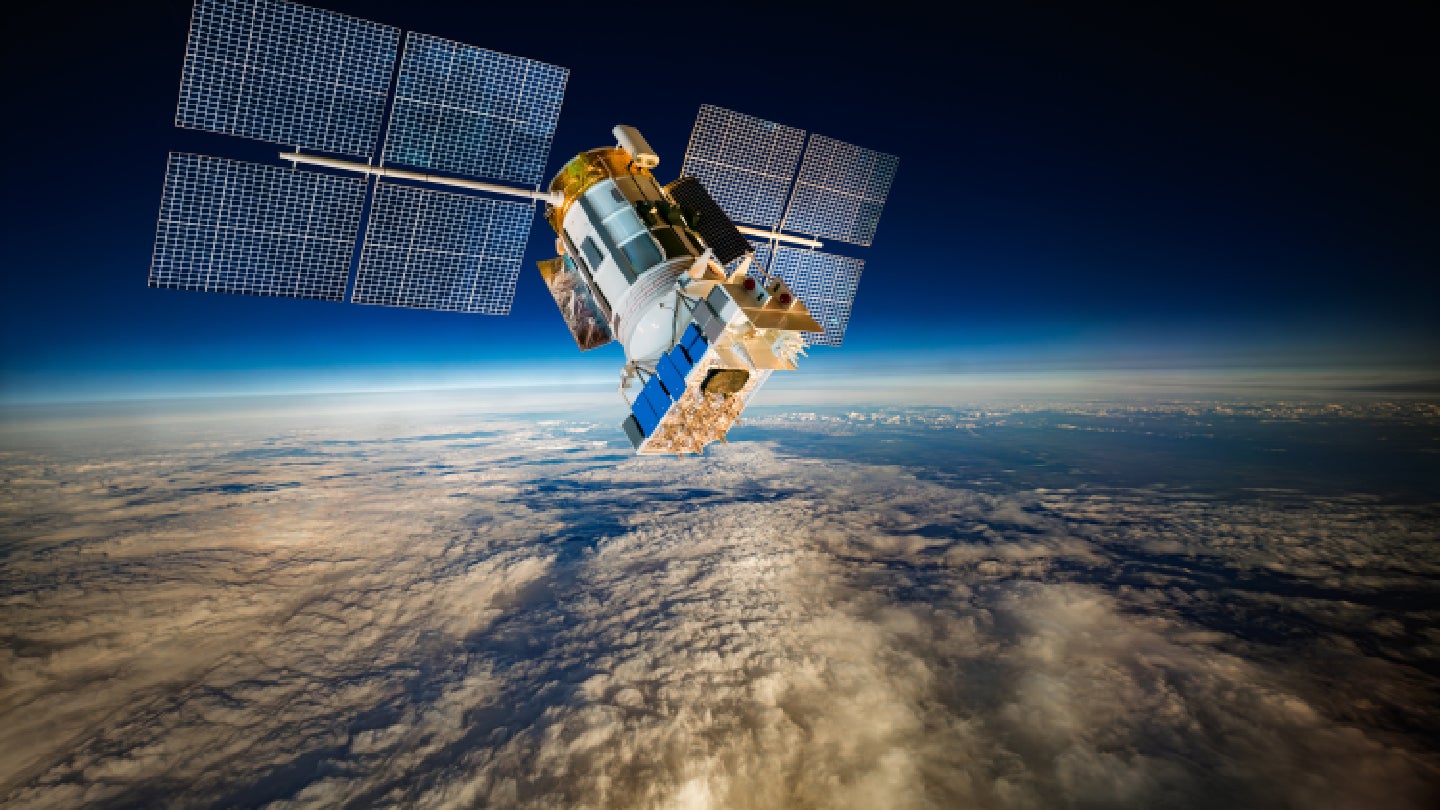
Google is preparing to launch a prototype satellite next week in its first orbital test of Project Suncatcher, a research initiative investigating whether space could eventually support large-scale AI computing.
The mission will send Google’s Tensor Processing Units (TPUs) into low Earth orbit aboard SpaceX’s forthcoming Transporter-18 rideshare launch, developed in partnership with satellite operator Planet Labs. The primary objective is to gather data on how the AI chips withstand the physical stresses of spaceflight, along with the radiation and thermal extremes of the orbital environment.
Go deeper with GlobalData


Access deeper industry intelligence
Experience unmatched clarity with a single platform that combines unique data, AI, and human expertise.
Announced last year, Project Suncatcher is what Google describes as a long-term research effort exploring whether interconnected constellations of solar-powered satellites could one day run machine learning workloads in orbit.
The energy case is significant, with satellites in low Earth orbit able to tap near-continuous sunlight and produce up to eight times more solar power than is achievable on Earth. Over time, Google believes it could become possible to link multiple constellations together, enabling them to handle increasingly large AI workloads.
Travis Beals, Google’s senior director of the Paradigms of Intelligence unit, set out the engineering challenges in a blog post accompanying the announcement. Among the most immediate is surviving launch itself.
A ten-minute ascent to low Earth orbit exposes the spacecraft to sustained acceleration of up to ten times the force of gravity (g), while smaller components such as TPU chips can be subjected to peak forces ranging from 50g to 100g. Google simulated these conditions by shaking the satellite along all three axes at frequencies matching a rocket launch.
Beals wrote: “Tests like this rarely go as planned, so we were pleasantly surprised that the hardware held up to the force.”
Radiation in orbit presents a distinct threat. Solar events and cosmic rays can corrupt electronic components, producing data errors known as bit flips. To quantify the risk, Google ran AI workloads on its Trillium TPUs while exposing them to a proton beam at the University of California, Davis’s Crocker Nuclear Laboratory, monitoring closely for errors throughout.
The initial findings were encouraging according to the blog with the chips tolerating a total ionising radiation dose exceeding what they would accumulate over five years in orbit.
Beals acknowledged, however, that ground-based facilities cannot replicate every aspect of the space environment.
He wrote: “But some things can only be tested in space. Putting our first TPUs in orbit next week will help us get data and learnings to inform future launches.”
Managing heat is another critical area of investigation, the blog noted. TPUs concentrate significant thermal output in a compact footprint, and the absence of atmosphere in orbit rules out convective cooling entirely.
Google is instead developing a system combining heat pipes and radiators, which it has so far validated in a thermal vacuum chamber designed to replicate orbital conditions. The forthcoming mission will provide the first opportunity to assess the approach in the actual space environment.
Beyond the initial launch, Google’s longer-term vision calls for satellites that each carry dozens of TPU chips, flying in coordinated clusters. Sustaining the data throughput required for AI processing will depend on each satellite knowing both its own position and where it sits relative to its neighbours, with the fleet connected by laser links.
Existing space-based laser systems are generally built for narrow bandwidth across vast distances, but Project Suncatcher demands extremely high bandwidth over comparatively short spans.
Beals wrote: “Maintaining the necessary connection requires extraordinary precision, similar to hitting a coin-size target from miles away while both points are in motion.”
Google intends to test this inter-satellite laser communication technology in 2027, when it plans to place two satellites in orbit.
The initiative places Google alongside other companies exploring orbital computing. SpaceX and Starcloud are among firms pursuing plans to deploy data centres in low Earth orbit, seeking to harness abundant solar energy for power-intensive AI processing and circumvent growing constraints on terrestrial electricity supplies.