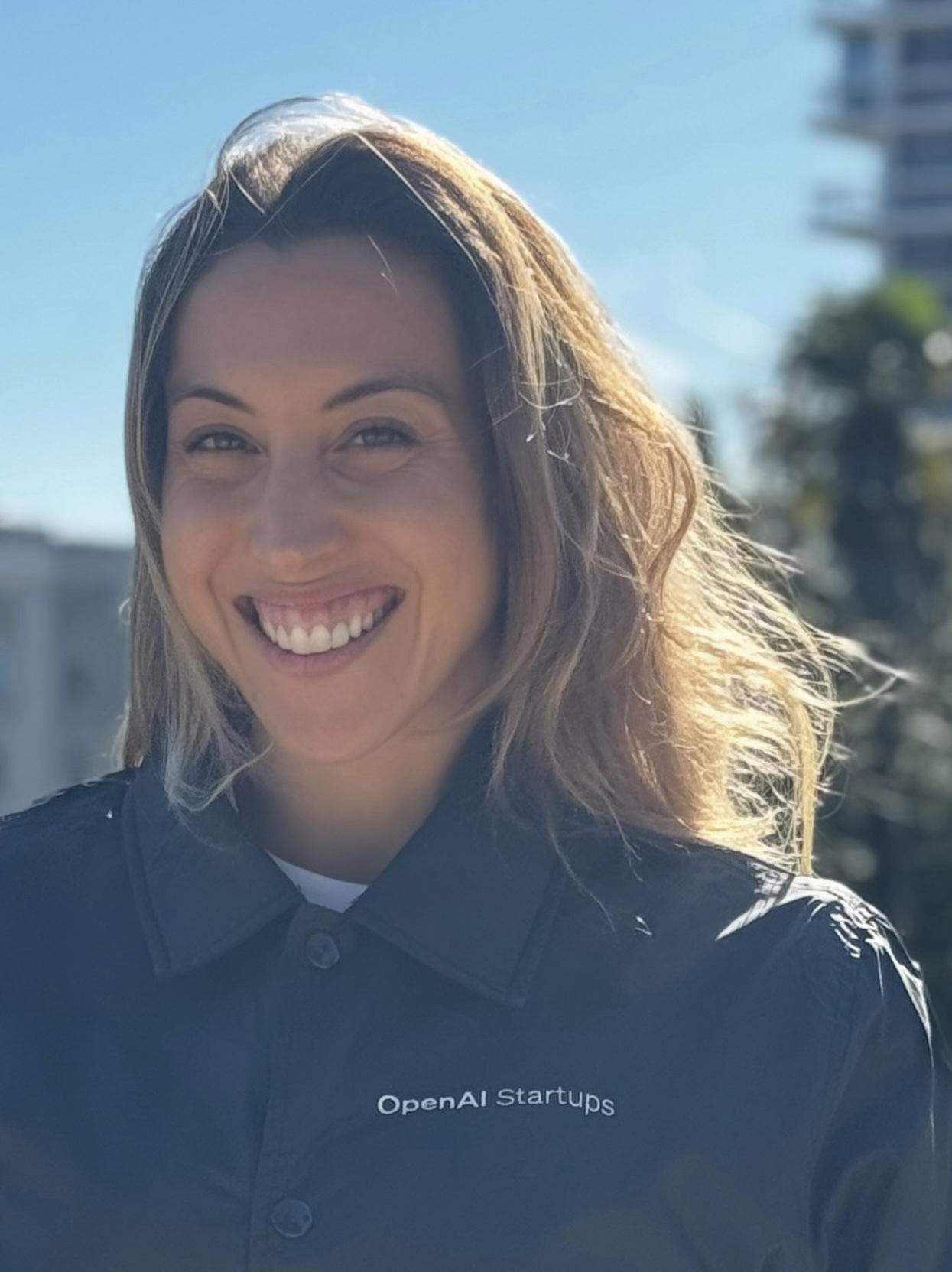
Laura Modiano has always worked within the startup ecosystem in some way or another. So no surprise, then, that she describes her role as global head of OpenAI’s Founder Experience as her “dream job”. The new division, launched in May this year, is designed to help founders scale early-stage AI native startups by offering tailored resources and investment structures while integrating OpenAI technologies.
Modiano’s career, spanning angel investing and venture capital, has given her insight into the many ways founders build companies. But her current role gives her a front row seat to the creation of the next generation of frontier AI companies, which she says requires a rethink of the traditional route to scaling a business.
Go deeper with GlobalData


Access deeper industry intelligence
Experience unmatched clarity with a single platform that combines unique data, AI, and human expertise.
“The models, the capabilities, the tools are changing,” she says describing how Founder Experience is tailored to account for this rapid pace of change in the AI market, adding: “We recognise that building a company today has evolved, it’s a lot faster, it’s a lot more AI native. We wanted to think about how we change the model of how we’re approaching founders from day one, in the way that they’re building companies today.”
During her time as an angel investor and principal VC at AWS, Modiano would identify and fund talent, spend time resourcing and helping them to scale, and if successful, reinvest. It was a tried and tested path. But Founder Experience is “meeting founders where they are at” whether they are a university student with a great idea pre-funding or a company further along the funding route—and, critically, in the way that they choose to scale their businesses.
This also means helping them deliver value in the way that they define value. “Because I think a lot of platforms have their own definition of what value is and their own definition of how to work with companies, their own definition of who’s going to be successful,” says Modiano.
“Founders shouldn’t have to be on the platform’s clock, they should be on their clock, and we need to adapt to the founders today. Personally, I don’t know any other company that actually has room to think about startups and founders as a partnership outside of the sales process,” she explains.
Changing times needs a changed approach
A five-year timeline for AI native companies is almost impossible to predict. Modiano tends to think in six-month blocks, from which she sees the general direction of travel as agents progressively taking on more complete tasks, rather than rote parts of an individual’s workload.
And for these AI native companies the biggest differentiator, as the market develops and competition increases, is “good taste” says Modiano. By this she means the ability to stay very close to the voice of your customer and your users.
“Are you continuously building and iterating on the tools, capabilities, and needs that your users have, so that you continue to delight them? For me, this is the North Star of every builder, whether they’re a huge enterprise that’s been around for 150 years or a new startup,” she explains.
“The power you have is the relationship that you have with your users. Those who are spending the most time actually doing this are the ones that I think will go the furthest,” she adds.
AI native startups build in collaboration
Agentic AI capability embedded within an organisation’s processes breaks down silos and enables the kind of frictionless collaboration that Modiano describes as harnessing every individual’s superpowers. “And I think shipping ‘delightful’ products is a lot more important than shipping the org charts that companies are often doing today, and tend to be the pain point that most companies face,” she says.
AI native companies have collaboration embedded into their company structures which contributes to faster development because information about where the dependencies lie, are so often how decisions are made.
Modiano describes this “always on” collaborative approach where agents are context aware of the whole organisation as a kind of orchestration focused around the customer and the final output.
“We’ll always have experts like engineers, for example, but the feedback that the sales person hears should always inform what the engineer does, and in a world where there’s more competition, more capabilities, and speed matters, doing that very quickly is going to be essential to continue to move at pace,” she says.
AI native companies rewriting the blueprint
There are no blueprints for AI native companies which is an opportunity to do things differently. By using AI in the right way, Modiano says, “we’re not constrained to just how things have always been done”, and in this version of the future, AI will unlock value and job satisfaction, adding: “There are so many ways to actually make people’s lives better, and we shouldn’t limit ourselves to unit economics. We should explore what’s possible.”