Quantinuum, Honeywell’s quantum computing subsidiary, has raised $1.68bn in its initial public offering (IPO) by selling 28 million shares at $60 each, a price above its previously indicated range of $53 to $55 per share.
The company, which recently increased the number of shares offered to 26.5 million before finalising the higher tally, began trading on the Nasdaq on Wednesday under the symbol “QNT”.
Go deeper with GlobalData


Access deeper industry intelligence
Experience unmatched clarity with a single platform that combines unique data, AI, and human expertise.
Shares of Quantinuum opened at $68, representing a rise of 13.3% from the IPO price. This performance gave the company a market capitalisation of $17.63bn at the close of its debut session.
The offering comes amid heightened investor interest in quantum computing. Quantinuum’s rival company IonQ saw its shares climb approximately 52% this year for a market value near $25.47bn, reported Reuters, citing LSEG data.
Quantinuum describes itself as a full-stack quantum computing company. It offers a platform for deploying quantum computing in real-world settings and has released multiple generations of quantum systems built on its QCCD architecture.
According to the company, these systems achieved what it calls the highest accuracy levels in the sector based on average two-qubit gate fidelity as of 31 December 2025.
The firm’s customer base spans pharmaceuticals, material science, financial services, government, and other industrial markets. Quantinuum’s headquarters are in Broomfield, Colorado, and it maintains facilities in the US, UK, Germany, Japan, Qatar, and Singapore.
Quantinuum was established in late 2021 through the merger of Honeywell Quantum Solutions and Cambridge Quantum.
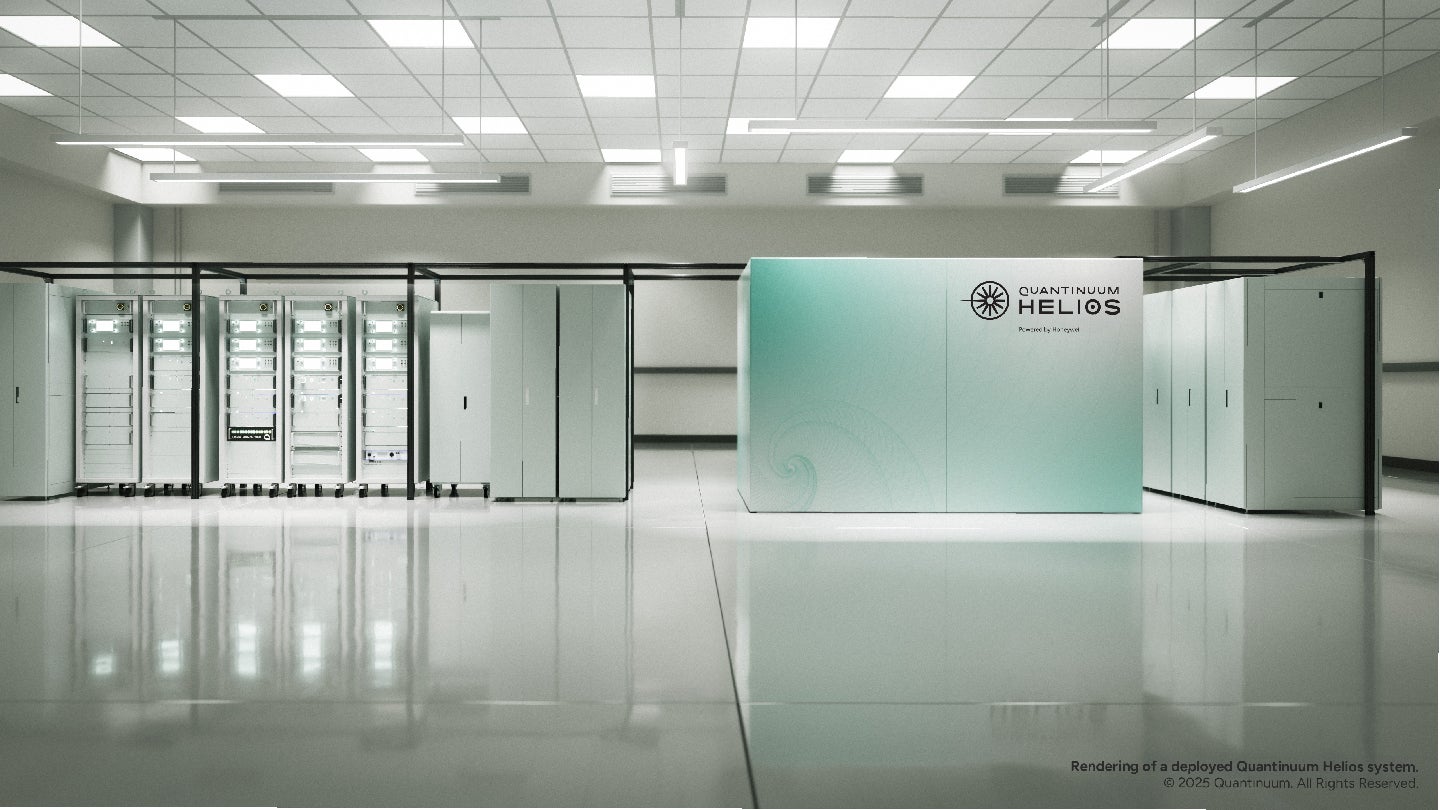
In September 2025, Honeywell announced an equity capital raise of approximately $600m for Quantinuum at a pre-money valuation of $10bn. The proceeds are intended to support the company’s large-scale quantum development and the launch of its next-generation Helios system in November 2025.
Earlier this week, Quantinuum stated it had signed a non-binding memorandum of understanding with Mitsubishi Electric. The agreement aims to jointly identify use cases for quantum computing in advanced industrial engineering and design, with initial projects expected to focus on computer-aided engineering and simulation applications using Quantinuum’s platform.
In May 2025, Quantinuum also announced a letter of intent with the US Department of Commerce’s CHIPS Research and Development Office. This document proposes possible federal funding for the development of large-scale, fault-tolerant trapped-ion quantum computers.
The plan outlines collaboration with the CHIPS R&D Office and suppliers such as GlobalFoundries and Monarch Quantum to further develop semiconductor and photonic components for future systems.