

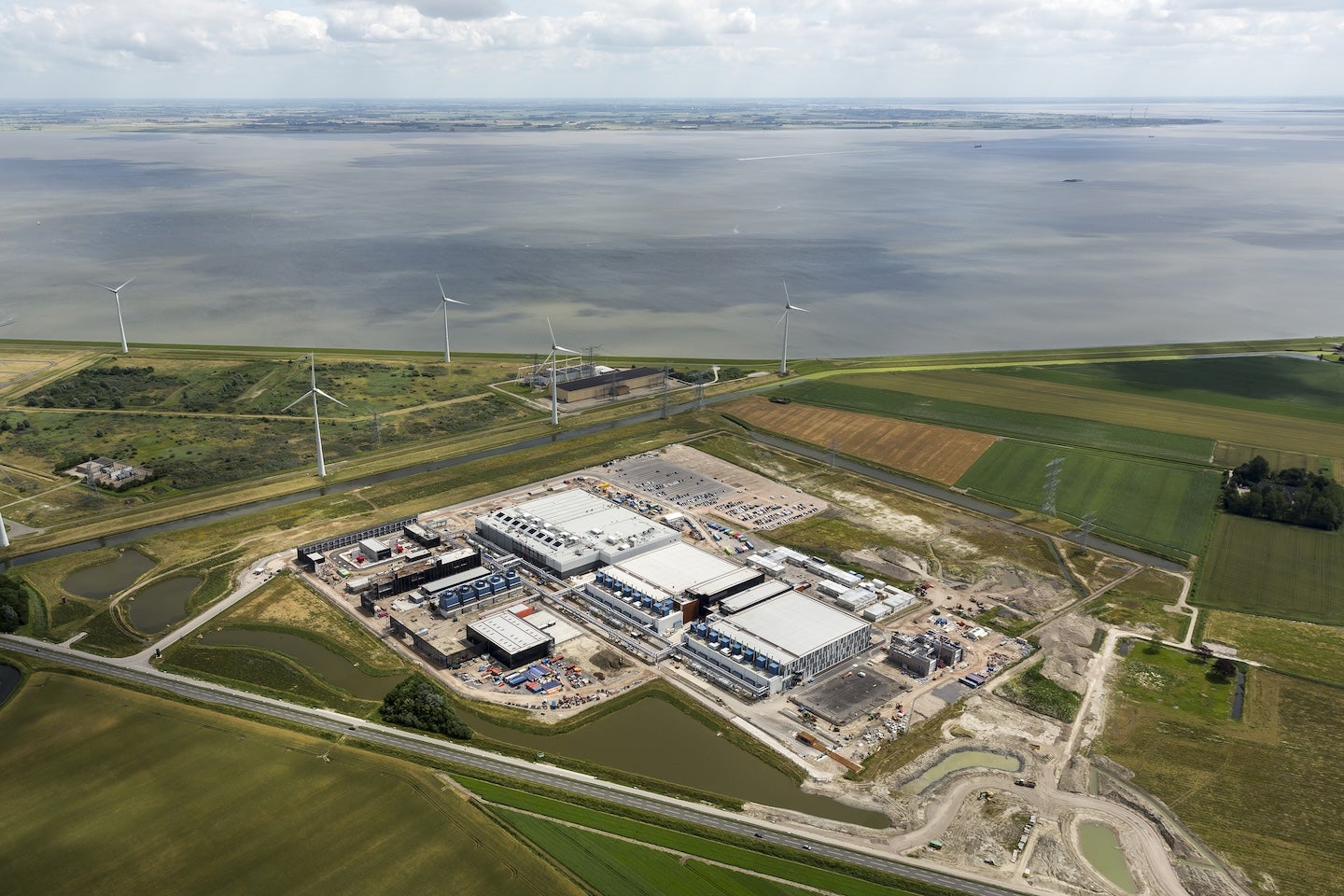
On May 18, in response to surging enterprise demand for AI infrastructure, Google and Blackstone unveiled a US-based joint venture to provide high-performance compute services. The venture will combine data centre capacity, operations, and networking with Google’s custom Tensor Processing Units (TPUs), which are Google-designed AI chips for training and running models.
Under the deal, Blackstone will commit an initial $5bn in equity to build out approximately 500MW of data centre capacity by 2027, with further expansion expected afterwards.
Go deeper with GlobalData


Access deeper industry intelligence
Experience unmatched clarity with a single platform that combines unique data, AI, and human expertise.
The offering is structured as compute-as-a-service (CaaS), meaning companies can rent AI computing capacity on demand, paying for usage, while the joint venture owns, operates, and maintains the data centre infrastructure, power, networking, and chips. Leadership will be headed by Benjamin Treynor Sloss, a longtime Google infrastructure executive.
The venture is expected to offer deployment options that may appeal to customers with strict data residency or sovereignty requirements. Blackstone is expected to hold the majority ownership stake, and the venture’s total value, including debt and financing, could reach about $25bn.
This joint venture may deliver multiple benefits for enterprises
Enterprises stand to gain several critical advantages from this partnership. First, because the partnership is delivered as CaaS, enterprises can access specialised AI hardware on a consumption/contract basis, without upfront capital expenditure for the infrastructure and without having to manage the hardware lifecycle (procurement, upgrades, maintenance, and decommissioning) themselves.
Second, enterprises will access resilient data-centre capacity designed for high availability. Like most modern hyperscale facilities, sites are likely to incorporate power and advanced cooling solutions, environmental monitoring, and operational tools designed to minimise downtime. Third, Google and Blackstone achieve this flexibility by deploying TPU-powered CaaS so that enterprises can train large language models and run inference wherever needed, including in sovereign or regulated environments. Cost predictability improves because enterprises use shared infrastructure rather than investing in internal AI compute farms themselves.
Recent industry deals have shown a rising appetite for long-term capacity contracts and large-scale infrastructure commitments to secure access to advanced AI chips, although contract size and structure vary widely by provider and customer. GlobalData forecasts that the North American data centre market—already the largest regional segment with $40.9bn in revenue in 2024—will grow at a CAGR of 8.9% through 2029, reaching about $62.5bn by then.
Some key differentiators of the Google-Blackstone venture begin with its hardware. It uses Google’s TPUs, which provide a different performance and cost profile than the dominant NVIDIA GPU stack. Although TPUs need more specialised design, are less flexible for irregular tasks, and are largely only available via Google Cloud, Blackstone supplies the capital expertise needed to build large data centres, sharing risk and reward so that the venture becomes more viable than depending on a single cloud provider alone.
Major risks are involved, but the venture signals a strategic transformation
There are, however, serious risks ahead. Delivering 500 MW of AI-enabled data centres implies substantial energy and power infrastructure demands, along with site selection, permitting, and regulatory hurdles. Financially, while Blackstone’s $5bn equity contribution is large, much of the $25bn potential value depends on long-term contracts with hyperscalers, cloud providers, and large enterprises, which will require funding the build-out through debt or project finance along with equity, spreading cost and risk over time.
Despite these challenges, the venture signals a strategic shift: compute capacity is increasingly viewed as core infrastructure. This means enterprises can gain access to leading-edge AI compute through multiple channels, via joint-venture data centres, private or semi-private setups, or dedicated infrastructure, so they can avoid total reliance on public cloud providers.